
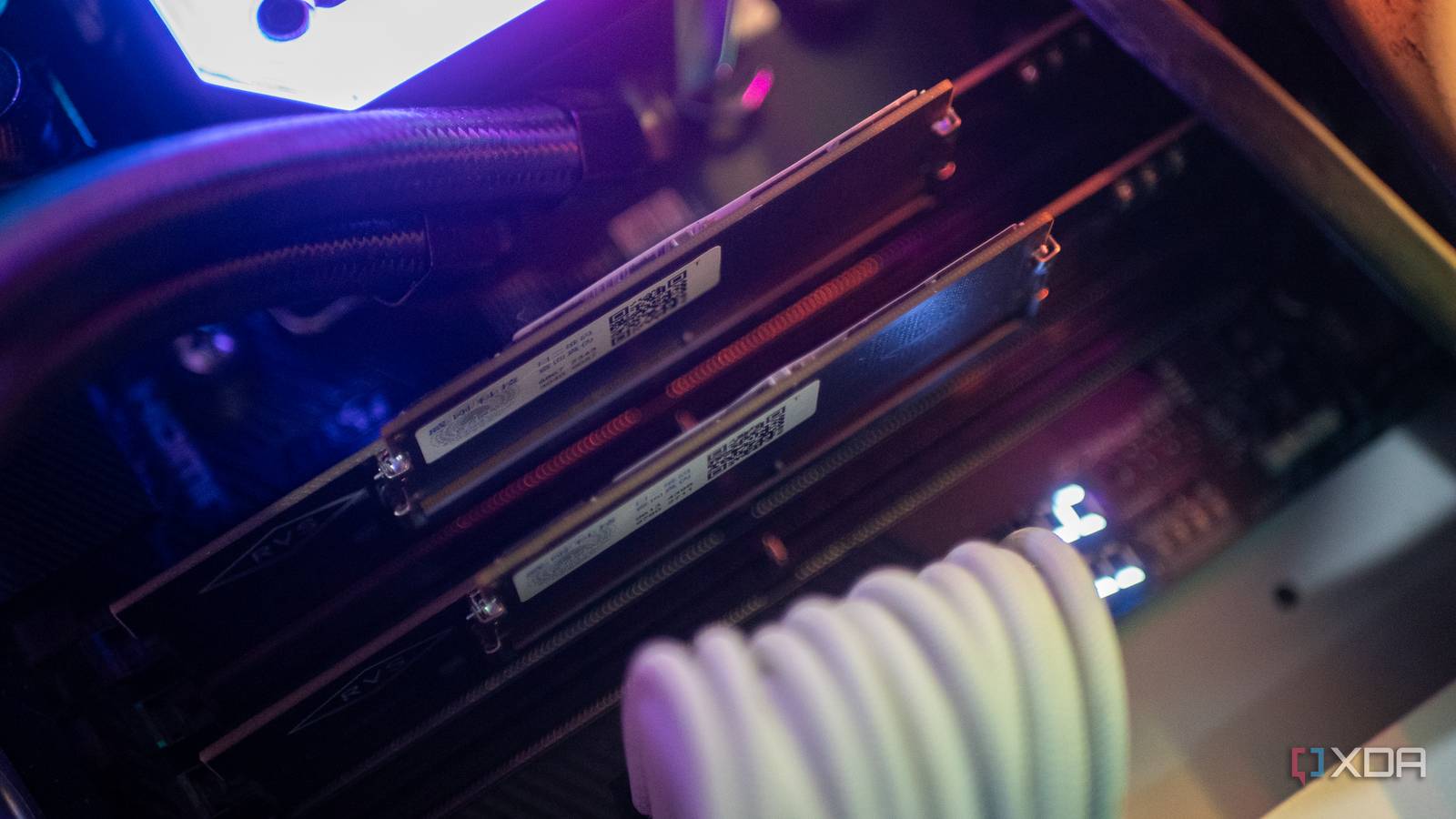
Published Sep 20, 2026, 9:30 AM EDT After a 7-year corporate stint, Tanveer found his love for writing and tech too much to resist. An MBA in Marketing and the owner of a PC building business, he writes on PC hardware, technology, and Windows. When not scouring the web for ideas, he can be found building PCs, watching anime, or playing Smash Karts on his RTX 3080 (sigh). It's a bit late to revisit the DDR4 vs. DDR5 comparison, since the latter has already become the standard for new builds. Despite all the benefits of DDR5 RAM, it's not without its peculiarities, some of which might catch you off guard if you're just moving from DDR4. The blazing-fast transfer speeds of DDR5 memory might entice you to build a new PC, but the benefits might not always be proportionate to the price premium. Besides, DDR5 RAM can introduce some unexpected problems into your setup. The fastest speeds aren't plug-and-play DDR5 stability issues might surprise you Due to the significantly higher transfer rates and bandwidth, DDR5 memory is difficult to run reliably when you populate more than two slots on the motherboard. The signal is simply too sensitive, and requires more voltage regulation compared to that of DDR4 memory. If you try to run four DIMMs, most kits simply fail to reach speeds anywhere close to their maximum rated frequencies, with or without XMP/EXPO. The DDR5 signal is already a strain on the CPU's IMC (Integrated Memory Controller), and populating all four slots on the motherboard takes things up a notch. At that point, achieving any kind of stability requires slower transfer speeds, looser timings, and raised voltages. This could come as a shock to some users who expect to run their four-DIMM, 64GB or 128GB kit at the speeds printed on the box. G.Skill Trident Z5 RGB DDR5-7200 CL34 9/10 Brand G.Skill Size 32 GB Technology DDR5 Speed 7200 G.Skill is known for producing some of the fastest RAM kits out there and this Trident Z5 RGB kit is fantastic for the latest Intel processors. The out-of-the-box DDR5-7200 speeds offer excellent performance if the motherboard and CPU will allow such XMP speeds to be set. DDR5 boot times are longer It's just the nature of DDR5 Compared to DDR4 systems, DDR5 builds inevitably take longer to load Windows. If you're using a DDR5 PC, you'd have noticed this already. Owing to the memory training required to ensure the voltage settings are accurate on every boot, DDR5 systems need more time to go through the motions before they can load to the desktop. In fact, your motherboard model can affect your PC's boot time, depending on the Fast Boot implementation and UEFI differences. This might seem like a minor inconvenience, but people who don't like the issues associated with Sleep mode or are always in the habit of shutting down their PC will feel the hit of a long boot time. Some DDR5 motherboards can take almost a minute to hit the desktop from the moment you press the power button. DDR5 is the more advanced standard, but it still lags behind DDR4 in some areas. Real-world gains are often slim The numbers aren't everything Finally, it's time to address the performance of DDR5 memory. While it's indisputable that DDR5 RAM is faster than DDR4 RAM in gaming, the actual gains might not matter a whole lot to everyone. For instance, with a decent mid-range GPU and a budget CPU running 1080p gaming, a jump from, say, a 3,200MT/s DDR4 kit to a 6,400MT/s DDR5 kit might improve your FPS by about 15–20%. This feels significant, but when you consider the actual FPS numbers, this might be a difference between 150 and 170 FPS — hardly noticeable. And the moment you consider higher resolutions like 1440p and 4K, the impact of RAM speed on gaming performance starts going down. Of course, this hardly means you should build a DDR4 PC in 2025, but those of you still on DDR4 need not rush to upgrade to DDR5 just for the faster transfer speeds. DDR5 isn't as perfect as it seems DDR5 RAM might have established itself as the standard for new PC builds a while back, but that doesn't mean it's without a few downsides. Signal stability is still a challenge that can force users to run their kits at lower speeds. Boot times are longer on DDR5 memory, and that's something you have to make peace with. And even the performance benefits in gaming can feel underwhelming if your framerates are already too high.
The hidden downsides of DDR5 no one warns you about
Full Article
Original Source
Read the full article at Xda-developers →KhanList aggregates and links to publicly available news content. We do not host full articles from third-party sources. Always verify important information with original sources.