
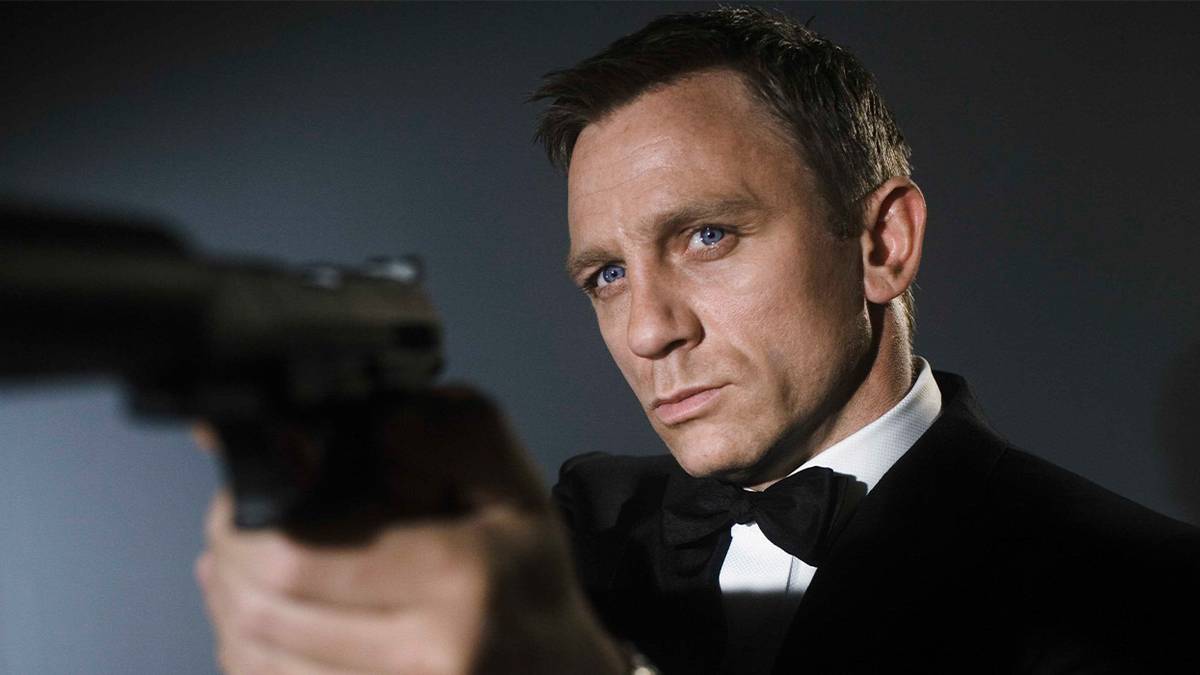
Published Sep 22, 2026, 5:10 AM EDT Jeffrey is a freelance features writer at Collider. He is an MPA-accredited entertainment journalist and a Tomatometer-approved critic based in the LA area. He graduated from the University of Texas at Austin with a Bachelor of Science in Radio, TV, & Film and a Bachelor of Arts in Theater. As we await a new reboot of the James Bond franchise, now is the perfect time to revisit the last reboot — and the ingenious way it tied itself to the larger history of the film series. Three months from now marks the 20th anniversary of Casino Royale, which debuted in theaters on November 14, 2006. The franchise reset starred Daniel Craig, portraying the new big-screen iteration of Bond, based on Ian Fleming's original novel of the same name. Craig truly kickstarted his new era of the franchise with a bang. However, no Bond movie and performance is truly complete until the actor utters the iconic line first spoken by Sean Connery in Dr. No, "Bond. James Bond." Craig's iteration redefined the entire franchise. 'Casino Royale' Took James Bond Back to His Roots Image via Sony Pictures Casino Royale marked a much-needed reset for the 007 movie franchise. Pierce Brosnan did well as the MI6 agent with a license to kill, but towards the end of his run, his movies were descending into opulent, laughable self-parody, as demonstrated in his final entry, Die Another Day. Casino Royale, by adapting Fleming's original novel, brought Bond back to his literary roots, taking a much more grounded spy-thriller approach. Brosnan's movies had taken steps towards transforming Bond into something akin to a comic book superhero, with villains and plots to match, and that's just not how Fleming originally conceived the character. Craig was the perfect actor to portray a more realistic version of 007. Bond is best described by his original creator, Fleming, as "an anonymous, blunt instrument wielded by a government department." In short, he's a government-sanctioned assassin, with a license to kill. The blunt instrument term is even evoked by Bond's superior, M (Judi Dench), during Casino Royale after Bond invades a foreign embassy and kills a wanted operative whom MI-6 was pursuing. Rather than a superhero fighting for queen and country, Craig's Bond acknowledges that he might be working at the behest of the British government, but he's still a killer operating in a morally gray world. Casino Royale, and Craig’s stint as the character, explore what a job as a government-sanctioned hitman does to a man's soul, offering a strong level of depth and introspection into the character’s psyche. 'Casino Royale' Explores Bond's Origins Casino Royale depicts James Bond at the start of his journey as a 00 agent, with the exceptional black and white prologue showing Bond completing his mission to receive his license to kill. Moviegoers had never previously seen this side of Bond depicted onscreen; Bond's license to kill and 00 agent status had been baked into the character going back to the 1960s. However, seeing his mission that led to the license was a monumental cinematic moment. Elsewhere, Casino Royale plays with audience expectations of the Bond legend, except through the lens of Craig's version of the character becoming the icon that legions of fans have come to know and love. This is shown through scenes such as when Bond dons his famous tuxedo for the first time. Also, when a waiter asks Bond if he wants his drink of choice "shaken or stirred," Bond then bluntly answers, "Does it look like I give a damn?!" However, the coup de grâce of Craig’s performance is the movie's ending, when he finally delivers his first utterance of the famous line, "The name's Bond. James Bond." The moment occurs after Bond receives a parting message from his late girlfriend, Vesper Lynd (Eva Green), who gave Bond the phone number of Mr. White (Jesper Christensen), a high-ranking member of the international criminal organization QUANTUM. The movie ends with Bond discovering White's location and shooting him in the foot before properly introducing himself as Bond for the first time, all while the classic Bond score starts blaring. The ending shows that Bond returned to MI-6, rescinding his earlier resignation, marking a new era for the character. Daniel Craig Completes His Transformation into James Bond Image via Sony Pictures Releasing After his ordeal with Le Chiffre (Mads Mikkelsen) in Casino Royale, Bond attempts to quit the spy life and start over with Vesper. That comes to an end when it's revealed that Vesper was a double agent, culminating in her death. Vesper's betrayal and her subsequent death instead harden Bond, pushing him back toward the life of a spy and resuming his occupation as MI-6's blunt instrument. His encounter with Vesper also shows why he struggles to settle down and form a long-term romantic relationship, as her betrayal and his career make it difficult for him to trust others. Although Craig delivers the iconic line at the end of the movie, which concludes Casino Royale in an exciting, cool, and energetic moment, it's also somewhat bittersweet. James Bond's transformation into the MI-6 superspy is complete, yet it comes at the cost of knowing Bond can never truly know peace or happiness. However, the ending marks a triumphant moment for the audience, since it depicts that Daniel Craig has fully become James Bond, and a cinematic icon is reborn. With the ending, Craig's journey as the legendary character finally begins, as James Bond's origin story is now complete. Release Date November 17, 2006 Runtime 144 minutes Director Martin Campbell
The Greatest James Bond Final Line Officially Redefined the Franchise
Full Article
Original Source
Read the full article at Collider →KhanList aggregates and links to publicly available news content. We do not host full articles from third-party sources. Always verify important information with original sources.