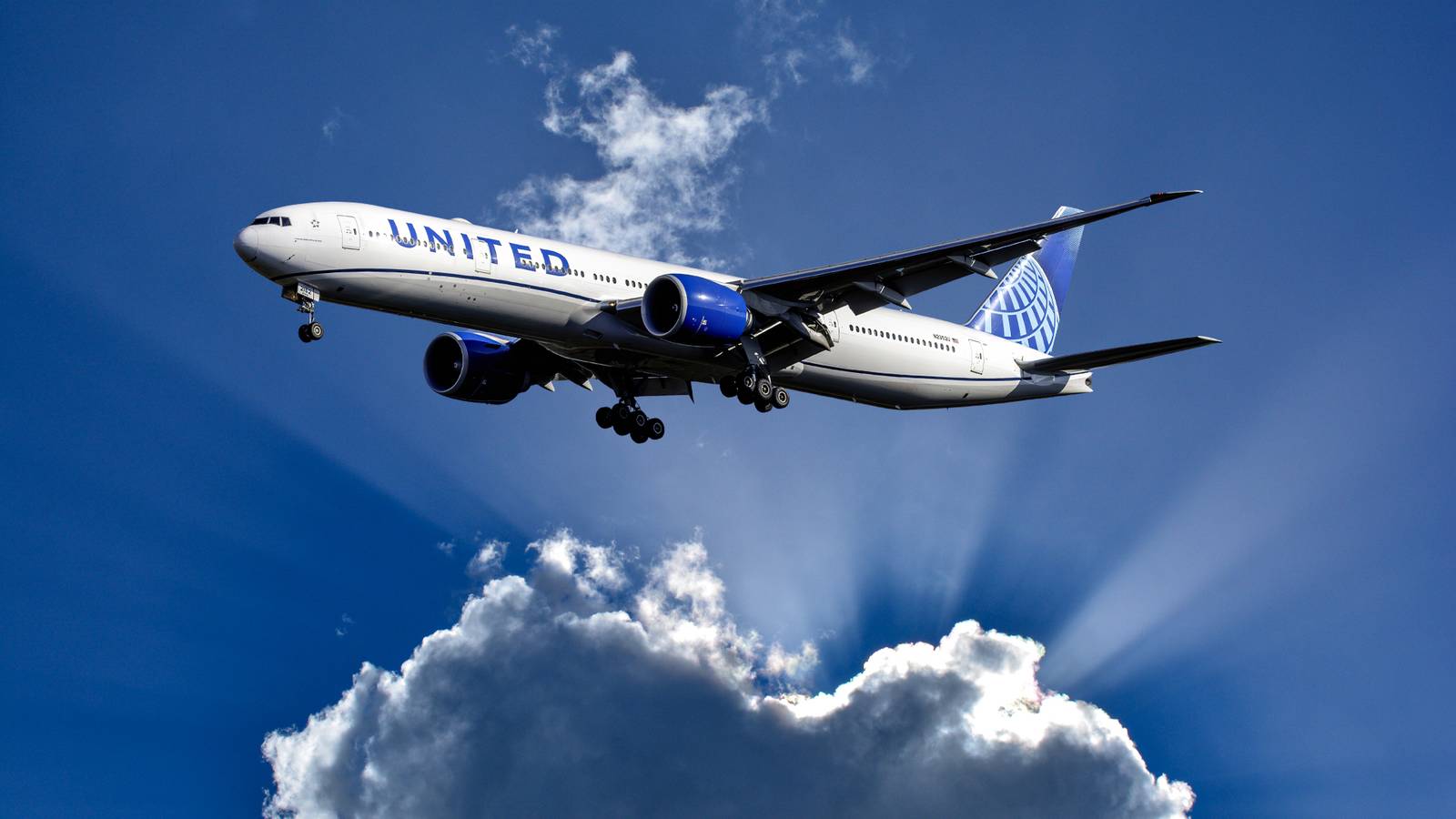
Published Jul 27, 2026, 3:00 AM EDT Airline and Airport Management Graduate, Student Commercial Pilot and Commercial Aviation Writer. Based in London & Nagoya Some of the longest flights in the world often test aircraft limits. Qantas Flight 10, a nonstop service operating from London Heathrow to Perth with a Boeing 787-9, recently encountered exceptionally severe winter headwinds over the Indian Ocean. The intense atmospheric resistance depleted the fuel reserves of the twin-engine widebody beyond original flight planning safety margins, resulting in the crew having to execute an unscheduled refueling stop. Instead of navigating directly to the destination, the aircraft was forced to divert to Karratha Airport, a regional facility located 932 miles (1,500 km) north of Perth that primarily serves the localized mining sector. It added hours to the journey, demonstrating that unforeseen jet stream anomalies can compromise even highly efficient long-range platforms. The incident is just one of many that show a critical industry reality: when operating at the extreme margins of structural aircraft range, winter weather patterns remain the ultimate arbiter of nonstop viability. For United Airlines, this example is sure to be exceptionally worrying, as it operates an equally risky route using a far less efficient aircraft in comparison. The Reality Of Pushing Range To Its Limits Credit: Shutterstock Ultra-long-haul commercial aviation, by nature, operates on a knife-edge where the equilibrium between revenue-generating payload and required fuel volume dictates absolute profitability. On oceanic corridors spanning thousands of miles, flight dispatchers need to calculate fuel parameters with precise accuracy to avoid catastrophic fiscal penalties. The margins are so narrow that unexpected changes in high-altitude environments can disrupt even the most calculated dispatch trajectories. When an aircraft operates near its structural limit, minor atmospheric deviations cease to be routine variables and become systemic disruptions. United faces this exact conundrum on the San Francisco and Sydney route, a 7,417-mile (11,936-km) transpacific sector that pushes twin-engine widebodies to their maximum efficiency limits. United routinely deploys the Boeing 777-300ER on this specific city pair, a platform celebrated for its high passenger volume but structurally restricted by its payload-range curve when encountering severe headwinds. Flight planning software routinely factors in alternate routing options, yet the structural realities of carrying maximum fuel reserves leave little buffer for operational volatility. If upper-atmospheric winds shift unexpectedly over the open ocean, the fuel burn rate accelerates drastically, leaving flight crews to choose between offloading profitable cargo prior to departure or opting for an unscheduled technical stop mid-journey. The structural range of the 777-300ER is officially rated at approximately 7,370 nautical miles (13,649 km) under nominal conditions, a benchmark that assumes an uninhibited, direct path at optimal flight levels. In actual transpacific operations, however, this theoretical distance is compromised by arbitrary air traffic control routing, initial low-altitude cruise caps due to heavy departure weights, and the strict diversion reserve requirements mandated by global aviation agencies. To protect the aircraft against unexpected destination closures or sudden cabin depressurization scenarios over the vast expanse of the Pacific, the flight has to depart with thousands of pounds of non-burnable contingency fuel. What this does is shrink the functional range of the airframe, meaning what should be a comfortable nonstop flight ends up being a situation where every single knot of atmospheric resistance carries an immediate financial penalty. Running Against The Wind Credit: Shutterstock What affects westbound transpacific corridors the most is the volatile behavior of upper-atmospheric jet streams. During winter cycles in the Southern Hemisphere, these high-velocity thermal winds consolidate into formidable barriers that move directly from west to east. Commercial aircraft routing from North America toward Oceania must actively penetrate these meteorological streams, which is a complex exercise. When these wind systems align directly against the flight path, the baseline assumptions governing trip fuel requirements become rather useless. The main aim is to maintain schedule integrity against these planetary air currents, so modern dispatch software must continuously recalculate the exact velocity of the wind core, which frequently spikes above 130 knots (241 km per hour). A 777-300ER combating an intense headwind component like this faces an immediate degradation of its groundspeed, extending the total block time across the Pacific by more than 90 minutes. Prolonged time spent in the air dramatically compounds the hourly fuel burn rate, accelerating the consumption of tactical trip fuel and eroding the mandatory contingency reserves required by international civil aviation regulations. When the projected atmospheric resistance exceeds specific threshold limits, the airline operations center must intervene before the aircraft leaves the gate. Schedulers will typically run iterative weight scenarios to determine if the airframe can structurally support the combined mass of the necessary fuel load and the ticketed payload. If the total weight threatens to breach structural maximums, the carrier will then implement proactive payload restrictions, deliberately depressing passenger seat availability and leaving commercial freight on the tarmac. Weight Is The Enemy Credit: Shutterstock The constant battle between atmospheric resistance and fuel volume does a good job of exposing the rigid structural constraints defined by the payload-range curve of the airframe. Every commercial aircraft operates under fixed legal weight limitations that dictate how much mass can be lifted off the runway at brake release. For the 777-300ER, the maximum takeoff weight is strictly limited to 775,000 lb (351,534 kg), a definitive threshold that cannot be exceeded under any operational circumstances. Consequently, every additional pound of jet fuel pumped into the wing tanks to hedge against headwinds necessitates an identical reduction in the weight allocated to revenue-generating traffic. The financial consequences of these structural compromises are amplified by the massive consumption rates of the twin General Electric GE90-115B engines, which burn approximately 17,000 lb (7,711 kg) of fuel per hour during initial cruise steps. When filling the tanks toward their absolute capacity of 48,533 gallons (183,717 liters) to secure a safe transpacific crossing, the remaining weight allowance left for the cabin and cargo hold diminishes with astonishing speed. With spot jet fuel prices managing to reach $4.88 per gallon ($1.29 per liter), the fiscal burden of carrying this immense fuel weight, known in network operations as the fuel to carry fuel penalty, severely degrades the underlying profitability of the flight cycle. For international network planners, this zero-sum game between fuel volume and payload volume is a critical vulnerability in ultra-long-haul route economics. While high-yield passenger tickets and premium time-sensitive cargo yield the highest margins, they are routinely the first variables sacrificed to preserve absolute safety margins. Bumping ten passengers or offloading five pallets of time-sensitive electronics can cost an airline thousands of dollars in compensation and lost freight revenue, which airlines would rather not miss out on. The Final Option Credit: Shutterstock When all pre-flight calculations and en-route speed adjustments fail to mitigate the effects of severe atmospheric resistance, flight crews then move on to the ultimate operational fallback of an unscheduled technical refueling stop. This decision occurs when the onboard flight management computer projects that the remaining fuel volume upon arrival at the destination will drop below the legal safety reserves mandated by international civil aviation authorities. For an aircraft the size of a 777-300ER crossing the vast expanse of the Pacific Ocean, crossing this invisible threshold changes the flight from a standard nonstop journey into a complex logistical challenge. Getting a heavy passenger jet into an unplanned oceanic airfield needs rapid, seamless coordination between the flight deck, corporate dispatchers, and regional air traffic control units. The pilots must select an approved Extended-range Twin-engine Operational Performance Standards diversion airfield, such as Honolulu International Airport or remote outposts like Pago Pago, which possess the necessary runway length to safely receive a fully laden widebody. Once a diversion is initiated, the airline must immediately coordinate with local ground handling services to secure high-volume fuel trucks and clear customs protocols for an immediate turnaround. The downstream financial and operational consequences of these unscheduled technical stops are exceptionally severe for international network carriers. A brief diversion is never a simple, forty-five-minute fuel uplift, and it frequently extends the total block time by more than three hours, pushing the flight crew dangerously close to their legal duty time limits. If the pilots exhaust their certified duty hours during the stop, the airline is forced to ground the aircraft, secure local hotel accommodations for hundreds of passengers, and fly in a relief crew, completely erasing the financial profitability of the entire flight cycle. Benefits Of New-Generation Aircraft Credit: Shutterstock Returning to the recent issues experienced by Qantas, questions will ultimately be raised about the choice of aircraft United uses on this route, especially as more 787 aircraft are being utilized in recent months. How international airlines defend their ultra-long-haul schedules against severe weather volatility now comes down to the exact type used, and having an aircraft that is at the top of the industry for fuel efficiency begins to become a real necessity rather than a utility. As operational costs escalate, the structural resilience of a modern airframe becomes a primary differentiator in maintaining daily nonstop reliability. The advanced material design of the newer twinjet, which utilizes carbon-composite materials for over 50% of its structure, is what makes it so much better for these kinds of routes. This structural optimization dramatically lowers the baseline empty weight of the vehicle compared to older metallic designs, allowing the aircraft to allocate a larger percentage of its maximum weight capacity to fuel reserves without penalizing passenger ticketing options. Furthermore, the aerodynamically clean wing design combined with next-generation propulsion systems lowers the hourly fuel burn rate by approximately 20%, providing a robust operational buffer when navigating directly into intense jet streams. The more modern aerodynamic profile completely changes the payload-range equation, enabling the aircraft to sustain an identical long-range cruise speed while drawing significantly less energy from its fuel tanks. When an intense winter storm array develops along the transpacific corridor, the next-generation widebody can absorb the extended flight duration without triggering the strict payload restrictions that harm older fleets. Making The World Come Closer Credit: Shuttertock Pushing airframes to the outer reaches of their respective limits is something that plenty of carriers are doing all over the world, not just Qantas and United. If the range is there and the math works, United will want to continue operating the 777-300ER on demanding routes like these, even if there is a fine line between profitability and an operational nightmare. Naturally, safety always comes into question, and the fact that there are so many considerations made on these long-haul flights is simply a part of aviation culture rather than being a lot of work for a high risk of experiencing losses. The San Francisco to Sydney route is one of the flagship routes for United and is one that demands an aircraft with a high capacity, high range balance; one where the 777-300ER is a perfect match. Global aviation safety is still growing, and the integration of real-time satellite communication and predictive atmospheric tracking will continue to refine how airlines manage these marginal long-range networks. As global jet fuel prices remain highly volatile and premium corporate travelers demand absolute schedule consistency, the reliance on advanced flight optimization software will only intensify. What is for certain, however, is that the true magnificence of these iconic widebodies is just how far they can push the limits of what is possible, bringing the world just that little bit closer.
The Boeing 777 Route So Long That A Single Headwind Risks A Fuel Stop
Full Article
Original Source
Read the full article at Simpleflying →KhanList aggregates and links to publicly available news content. We do not host full articles from third-party sources. Always verify important information with original sources.