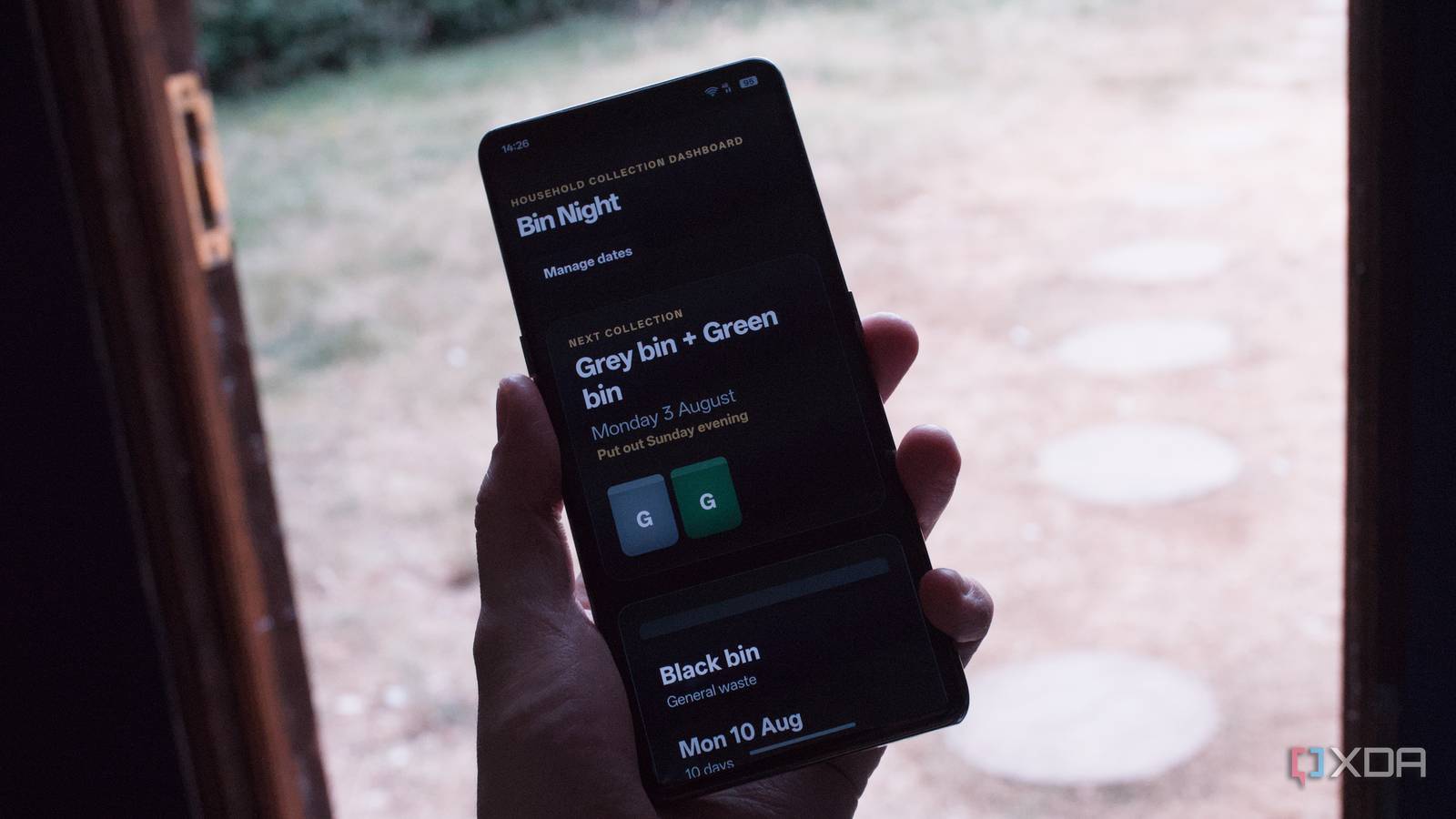
Published Jul 31, 2026, 4:00 PM EDT Richard is the PC Hardware Lead at XDA and has been covering the technology industry for almost two decades. He's been building PCs since young, and when not creating content, you can often find him inside a chassis somewhere. Large language models (LLMs) have made it so almost anyone can build an app or website with the right prompts and plenty of time to carefully curate the process and ensure everything is correctly put in place. We're huge proponents here at XDA of using AI tools to better our daily lives, improving various aspects of work and leisure. which is precisely what this technology should be used for. What's interesting, however, is how the best self-hosted tools could often be those people create for themselves. The best app is one made specifically for you It does everything you need and nothing else We've all been there when it comes to using websites, online services, and apps on phones and PCs. You'll use it, wonder why it does something specific this way instead of another, and consider what it would be like if you could build your own version from the ground up. That's precisely what LLMs can provide. You can prompt a model to make a website, an app, or even a fully functioning online service. It all depends on what you plan to build and how you can prompt it effectively to achieve the right result. I've done this for a few things I wanted to replace. For self-hosting financial data, Ghostfolio is brilliant. It gets a lot right, but like I already wrote, it just doesn't do everything I need it to do. That's where a few hours and some prompting came into play. With the aid of a locally hosted LLM, I put together an investment and savings platform that could monitor all my savings, stock holdings, pensions, and more. Better still, I could provide access to my family for them to add their own accounts. It was all nicely wrapped up in a PHP and MySQL app, running on a low-power LAMP LXC, which served the needs flawlessly. I handled much of the grunt work and looked to the AI chatbot to lend a hand with some more of the in-depth stuff regarding API access and the like. It all came together nicely, but it's not something I would share online. Why? Because this is heavily tailored to my immediate needs and isn't something I've bloated slightly to ensure a broader appeal. That's why I bet we have some absolute gems hidden out there. But a certain level of care needs to be taken when it comes to building new apps and services to self-host. Like the doctrine surrounding AI-assisted code being added to the Linux kernel, so long as you're confident the code works and has no issues, you'll take full responsibility for it once it's public. Using your own apps and coded tools is fine when it's locked within your own LAN, but it's a whole different game out in the wild. It's why I'm comfortable with vibe coding, as you still need to test everything and understand the important parts. If you don't know how the underlying code works, the AI can't really do much for you since even the agent is limited in the scope of development without more specific prompting. If the interface feels clumsy, you can describe the layout you want and iterate until it looks right. For self-hosters with a Raspberry Pi, mini PC, NAS, or Proxmox node ready to go, that makes creating small personal tools far more accessible. There's always space for just one more app It's very much similar to completing another Civilization turn Just like finding ways to improve our lives, building a self-hosted app or service is a great way to not only learn something new but also accomplish tasks and streamline daily workloads more. And these handy creations can be as extensive as a deployable LXC or as simple and compact as a single one-line script. It's incredibly easy to get up and running with your own content, and yet there's going to be quite the step to take to bring it to market. This is almost by design. The moment you publish an app or container, you'll have people accessing and using it with differing expectations. Again, this is no longer an app that's solely designed for you alone. It's now something that needs to meet the needs of as many users as possible. Not everyone will have the same hardware; some will likely try to run it on devices you have no access to. All this needs to be taken into account and supported post-release. A private app doesn't have all this burden and is able to breathe freely with more relaxed requirements. And really, these apps can be as basic-looking as they come. No one else is likely going to use it outside of those who gain access. If it's a tool that will only ever be used by you alone, why would you spend time making it look pretty? Not unless you wish to do so, of course—fear not, as I'm in the same camp. A privately developed app for the home may be an inventory system for household goods and food, or it could be a heavily tailored energy monitoring dashboard. But it doesn't really matter what the app you create actually does, nor how long the code is. It all boils down to how much time is saved. If a single-line script can save you valuable minutes renaming files, etc., it may be notably more valuable than a feature-packed web app that's rarely opened, and that's what makes custom self-hosted tools so brilliant. They're more accessible with LLMs of today, yet they have the power to completely change your way of life. For instance, I gave Qwen3.6 a task to create a very simple app that shows which bin needs to be put out for collection. It created a simple dashboard using PHP and MariaDB as the backend for storing data and provided a JSON API in which Homepage could pull the necessary information. What was particularly good was the creation of a regular cron-based scraper, which loads our local authority's website for accurate dates to fill the DB. The API can be accessed by Homepage to show which bin day it is without needing to load up our local authority website. It works on phones, tablets, PCs, and more, as well as any browser at home configured to load Homepage as the starter screen for each new tab and window. It's not something I've felt like I should publish anywhere because it is that simple, but it's helpful enough to make our lives that little bit easier. You can have more fun coding Even if you're not terribly proficient with computer code languages, building and managing your own apps that only you use can make it much more fun. I don't have any stresses about deadlines or having to deal with tickets and support requests. No one will have a feature request since I build all our scripts and apps for the household with everyone in mind who will use it, and while none of them will receive a GitHub star or recognition, it will always have a spot on my home lab server stack.
The best self-hosted apps are the ones you build yourself; it's why I stopped searching for perfect software
Full Article
Original Source
Read the full article at Xda-developers →KhanList aggregates and links to publicly available news content. We do not host full articles from third-party sources. Always verify important information with original sources.