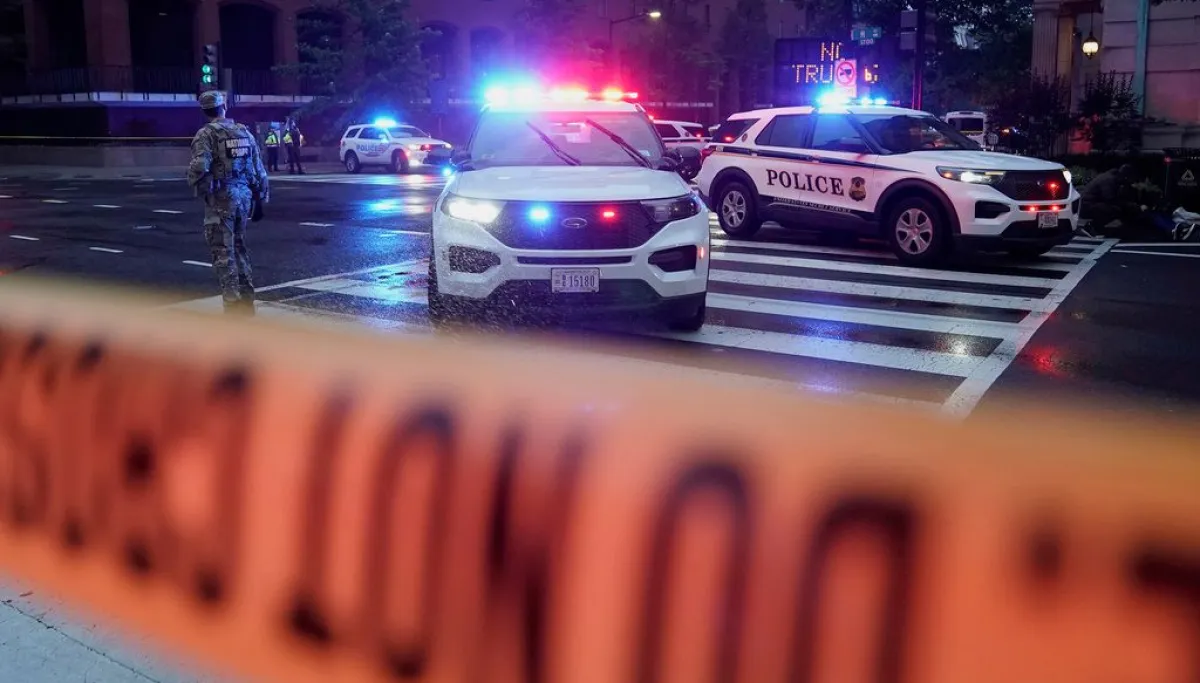
Growing up in Auburn, Alabama, crime never paralyzed me. It was rarely more than intoxicated college students and the occasional shoplifting. But every crime carries widespread costs.I witnessed this firsthand when Tuskegee, a small rural town 20 miles southwest of Auburn, got a Walmart. Despite the exciting news and needed business, soon after the store opened, it closed. The sheer quantity of theft from shoppers and employees made the store grossly unprofitable. After the closure, Tuskegee’s mayor sadly admitted that “a large amount of unpaid checks, a high rate of utility payments, and a large amount of theft” caused the business to close. One of the forgotten consequences of crime is its vast toll on the economy. Crime’s chaotic personality naturally causes economic ills. Every offense creates a cascade of costs: the initial damages, the ensuing lost productivity, and the thousands spent on legal costs. Not to mention that violent crimes are calculated to cost the economy millions. Every theft, arson, and murder forces each of the 340 million Americans to pay for its consequences. For many, crime is not a day-to-day occurrence, but even if you do not notice crime, it fundamentally shapes your lifestyle. From fumbling with a steering wheel lock in a parking lot to how you carry yourself near strangers at night, the shadow of crime looms over everything you do. Major life decisions like where you live, where your children go to school, and where you work are all influenced in some way by crime. Our nation has to confront the crippling cost and scale of crime. In 2024, there were 1.2 million violent crimes and 6 million property crimes across the nation. Every single one of these offenses had a victim, and every offense left a mark on the victim. Those millions of evil offenses came with a staggering annual price tag of $5 trillion to $7 trillion. An almost unfathomable negative economic impact comes from crime. Even on the low end, crime loses more than the $5 trillion the federal government collected in total revenue for fiscal 2025. Preventing and solving crime alone is expensive. We spend a grand total of $237 billion annually on police departments to mitigate the effects of crime. The burden strongly falls on the municipal and state levels, with our cities and states being forced to spend $176 billion on state and local police resources. Just to mitigate the crime epidemic, New York City is forced to allocate $10 billion for the New York Police Department’s budget. Even President Donald Trump’s deployment of the National Guard costs the federal government $93 million per month, totaling a costly bill of $1.1 billion a year. BEHIND THE RECOVERY: WHAT IT TAKES TO FIND A MISSING CHILDCrime’s carcinogenic effect indiscriminately harms everyone. Wherever crime becomes prevalent, communities are stunted. Its effects become entrenched, creating a cycle of urban decay, economic displacement, population decline, blight, and social fragmentation. These factors lead shackled, crime-ridden communities into higher rates of food deserts, poverty, and mental illness. In the case of many communities around America, much like the ouroboros, the cycle of crime may never end.The disturbingly enormous economic burden we carry because of crime is unacceptable. Being tough on crime and bringing justice means helping the victims and the economy. The once affordable, beautiful American dream of the white picket fence and our former high-trust society are being killed thanks to crime. We must secure the existence of our people and a future for our children, and the only way we can do this is by fighting crime. To improve our economy, we must stop crime.Grayson Ryland is a regional field manager at the Leadership Institute.
The $7 trillion invisible tax: How crime is robbing every single American
Full Article
Original Source
Read the full article at Washingtonexaminer →KhanList aggregates and links to publicly available news content. We do not host full articles from third-party sources. Always verify important information with original sources.