
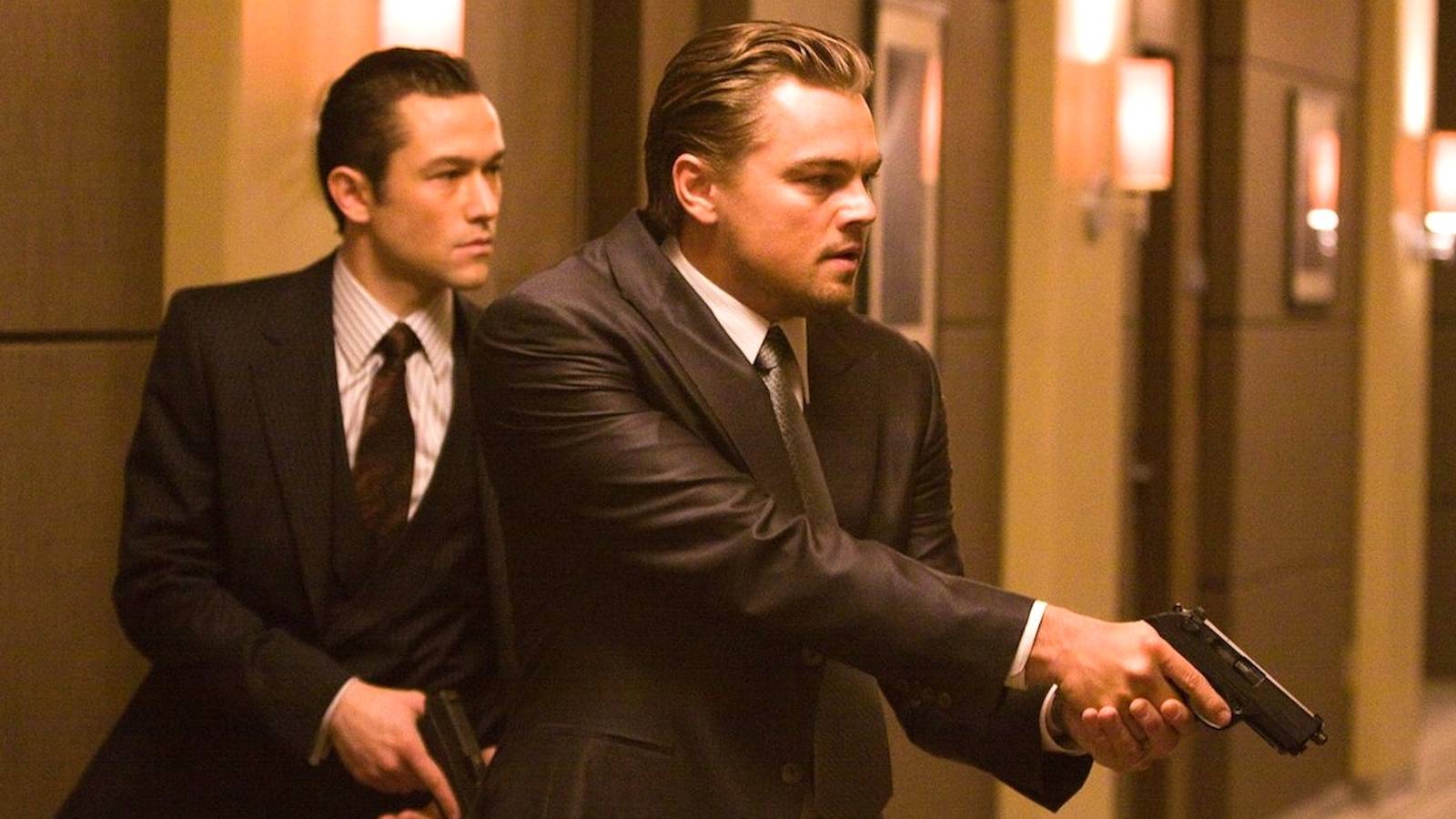
Image via Warner Bros. Published Oct 1, 2026, 7:44 AM EDT Sign in to your Collider account Spy movies already run on paranoia. Add science fiction and suddenly the person following you might be a machine, the building might fold in half, time itself might be sabotaging the mission, or the agency you trusted for years might have been compromised before you ever joined it. That combination is ridiculously fertile because espionage is really about information, and sci-fi lets information become a weapon with almost no ceiling. The danger is ending up with gadgets instead of tension. The great ones avoid that. Their technology complicates the mission rather than replacing it. A jetpack is only useful if somebody is shooting at you. A dream machine is only interesting if the wrong memory can blow the operation. A time inversion device is still useless if you misunderstand what already happened. That is where these six become much more than spies with cooler toys. 6 'Moonraker' (1979) Image via MGM James Bond (Roger Moore) is sent to investigate the disappearance of a Moonraker space shuttle that was being transported to Britain, and the trail leads him to industrialist Hugo Drax (Michael Lonsdale), whose aerospace empire is hiding a much larger plan. Moonraker starts as a familiar Bond investigation involving stolen technology, suspicious scientists, and corporate secrecy before steadily expanding into laboratories, secret launch facilities, orbital stations, and a scheme to wipe out humanity and repopulate Earth with a handpicked group. The movie is completely aware that it has gone too far and keeps going anyway. Bond survives a free-fall fight without a parachute, gets chased through Venice in a gondola that turns into a hovercraft, and eventually ends up in a laser battle in space. Jaws (Richard Kiel) returns and somehow becomes both a physical threat and a romantic subplot. The sci-fi material is enormous, but the spy-movie skeleton is still there underneath it. Bond is following clues, infiltrating facilities, identifying Drax’s real objective, and trying to stop a plan nobody around him initially believes exists. It is excessive in exactly the way late-1970s Bond should be. 5 'Spy Kids' (2001) Image via Dimension Carmen (Alexa Vega) and Juni Cortez (Daryl Sabara) think their parents are painfully ordinary until Gregorio (Antonio Banderas) and Ingrid (Carla Gugino) disappear during a mission and the kids discover both parents used to be elite international spies. Spy Kids follows the siblings as they enter that hidden world, uncover a plot involving kidnapped agents and robotic duplicates, and try to rescue their parents despite having almost no field experience and a warehouse full of gadgets they barely understand. The genius is how seriously the movie takes a child’s idea of espionage. The safe house is full of impossible technology. The Thumb-Thumbs are exactly what the name suggests, walking henchmen made almost entirely of thumbs. Floop (Alan Cumming)’s castle looks like a television set designed during a fever dream. Juni gets gadgets that are theoretically useful and immediately uses them badly. Carmen has to stop treating her brother like dead weight long enough for them to function as a team. Under all the cartoon machinery, the mission is simple and strangely sincere. Two kids find out their parents had an entire life before them and then have to become capable enough to save it. 4 'Kingsman: The Secret Service' (2014) Image via 20th Century Studios Eggsy (Taron Egerton) is a smart, angry young man from a rough London estate whose life changes when Harry Hart (Colin Firth) recruits him into Kingsman, an independent spy organization disguised behind a luxury tailor shop. Kingsman: The Secret Service follows Eggsy through brutal recruitment tests while Harry investigates billionaire Richmond Valentine (Samuel L. Jackson), whose plan to solve climate change involves distributing free technology that can trigger violent aggression in huge parts of the population. That mix of old-school spy fantasy and modern sci-fi lunacy is why the movie moves so well. The tailored suits, hidden weapons, coded manners, and secret rooms make espionage feel glamorous again, then Valentine’s tech drags everything into something much nastier. The church sequence is the movie’s point of no return. A signal activates the violent impulse in everyone inside, Harry gets trapped in the middle of it, and what follows is several minutes of horrifyingly efficient close-quarters combat. Later, exploding security implants turn a mass execution into a fireworks display of human heads. The movie is elegant enough to wear cufflinks and juvenile enough to think that is hilarious. Collider Exclusive · Sci-Fi Survival Quiz Which Sci-Fi World Would You Survive? The Matrix · Mad Max · Blade Runner · Dune · Star Wars Five universes. Five completely different ways the future went wrong — or sideways, or up in flames. Only one of them is the world your instincts were built for. Eight questions will figure out which dystopia, galaxy, or desert wasteland you'd actually make it out of alive. 💊The Matrix 🔥Mad Max 🌧️Blade Runner 🏜️Dune 🚀Star Wars TEST YOUR SURVIVAL → 01 You sense something is deeply wrong with the world around you. What do you do? The first instinct is often the truest one. APull on every thread until I understand the system — then figure out how to break it. BStop asking questions and start stockpiling — food, fuel, weapons. Questions don't keep you alive. CKeep my head down, observe carefully, and trust no one until I know who's pulling the strings. DStudy the patterns. Every system has a rhythm — learn it, and you learn how to survive it. EFind the people fighting back and join them. You can't fix a broken galaxy alone. NEXT QUESTION → 02 In a world of scarcity, what resource do you guard most fiercely? What we protect reveals what we believe survival actually requires. AKnowledge. If you understand the system, you don't need resources — you can generate them. BFuel. Everything else — movement, power, escape — runs on it. CTrust. In a world of fakes and informants, a truly reliable ally is rarer than any commodity. DWater. And after water, information — the two things empires are truly built on. EShips and credits. The galaxy is big — you survive it by being able to move through it freely. NEXT QUESTION → 03 What kind of threat keeps you up at night? Fear is useful data — if you're honest about what you're actually afraid of. AThat reality itself is a lie — that everything I experience has been constructed to keep me compliant. BA raid. No warning, no mercy — just the roar of engines and then nothing left. CBeing identified. Once someone with power decides you're a problem, you're already out of time. DBeing outmanoeuvred — losing a political game I didn't even know I was playing. EThe Empire tightening its grip until there's nowhere left to run. NEXT QUESTION → 04 How do you deal with authority you don't trust? Every dystopia has a power structure. Your approach to it determines everything. ASubvert it from the inside — learn its rules well enough to weaponise them against it. BIgnore it and stay out of its reach. The further from any power structure, the better. CAppear to comply while doing exactly what I need to do. Visibility is the enemy. DManoeuvre within it carefully. You can't beat a system you refuse to understand. EResist openly when I have to. Some things are worth the risk of being seen. NEXT QUESTION → 05 Which environment could you actually endure long-term? Survival isn't just tactical — it's physical, psychological, and very much about where you are. AUnderground bunkers and server rooms — cramped, artificial, but with access to everything that matters. BOpen wasteland — brutal sun, no shelter, constant movement. At least the threat is honest. CA dense, rain-soaked city where you can disappear into the crowd and nobody asks questions. DMerciless desert — extreme heat, no water, and something enormous living beneath the sand. EThe fringe — backwater planets and busy spaceports where the Empire's attention rarely reaches. NEXT QUESTION → 06 Who do you want in your corner when things fall apart? The company you keep is the clearest signal of who you actually are. AA tight crew of believers who've seen behind the curtain and have nothing left to lose. BOne or two people I'd trust with my life. Any more than that and someone talks. CNobody, ideally. Alliances are liabilities. I work alone unless I have no choice. DA community bound by shared hardship and mutual survival — people who need each other to last. EA ragtag team with wildly different skills and total commitment when it counts. NEXT QUESTION → 07 Where do you draw the line — if you draw one at all? Every survivor eventually faces a moment that tests what they're actually made of. AI won't harm the innocent — even the ones who'd report me without hesitation. BI do what I have to to protect the people I've chosen. Everything else is negotiable. CThe line shifts depending on who's asking and what's at stake. DI draw a long-term line — nothing that compromises my people's future, even if it'd help now. ESome lines, once crossed, can't be uncrossed. I know which ones they are. NEXT QUESTION → 08 What would actually make survival worth it? Staying alive is one thing. Having a reason to is another. AWaking others up — dismantling the illusion so no one else has to live inside it. BFinding somewhere — or someone — worth protecting. A reason to keep moving. CAnswers. Understanding what I am, what any of this means, before time runs out. DLegacy — shaping the future in a way that outlasts me by generations. EFreedom — for myself, for others, for every world still living under someone else's boot. REVEAL MY WORLD → Your Fate Has Been Calculated You'd Survive In…Your answers point to the world your instincts were built for. This is the universe your temperament, your survival instincts, and your particular brand of stubbornness were made for. The MatrixYou took the red pill a long time ago — probably before anyone offered it to you. You're a systems thinker who can't help but notice the seams in things. You're drawn to understanding how the system works before figuring out how to break it. You'd find the Resistance, or it would find you — your instinct for spotting constructed realities is the machines' worst nightmare. You function best when you have access to information and the freedom to act on it. The Matrix built an airtight prison. You'd be the one probing the walls for the door. Mad MaxThe wasteland doesn't reward the clever or the well-connected — it rewards those who are hard to kill and harder to break. That's you. You don't need comfort, community, or a cause larger than the next horizon. You need a vehicle, a clear threat, and enough fuel to outrun it — and you're good at all three. You are unsentimental enough to survive that world, and decent enough — just barely — to be something more than another raider. In the wasteland, that distinction is everything. Blade RunnerYou'd survive here because you know how to exist in moral grey areas without losing yourself completely. You read people accurately, keep your circle small, and ask the questions others prefer not to answer. In a city where humanity is a legal designation rather than a feeling, you hold onto something that keeps you functional. You're not a hero. But you're not lost, either. In Blade Runner's world, that distinction is everything. DuneArrakis is the most hostile environment in the known universe — and you are precisely the kind of person it rewards. Patience, discipline, and political awareness are your core strengths — and on Arrakis, they're survival tools. You understand that the long game matters more than any single victory. Others come to Dune and are consumed by it. You'd learn its logic and earn its respect. In time, you wouldn't just survive Arrakis — you'd begin to reshape it. Star WarsThe galaxy far, far away is vast, loud, and in a constant state of violent political upheaval — and you wouldn't have it any other way. You find meaning in being part of something larger than yourself — a cause, a crew, a rebellion. You'd gravitate toward the Rebellion, or the fringes, or whatever pocket of the galaxy still believes the Empire's grip can be broken. You fight — not because you have to, but because standing aside isn't something you're capable of. In Star Wars, that willingness is what makes all the difference. ↻ RETAKE THE QUIZ 3 'Captain America: The Winter Soldier' (2014) Image via Marvel Studios Steve Rogers (Chris Evans) is working for S.H.I.E.L.D. after the events of New York when Nick Fury (Samuel L. Jackson) becomes suspicious of Project Insight, a new surveillance system built around heavily armed helicarriers and an algorithm designed to identify future threats. Captain America: The Winter Soldier follows Steve as Fury is attacked, S.H.I.E.L.D. turns against him, and he discovers that HYDRA has spent decades growing inside the organization while preparing to eliminate millions of people before they can ever become a problem. The sci-fi idea is frightening because the machinery is only half of it. The real weapon is prediction. Arnim Zola (Toby Jones)’s algorithm uses personal data, history, behavior, and probability to decide who might someday resist HYDRA, then Project Insight is supposed to kill those people preemptively from the sky. Steve’s problem is therefore bigger than stopping three helicarriers. He has to accept that the institution he trusted is structurally rotten. The elevator fight captures the whole movie in miniature. Steve realizes everyone around him has turned hostile, politely asks whether anyone wants to get out, and then fights his way through the trap. That is spy paranoia translated perfectly into superhero language. 2 'Tenet' (2020) Image via Warner Bros. A CIA operative known only as the Protagonist (John David Washington) is recruited into a secret organization after surviving an operation in Kyiv and learning that objects can move backward through time because their entropy has been inverted. Tenet follows him as he traces that technology through arms dealer Priya (Dimple Kapadia), Russian oligarch Andrei Sator (Kenneth Branagh), and a future conflict in which people decades from now are trying to manipulate the present by sending inverted weapons and information backward. The movie becomes far easier to love once you stop trying to treat inversion like a puzzle that needs to be solved before you can enjoy it. The airport fight is the cleanest example. The Protagonist battles a masked opponent moving in the wrong temporal direction, then later experiences the same encounter from the other side and realizes exactly who he was fighting. The Tallinn highway chase pushes that even further, with cars moving through the same event in opposite directions and cause arriving after effect. Underneath all the temporal physics, though, the story is still espionage. Assets lie. Meetings are compartmentalized. Nobody gets complete information. Neil (Robert Pattinson) knows more than he can safely say. The strangest technology in the movie never changes the oldest spy rule: trust is always expensive. 1 'Inception' (2010) Image via Warner Bros. Dom Cobb (Leonardo DiCaprio) is an extractor who enters shared dreams to steal information from people’s subconscious minds, but a wealthy businessman offers him something much harder in exchange for clearing the criminal charges keeping him away from his children. Inception follows Cobb and a handpicked team as they attempt inception, planting an idea inside heir Robert Fischer (Cillian Murphy) so deeply that he will believe the thought originated from himself. To do that, they build multiple dream levels, synchronize sedatives and “kicks,” and enter a mission where time stretches differently on every layer. What makes the movie such a perfect spy film is how much of the operation is social engineering. Eames (Tom Hardy) impersonates people Fischer trusts. Ariadne (Elliot Page) designs spaces that feel believable enough to trap him. Arthur (Joseph Gordon-Levitt) manages logistics. Cobb studies Fischer’s relationship with his father and turns that emotional wound into the opening they need. The rotating hallway fight gets remembered because gravity disappears when the van in the level above rolls off the road, but the bigger thrill is watching every layer affect every other layer at once. One bad decision travels downward. One missed kick can strand everyone. And Cobb’s dead wife Mal (Marion Cotillard) keeps appearing inside missions because his own subconscious is effectively a hostile intelligence service. The technology is wild. The paranoia is pure spy cinema. Inception Release Date July 16, 2010 Runtime 148 minutes
The 6 Best Sci-Fi Spy Movies, Ranked
Full Article
Original Source
Read the full article at Collider →KhanList aggregates and links to publicly available news content. We do not host full articles from third-party sources. Always verify important information with original sources.