
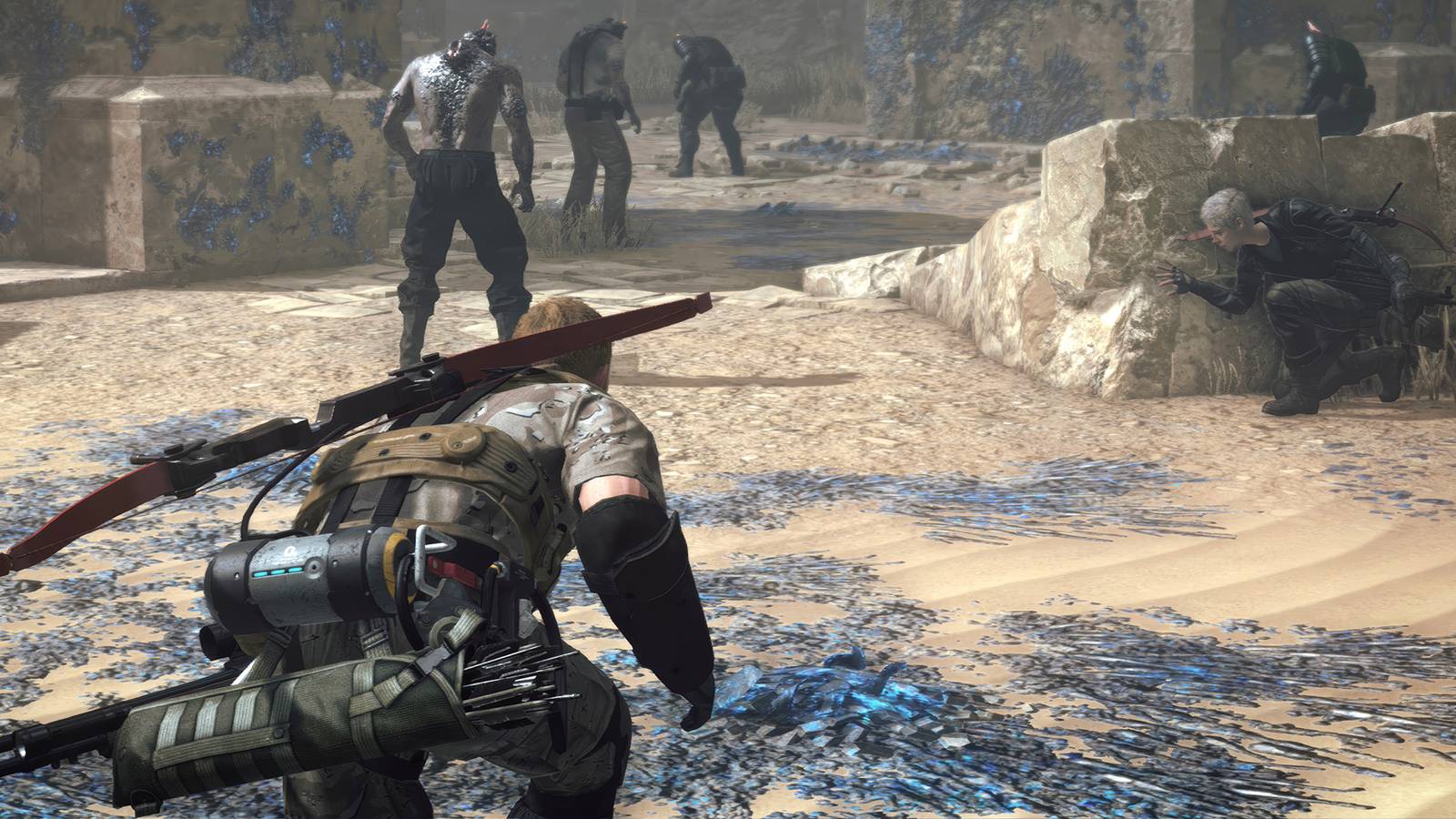
Published Sep 26, 2026, 6:02 AM EDT Writing from the Chicagoland area in Illinois, Robert is an avid movie watcher and will take just about any excuse to find time to go to his local movie theaters. Robert graduated from Bradley University with degrees in Journalism and Game Design with a minor in Film Studies. Robert tries his best to keep up with all the latest movie releases, from those released in theaters to those released on streaming. While he doesn't always keep up with the latest TV shows, he makes it a goal to watch nearly every major new release possible. He has been honing his craft and following any and all movie news all his life, leading up to now, where he has a vast knowledge of film and film history. He also logs every movie that he watches on his Letterboxd page, and has hosted a weekly online movie night with his closest friends for over 6 years. Sign in to your Collider account Video games as an art form reached new heights of popularity and success in the 2010s, cementing them as the dominant artistic medium and entertainment industry of the 21st century and beyond. However, for all of the great successes and monumental growth that gaming saw during the era, it wasn't without its failures and pitfalls, as there were also several games that were infamously disastrous in their lack of quality. These bad games took all styles of forms, ranging from poorly executed ideas to games crippled by rushed development and crunch. It reaches a point where many of these games have earned a reputation not for any potential qualities, but as some of the worst gaming experiences of the era. Ranging from those entirely forgotten due to their mediocrity to games that are unforgettably infamous as some of the worst games of all time, these unfortunate icons of gaming failure are the absolute worst that the 2010s have to offer. 10 'Amy' (2012) One specific archetype of gaming release that saw massive prominence and growth in the 2010s was the lower-budget, digital-exclusive downloadable title. While games like The Walking Dead and Bastion found great success through this format, Amy was an often-forgotten relic of failure attempting to capitalize on survival horror trends of the era. The game's primary selling point is its dual player characters, utilizing the duo of Lana and young girl Amy to solve puzzles and quietly navigate around deadly monsters. Considering the fact that the entire game centers around the importance of keeping this child safe and the relationship of the two leads, it makes it all the more egregious that the gameplay elements involving Amy are notoriously annoying and arduous to complete. Throughout the course of the game, it manages to accomplish the complete opposite goal by making the player detest and be enraged by Amy's poorly made AI. It also certainly doesn't help that the scares aren't effective, the story is incredibly generic, and it just doesn't run well on either the PS3 or Xbox 360. 9 'Paper Mario: Sticker Star' (2012) While not as immediately recognizable as other Mario games, the Paper Mario series has carved out a niche for itself thanks to the charm of its paper craft aesthetic and the simple fun of its gameplay. However, Paper Mario: Sticker Star completely forgoes the previous strengths of the series to create one of the largest dips in quality for any Nintendo franchise. While previous Paper Mario games created their own vast worlds with original characters and stories, Sticker Star abandons this for the basic Super Mario aesthetic that, while fun in a platforming setting, wasn't interesting to see in Paper Mario. Even worse than these aesthetic choices is the game's primary combat mechanic, as instead of a simple yet layered RPG system or a fun 2D platformer in Super Paper Mario, Sticker Star's entire combat relies upon the collectible stickers. It's a JRPG without any XP, making every non-required fight an absolute waste of both time and resources. Its fights act more as puzzles instead of actual fights, yet when the puzzles are either incredibly easy or impossibly archaic to understand, the entire game becomes a test of patience and frustration. 8 'Umbrella Corps' (2016) The continuous balancing act that has been done between the horror and action elements of the Resident Evil franchise has resulted in several misaligned failures that completely misunderstood the appeal and strengths of this franchise. However, none of these misfires are more infamous than Umbrella Corps, a tactical shooter that combines competitive multiplayer with zombies for an absolutely horrendous final product. The game had hopes of following in the footsteps of games like Rainbow Six Siege, yet no singular Resident Evil fan wanted a generic multiplayer shooter out of the franchise. It's an incredibly forgettable first-person shooter game that has inklings of Resident Evil sprinkles placed over it, creating an experience that was never going to appeal to either Resident Evil fans or fans of traditional tactical shooters. With no interest in the game resulting in a hilariously low player count, the game failed as soon as it launched. Ironically, the game released a week after the announcement of Resident Evil 7: Biohazard, immediately painting the game as this awkward final reminder of when Resident Evil cared more about action than horror. 7 'Aliens: Colonial Marines' (2013) Licensed tie-in video games are always a mixed bag of quality, yet Aliens: Colonial Marines in the lead-up to its release showed so much promise that gamers were expecting it to be one of the very best tie-in games. However, the game instead became one of the greatest examples of false advertising in video game history, with the final game having considerably worse graphics quality than trailers and even demos sent to the press. Combined with an overwhelming amount of technical problems and bugs that made the game near-unplayable and an incredibly short length, Colonial Marines was the type of disastrous disappointment that sent ripples throughout the entire industry. It had some of the largest controversies and anger from fans of any video game of the 2010s, with there even being an attempted lawsuit being filed due to its false advertising. Hilariously enough, several of the game's flaws stemmed from developers Gearbox Software prioritizing the next game on this list instead of Colonial Marines. 6 'Duke Nukem Forever' (2011) For over 14 years, Duke Nukem Forever has stood as this absolute icon of video game delays and the immediate go-to example of development hell and a game that was seemingly never going to be released. As it changed engines, developers, and platforms over the years, the game managed to finally get finished in 2011, when it not only disappointed fans but felt outright embarrassing to witness. It became immediately apparent that the crass humor and simplistic FPS gameplay that worked wonders in the 90s simply didn't land nearly as well in the 2010s. The game did surprisingly little to update the series and evolve it into the age of modern gaming, simply hoping that nostalgia and generic parody would be enough to entice long-time fans of this classic video game icon. Generic gameplay, tired clichés, and dated unfunny humor only served to annoy many modern gamers instead of charming them. It ended up being the final nail in the coffin for Duke as a character, as there hasn't been another Duke Nukem release in the 15 years since this game's monumental failure. Collider Exclusive · Universe Personality Quiz Which Iconic Universe Do You Belong in the Most? Star Wars · Lord of the Rings · Harry Potter · Game of Thrones · Star Trek Five legendary universes. Five completely different visions of what the world could be — or already was. One of them is the world your instincts, your values, and your particular way of existing were built for. Eight questions will tell you which one. 🚀Star Wars 💍Lord of the Rings 🧙Harry Potter 👑Game of Thrones 🖖Star Trek FIND YOUR UNIVERSE → 01 What gives your life its deepest sense of meaning? Every universe is built around a different answer to this question. ABeing part of something larger than myself — a cause, a rebellion, a fight for freedom that outlasts me. BThe journey itself — the places I'll go, the companions beside me, the world I'll discover on the way. CLearning — unlocking what I'm capable of, understanding the world's hidden mechanics, growing into something more. DLegacy — the name I leave behind, the power I build, the mark I make before the world moves on without me. EUnderstanding — exploring what exists beyond the horizon and asking what it means to be alive in a universe this vast. NEXT QUESTION → 02 Which kind of world do you most want to inhabit? The environment shapes who you become. Choose carefully. AA galaxy of planets, each with its own culture — connected by conflict, trade, and the Force. BAncient lands of breathtaking beauty, deep history, and a creeping darkness at the edges. CA world hidden inside our own — full of wonder, community, and magic waiting to be learned. DA brutal, beautiful continent where power is everything and every alliance is a calculation. EA future where humanity has reached the stars — and must decide what kind of species it wants to be. NEXT QUESTION → 03 How do you prefer your conflicts resolved? The shape of a world's conflicts tells you everything about its soul. AThrough sacrifice and courage — someone has to make the impossible choice so others don't have to. BThrough fellowship — the impossible becomes possible when the right people walk the same road. CThrough growth — confronting what you fear, understanding what you lack, and becoming equal to the challenge. DThrough strategy — outthinking, outmaneuvering, positioning yourself so the outcome was never in doubt. EThrough dialogue — finding the third option, the peaceful resolution, the answer that doesn't require a body count. NEXT QUESTION → 04 Who do you want beside you when things get difficult? Your ideal companions reveal the world you were made for. AA small crew — a pilot, a rogue, a warrior — each broken in their own way, unbeatable together. BA fellowship of different kinds of people, bound by purpose and deepened by the long road. CFriends who grew up alongside me — who knew me before I knew myself, and stayed anyway. DAllies whose loyalty I've earned — and tested — and whose ambitions align with mine, for now. EA crew of brilliant, curious, principled people from every corner of known space. NEXT QUESTION → 05 What is your relationship with power? How you seek, wield, or resist power is the map of who you are. AI want to use it to protect — and I'm terrified of what I might become if I'm not careful. BI distrust it. The most important power in this story is the courage to give it up. CI want to earn it — through knowledge, through effort, through becoming someone worthy of it. DI want to wield it. Preferably before someone else decides to wield it against me. EI want to understand it — its structures, its limits, its ethical dimensions. Power without accountability is the real threat. NEXT QUESTION → 06 How does your universe treat good and evil? A world's moral architecture tells you more about it than any map. AThere is a dark side and a light side — and the choice between them is always present, always personal. BEvil is real and ancient and patient — and goodness, however small, is the only thing that can undo it. CGood and evil are real, but they live inside people — and people are complicated, always capable of both. DGood and evil are mostly a matter of perspective and proximity. Power is the only honest currency. EEvil is usually the result of ignorance, fear, or broken systems — and understanding it is the first step to solving it. NEXT QUESTION → 07 What role would you naturally fall into? Every universe has archetypes. Which one fits you without trying? AThe reluctant hero — ordinary origins, extraordinary moment, changed forever by the choice to act. BThe unlikely carrier — the one nobody expected to matter most, quietly bearing the weight of everything. CThe student — not yet who I'll become, learning through every mistake, growing into something the world needs. DThe player — sharp enough to see the game for what it is, ambitious enough to try to win it. EThe explorer — drawn to the unknown, driven by curiosity, most alive when standing somewhere no one has stood before. NEXT QUESTION → 08 What do you ultimately believe about the future? The answer to this is the clearest window into which universe already lives inside you. AThat hope is real — that even in the darkest galaxy, a new hope is always possible. CThat even the smallest person can change the course of the future, if they have the courage to try. CThat love and friendship and doing what's right will matter in the end, even when everything says otherwise. DThat the wheel keeps turning — that power shifts, winters end, and what endures is those willing to fight for it. EThat humanity — or whatever we become — is capable of extraordinary things, if we choose to be. REVEAL MY UNIVERSE → Your Universe Has Been Chosen You Belong In…Your answers point to the iconic universe your values, your instincts, and your particular way of seeing the world were built for. This is where you would find your people — and your purpose. Star WarsYou believe in the cause — in the idea that freedom is worth fighting for even when the odds are impossible and the empire is vast. You are drawn to the moral clarity of a universe where hope itself is a form of resistance. You'd find your people in the Rebellion — a ragtag coalition of true believers held together by conviction more than resources. Star Wars is fundamentally a story about ordinary people choosing to matter in an extraordinary conflict — and that is exactly your kind of story. The Force may or may not be with you. But the will to use it for something larger than yourself certainly is. Lord of the RingsYou understand, in the deepest part of yourself, that the journey matters as much as the destination — and that the world's beauty is worth protecting even at great cost. Middle-earth is a world of ancient wonder, deep friendship, and a darkness that only retreats when enough small acts of courage accumulate. You would thrive here because you value the fellowship more than the glory — the road more than the arrival. Tolkien's universe rewards patience, loyalty, and the willingness to carry something heavy across a very long distance. Those are not burdens to you. They are simply how you move through the world. Harry PotterYou believe that love, loyalty, and doing what's right are not naive sentiments — they are the most powerful forces in any world, magical or otherwise. The Wizarding World is a place of wonder hidden in plain sight, where learning is transformative and the bonds you form at school follow you into every battle. You would flourish here because you take both the magic and the friendships seriously — and you understand that one without the other is incomplete. Harry Potter's universe ultimately rewards those who choose to stand for something even when standing is terrifying. That choice — made quietly, without guarantee — is something you understand completely. Game of ThronesYou see the world clearly — its power structures, its hypocrisies, its brutal arithmetic — and you are not paralysed by that clarity. You use it. Westeros is a world that rewards intelligence, adaptability, and the willingness to understand that every alliance is also a negotiation. You would survive here — possibly thrive here — because you don't confuse the world as it is with the world as you'd like it to be. Game of Thrones is a story about what happens when the idealists and the realists collide. You are sharp enough to know which one lasts longer. Winter always comes. You are already prepared. Star TrekYou believe the future is worth building — that curiosity, cooperation, and the expansion of understanding are not just ideals but the most practical path forward for any civilisation. Star Trek is a universe where the questions matter as much as the answers, and where encountering something utterly alien is cause for wonder rather than fear. You would belong here because you are fundamentally optimistic about what intelligence and decency can achieve — while being honest about how hard that achievement is. The Federation is the universe's most ambitious thought experiment: what if we actually got better? You don't just hope that's possible. You think it's the only thing worth working toward. ↻ RETAKE THE QUIZ 5 'Wreck-It Ralph' (2012) Considering the fact that the fan-favorite Disney movie's entire concept and inception revolves around the fun and creativity of video games, it's all the more iconic and painful that the video game adaptation of Wreck-It Ralph is so abysmal in its execution. It's the clearest example of a cheap, made-for-profit movie tie-in game that the 2010s have to offer, with laughably bad cutscenes and the entire game able to be beaten in a few hours. It certainly wants to pay tribute to some of the same 2D platformers that inspired the original movie, yet without any understanding of what made these games so great, the final product is a painfully generic mess of ideas that is forgotten by the time the credits roll. There is a sardonic humor to be had in the video game adaptation in a movie about video games being so poorly made, but even worse is the fact that this game wasn't even memorable in its lack of quality. 4 'Tony Hawk's Pro Skater 5' (2015) The Tony Hawk's Pro Skater franchise was a pillar of quality in the early 2000s, at the apex of skateboarding video games and perfectly paralleling the renegade skater culture of the era. However, much like the declining popularity of skateboarding culture, the franchise largely fell out of popularity in the 2010s, with Activision releasing Tony Hawk's Pro Skater 5 at the literal last minute before their licensing deal with Tony Hawk would expire. As a result, Pro Skater 5 was hastily put together in a few months and released in a completely unfinished state, completely bastardizing a fan-favorite franchise and spitting in the face of fans who were waiting years for a new game in the series. It's an embarrassing case of profit-maximizing not only getting in the way of a game's success, but acting as the only reason for the game's very existence, creating a soulless husk of gaming and an incredibly disappointing sequel. 3 'Sonic Free Riders' (2010) One seemingly inescapable trend of 2010s gaming that has largely gone by the wayside is the abundance of motion controls. Through the Nintendo Wii, PlayStation Move, and Xbox Kinect, every gaming studio was trying to create experiences tailored to non-gamers with physical motion as the main method of gameplay. While there were certainly games that found success, many failed to adapt to the concept, with one of the worst examples of such being Sonic Free Riders, a racing game requiring Kinect motion controls to play. An unlikely candidate for what could be the worst game in the Sonic the Hedgehog franchise, Sonic Free Riders isn't just poorly made in its implementation of Kinect controls, but is outright unplayable with how unresponsive this control scheme is. Especially for a racing series that was previously defined by precision and slick tricks, the motion controls slow the feel of the game down to a crawl and make it an arduous task to even move. While Metal Gear is massively celebrated as one of the greatest video game franchises out there, a great deal of its success and ingenuity is attributed to series creator Hideo Kojima. This meant that the separation of Kojima and Konami in 2015 placed the series in a state of unknown limbo, as it wouldn't be known what would happen to the series without Kojima's leadership. The answer ended up being Metal Gear Survive, which was worse than even the lowest expectations of what Metal Gear without Kojima would be. Metal Gear Survive is a survival action game with tower-defense elements and minor stealth elements where the player explores a world overrun by zombie-like creatures known as "wanderers". Anyone even slightly familiar with Metal Gear as a franchise can point out how idiotic this concept is, yet the repetitive gameplay and egregious microtransactions took an already bad concept and made it into a true nightmare. Metal Gear hasn't had a fully original game since this release, and without Kojima at the helm, it's difficult to see any real future for the franchise. 1 'Ride to Hell: Retribution' (2013) While every other game on this list was notoriously bad for the era, Ride to Hell: Retribution goes a step beyond in terms of terribly constructed gameplay and visuals to make for not just the worst game of the 2010s, but easily one of the worst video games of all time. The game sees the player as a hardened biker on a quest for revenge, taking down each member of the biker gang that killed his brother. Whether it be through awkward driving segments or terrible third-person shooter levels, Ride to Hell: Retribution is a glitchy, unplayable mess from beginning to end. Even if the game were working as intended, its terrible visuals, laughably bad dialogue, and uninspired gameplay don't do anything to make the game worthwhile. The game even finds room to be outright misogynistic in its depiction of women as sex rewards for the player, just for good measure. It's one of the closest that a video game has gotten to recreating the feel of a so-bad-it's-good movie, where its failures are so abundant and in your face that one cannot help but laugh at the stupidity and low quality on display.
The 10 Worst Video Games of the 2010s, Ranked
Full Article
Original Source
Read the full article at Collider →KhanList aggregates and links to publicly available news content. We do not host full articles from third-party sources. Always verify important information with original sources.