
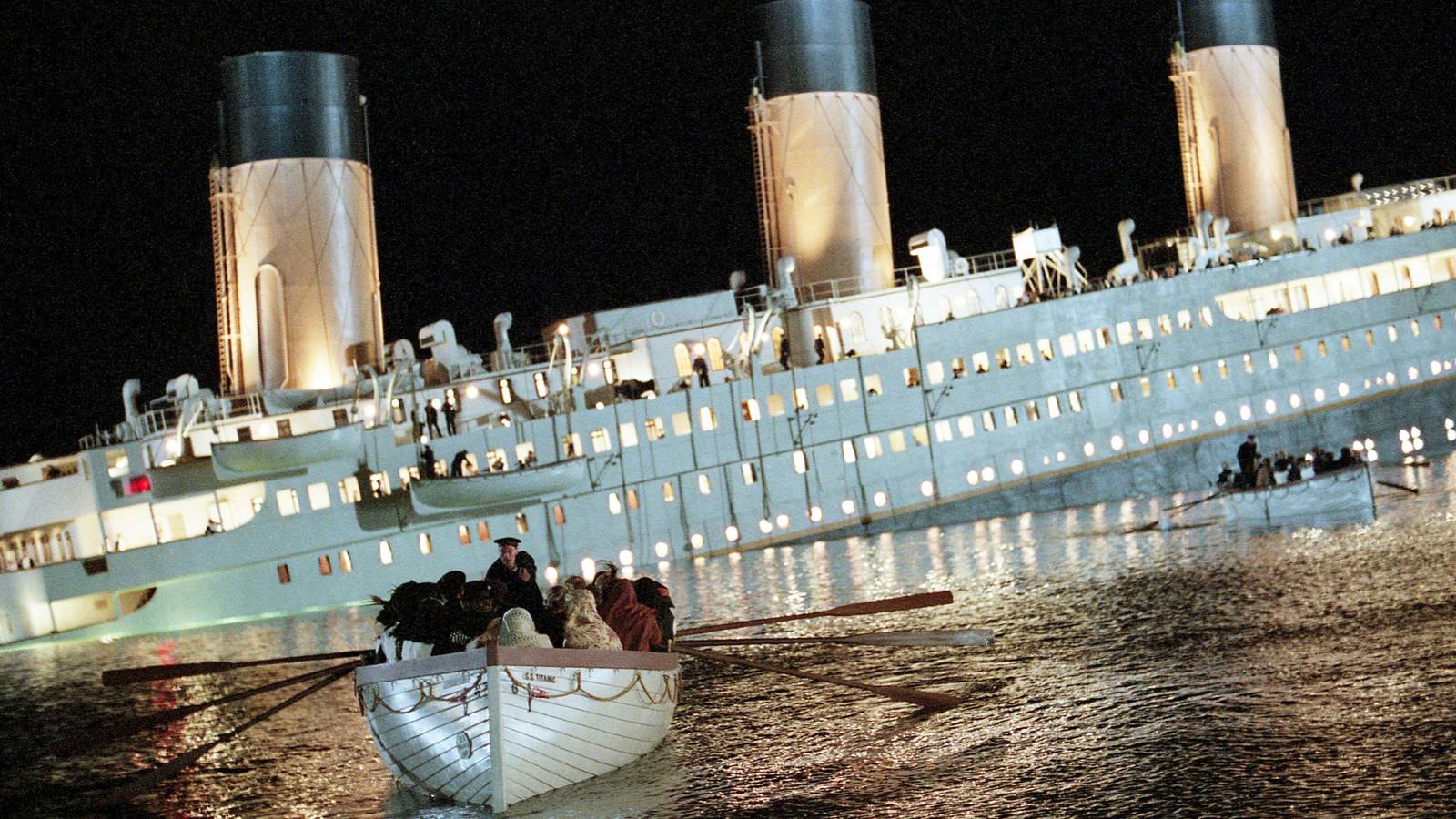
Image via Paramount Pictures Published Sep 8, 2026, 7:03 AM EDT Michael Block is a 14 time GLAM Award nominated writer, producer, and host of the podcast Block Talk. Throughout his time in the entertainment industry, he has worked on and off Broadway as a stage manager, written several produced plays, critiqued hundreds of theatrical performances, drag and cabaret shows, and has produced events randing from drag competitoons to variety concerts! On Block Talk, he interviews nightlife personalities, covers the wide world of entertainment through features, ranking episodes, and recaps ALL of Drag Race, as well as Dragula and Survivor. He has interviewed hundreds of RuGirls that span the globe at DragCon NYC, DragCon LA, and DragCon UK. In his free time, he makes one-of-a-kind jewelry and gift baskets with his mom. He is a proud member of the LGBTQ+ community. Sign in to your Collider account They say when you see a train wreck or a car crash, you can't look away. It's the fascination of seeing a disaster unfold that you're not a part of. Our curiosity paints a picture of what happened and what the aftermath might be. That's why disaster movies are so alluring—you get the entire story laid out for you! Hollywood has provided cinema with some of the greatest disaster films of all time. From human-made errors to natural devastations, these disasters have provided a brilliant source of thrills that we simply can't look away from. Though these may be stressful scenarios, the magic of cinema has made them entirely entertaining. From pure thriller to romance and parody, the range of styles proves that disaster flicks have no bounds. 1 '2012' (2009) Image via Sony Pictures Releasing We can look back at the year 2012 and chuckle at the paranoia that the world might end in the same way it could have due to Y2K. But in 2009, the premise of the film 2012 did give some of us quite a fright. Directed by Roland Emmerich, the epic disaster film follows a global cataclysm that destroys the planet as massive solar storms heat the Earth's core. Geoscientist Adrian Helmsley (Chiwetel Ejiofor) warns world leaders of impending doom, leading to the revelation of massive arks intended to preserve humanity. Meanwhile, divorced limousine driver and novelist Jackson Curtist (John Cusack) races to save his family while facing off against massive earthquakes, volcanic eruptions, and megatsunamis that topple cities. Drawn from the 2012 phenomenon and Mayan calendar prediction that forecasted the end of the world on December 21, 2012, the film played into our paranoia about what could happen if we don't take care of our planet in the present. 2012 went full tilt, as anything that could happen did happen. Emmerich ramped up the action, introducing every apocalyptic trope that came into play in order to allow a high-octane global destruction story. Watching beloved landmarks crumble before one's eyes serves as a wake-up call about the potential of total destruction. As pure entertainment, 2012 is a genuine popcorn flick whose greatest strength is its shock-and-awe. It's the most disastery film in history. 2 'Airplane!' (1980) Image via Paramount Pictures If there is a hall of fame for the greatest comedies of all time, you can most certainly expect Airplane! to appear. The film delivered non-stop laughs, but at its core, it is a serious disaster film set on a plane. The satirical comedy, written and directed by David Zucker, Jim Abrahams, and Jerry Zucker, follows Ted Striker (Robert Hays), a traumatized former fighter pilot with a fear of flying, who boards a commercial flight to win back the heart of his flight-attendant ex-girlfriend, Elaine Dickinson (Julie Hagerty). As the passengers and crew onboard fall violently ill with food poisoning, Ted must overcome his trauma, take control in the cockpit, and land the plane safely. Surely, you can't be serious! The spoof comedy parodies the 70s movie genre, utilizing brilliant visual gags, on-the-nose puns, and rapid-fire absurdist humor. A product of its time, Airplane! continues to keep us laughing to this day. A major reason for the film's success is tasking serious dramatic actors, including Leslie Nielsen, Robert Stack, and Lloyd Bridges, to deliver silly performances with deadpan seriousness. In turn, it made Airplane! a quotable hit. Though some bits may not have aged quite as well, they still make us laugh. Through high-stakes action and low-seriousness delivery, Airplane! is a literal ticking-clock scenario of peril in the sky. The film reinvented the parody genre while launching a sequel and other like-minded genre-spoofs, many starring Nielsen. I dare you not to chuckle when you're at the airport and hear the announcements about loading zones. 3 'Armageddon' (1998) Image via Buena Vista Pictures Every so often, two studios release very similar movies around the same time. Like Pixar and DreamWorks tackled the insect game with A Bug's Life and Antz in 1998, that same calendar year saw two rival meteor disaster films, Touchstone Pictures' Armageddon and Paramount Pictures' Deep Impact. It was the former that was the more superior film, though less accurate. In the Michael Bay-directed film, a rogue asteroid the size of Texas is on a collision course with Earth, threatening humanity if it crashes within 18 days. NASA executive Dan Truman (Billy Bob Thornton) assembles a ragtag group of deep-core oil drillers, led by Harry Stamper (Bruce Willis), to split the rock in two. A story of heroism from ordinary people, determination, and the ultimate sacrifice, Armageddon is a high-octane thriller that filled the summer box office slot. With Bay in control, Armageddon was a sleek and visually spectacular film. Though science is treated as an afterthought, practicality means little when you're watching everyday people do the extraordinary. By compiling a group of individuals you resonate with, the stakes are at an astronomical high. Of course, there must be a convenient love story between Harry's daughter, Grace (Liv Tyler), and his employee, A.J. Frost (Ben Affleck), to make the mission even more personal. Armageddon is also responsible for "I Don't Want to Miss a Thing" by Aerosmith, so the disaster film was anything but! A great popcorn flick of the time, Armageddon is pop culture entertainment to the max. 4 'A Night to Remember' (1958) Image via The Rank Organisation The sinking of the Titanic was a source of storytelling long before the iconic 1997 film we'll discuss soon. In fact, it was the source of a 1958 film directed by Roy Ward Baker. The historical disaster film A Night to Remember showcases the final hours of the ocean liner's maiden voyage. Tracking the events as they unfold in real time, the film depicts the disaster through the eyes of Second Officer Charles Lightoller (Kenneth More), as well as those of the passengers and crew. A Night to Remember showcases the response to the crisis across all social classes, capturing the profound bravery through extreme panic. Based on Walter Lord's nonfiction book of the same name, A Night to Remember is a film endorsed by historians and survivors for its cinematic accuracy. It's the ultimate battle between humans and nature. What was believed to be an unsinkable vessel was anything but. A Night to Remember rejected the standard Hollywood melodrama in favor of a documentary-style, immersive experience that prioritizes the authentic experiences of the individuals on board. Baker builds slow tension and dread through practical special effects, black-and-white cinematography, and realistic performances. A Night to Remember is a perfect companion film to the '90s masterpiece, offering an important perspective. 5 'Contagion' (2011) Image via Warner Bros There have been quite a few virus-centric disaster films, but none as powerful as 2011's Contagion. A film that has grown more terrifying over time, the Steven Soderbergh medical thriller depicts a rapidly spreading lethal airborne virus that spreads across the globe. As ordinary people are directly affected by the disease, the CDC's Dr. Ellis Cheever (Laurence Fishburne) and Dr. Erin Mears (Kate Winslet) race to track it, while Dr. Ally Hextall (Jennifer Ehle) works to develop a vaccine that will be distributed only through a birthdate lottery system. A narrative that describes how paranoia is born from conspiracy and corporate power, Contagion shows the dramatic cost of a domino effect. Rather than playing into the sanitized Hollywood disaster-flick trope seen in the '90s, Contagion explores chilling, scientifically rigorous truths. With its real-world biology, accurate transmission, and the slow, methodical, and bureaucratic struggles for an overnight vaccine miracle, Contagion was a prophetic film that needed to be viewed in real time. The most terrifying element of Contagion is how easily the societal breakdown arrives. Rather than purely shown through action, the illustration of societal hierarchy, slow distribution, and the spread of misinformation can be just as lethal as the virus itself. Contagion's eerie precision makes it a sensational film that has aged like fine wine. Boasting a brilliant ensemble, featuring Matt Damon, Jude Law, Marion Cotillard, Bryan Cranston, and Gwyneth Paltrow, Contagion is a must-watch. 6 'The Impossible' (2012) Image via Warner Bros. Pictures Natural disasters are one of society's greatest fears. Mother Nature can be unpredictable, but there are certain weather events we can avoid. Others, like a tsunami, have a lower chance of survival. And then came The Impossible, which proved otherwise. Inspired by true events and the experience of Maria Belon and her family during the 2004 Indian Ocean tsunami in Thailand, The Impossible is a harrowing story of resilience, survival, and true grit. Maria (Naomi Watts) and her son Lucas (Tom Holland) are dramatically separated from her husband, Henry (Ewan McGregor), and their sons, Thomas and Simon, when the massive tsunami strikes. The Impossible depicts the struggle for reunion as they navigate widespread devastation, life-changing injuries, and overwhelming trauma. With powerhouse performances from Watts and Holland, who makes his film debut, The Impossible is one of the most stressfully hopeful disaster dramas of all time. The Impossible showcases how a fun family vacation can change in the blink of an eye. Director J.A. Bayona leaves little to the imagination, grounding the film in immense realism. He drops you into the inescapably rough waters before shifting gears toward a genuine human story. Through a micro-examination of the family rather than a more outward approach of the local victims, The Impossible is a very specific ordeal. The Impossible is a powerful film thanks in part to the visceral imagery, remarkable performances, and the fight against overwhelming odds. You may not be able to escape an event like this, but The Impossible brings a glimmer of hope through its story of perseverance. 7 'The Poseidon Adventure' (1972) Image via 20th Century Studios In 1972, Ronald Neame adapted Paul Gallico's 1969 novel The Poseidon Adventure into a cinematic event. The film depicts the titular aging luxury ocean liner on its voyage from New York City to Greece. Just after midnight on New Year's Eve, the S.S. Poseidon is rocked by a rogue wave, capsizing the ship. As many passengers drown while awaiting help in the ballroom, Reverend Frank Scott (Gene Hackman) leads a small group to climb through the upside-down interior, facing off against raging fires, rising water, and block passages in hopes of safety. A high-stakes survival thriller, The Poseidon Adventure was simply groundbreaking The Poseidon Adventure could have been a disaster with its epic all-star cast, which included five Oscar winners: Hackman, Jack Albertson, Ernest Borgnine, Red Buttons, and Shelley Winters. Instead, it was a brilliant, simply unpredictable disaster film. Unlike other disaster films, this one has a buffer when it comes to its stars. With this stacked cast, major characters can and will die. The original story allowed for constant, realistic danger at every turn. With practical sets, real water and fire, and physical stunts performed by its stars, The Poseidon Adventure is a thrill of a watch. Though a sequel and remakes were made, nothing holds up as well as the original. 8 'The Towering Inferno' (1974) Image via 20th Century Fox/Warner Bros. Nothing is more terrifying than the thought of being stuck in a skyscraper during a major disaster. That fear is realized in 1974’s The Towering Inferno. Directed by John Guillermin, the all-star disaster film is set in the lavish, state-of-the-art 138-story building called the Glass Tower in San Francisco, where a massive fire breaks out during the grand opening dedication party. The building's architect, Doug Roberts (Paul Newman), and fire chief Michael O'Hallorhan (Steve McQueen) work together to fight the blaze, rescue the trapped attendees, and survive the collapsing high-rise. A practical high-stakes thriller, The Towering Inferno is a disaster flick as you’ve never seen before. The Towering Inferno became a groundbreaking hit thanks to its special effects. Using real Fire and Water, it put the actors right into the danger zone. Through highly detailed miniatures and massive sets, the film felt tangible. A dual production feat from 20th Century Fox and Warner Bros., The Towering Inferno featured one of the strongest ensembles in cinema, including Fred Astaire, Richard Chamberlain, Faye Dunaway, William Holden, and Robert Wagner, among others. The Towering Inferno constantly keeps the action moving and the audience on high alert. A spectacle from start to finish, The Towering Inferno remains one of the most influential disaster films of the decade. Collider Exclusive · Oscar Best Picture Quiz Which Oscar Best PictureIs Your Perfect Movie? Parasite · Everything Everywhere · Oppenheimer · Birdman · No Country Five Oscar Best Picture winners. Five completely different visions of what cinema can be — and what it can do to you. One of them is the film that was made for the way your mind works. Ten questions will figure out which one. 🪜Parasite 🌀Everything Everywhere ☢️Oppenheimer 🐦Birdman 🪙No Country for Old Men FIND YOUR FILM → 01 What kind of film experience do you actually want? The best movies don't just entertain — they leave something behind. ASomething that pulls the rug out — that makes me think I'm watching one kind of film and then reveals I'm watching another entirely. BSomething overwhelming — funny, sad, absurd, and genuinely moving, all at once. CSomething grand and weighty — a film that makes me feel the full scale of what I'm watching. DSomething formally daring — a film that pushes what cinema can even do. ESomething lean and relentless — pure tension with no wasted frame. NEXT QUESTION → 02 Which idea grabs you most in a film? Great films are driven by a central obsession. What's yours? AClass, inequality, and what people are willing to do when desperation meets opportunity. BIdentity, family, and the chaos of trying to hold your life together when everything is falling apart. CGenius, moral responsibility, and the catastrophic weight of a decision you can never take back. DEgo, legacy, and the terror of becoming irrelevant while you're still alive to watch it happen. EEvil, chance, and whether moral order actually exists or if we just tell ourselves it does. NEXT QUESTION → 03 How do you like your story told? Form is content. The way a story is shaped changes what it means. AGenre-twisting — I want it to start in one lane and migrate into something completely different. BMaximalist and genre-blending — comedy, action, drama, sci-fi, all in one ride. CEpic and non-linear — cutting between timelines, building a mosaic of cause and consequence. DA single unbroken flow — I want to feel like I'm living it in real time, no cuts to safety. ESpare and precise — every scene doing exactly what it needs to do and nothing more. NEXT QUESTION → 04 What makes a truly great antagonist? The opposition defines the protagonist. What kind of opposition fascinates you? AA system — invisible, structural, and almost impossible to fight because it has no single face. BThe self — the ways we sabotage, abandon, and fail the people we love most. CHistory — the unstoppable momentum of events that no single person can stop or redirect. DThe industry — the machinery of culture that chews up talent and spits out irrelevance. EPure, implacable evil — a force so certain of itself it becomes almost philosophical. NEXT QUESTION → 05 What do you want from a film's ending? The final note is the one that lingers. What do you want it to sound like? AShock and inevitability — a conclusion that recontextualises everything that came before it. BEarned emotion — I want to cry, laugh, and feel genuinely hopeful, even if the world is a mess. CDevastation and grandeur — an ending that makes me sit in silence for a few minutes after. DAmbiguity — something that leaves enough open that I'm still thinking about it days later. EBleakness — an honest refusal to pretend the world is tidier than it actually is. NEXT QUESTION → 06 Which setting pulls you in most? Where a film takes place shapes everything — mood, stakes, what's even possible. AA gleaming modern city with a hidden underside — beauty masking rot, wealth masking desperation. BA collapsing suburban life that opens onto something infinite — the multiverse of a single ordinary person. CThe corridors of power and science at a world-historical turning point — where decisions echo for decades. DThe grimy, alive chaos of New York and Hollywood — fame as both destination and trap. EVast, indifferent landscape — desert and highway where violence arrives without warning or reason. NEXT QUESTION → 07 What cinematic craft impresses you most? Every great film has a signature — a technical or artistic element that makes it unmistakable. AProduction design and mise-en-scène — every frame composed to carry meaning beneath the surface. BEditing and tonal control — the ability to move between registers without losing the audience. CScore and sound design — music that becomes inseparable from the dread and awe of what you're watching. DCinematography as performance — the camera not recording events but participating in them. ESilence and restraint — what's left unsaid and unshown doing more work than any dialogue could. NEXT QUESTION → 08 What kind of main character do you root for? The protagonist is the lens. Who you choose to follow says something about you. ASomeone smart and resourceful who makes increasingly dangerous decisions under pressure. BSomeone overwhelmed and ordinary who turns out to be capable of something extraordinary. CA brilliant, tortured figure whose gifts and flaws are inseparable from each other. DA self-destructive artist whose ego is both their superpower and their undoing. EA quiet, principled person trying to make sense of a world that has stopped making sense. NEXT QUESTION → 09 How do you feel about a film that takes its time? Pace is a choice. Some films sprint; others let tension accumulate slowly, deliberately. AI love a slow build when I know the payoff is going to be seismic — patience for a devastating reveal. BGive me relentless momentum — I want to feel breathless and emotionally spent by the end. CEpic runtime doesn't scare me — if the material demands three hours, give me three hours. DI want it to feel propulsive even when nothing is technically happening — restless energy throughout. EDeliberate and unhurried — I want dread to accumulate in the spaces between the action. NEXT QUESTION → 10 What do you want to feel walking out of the cinema? The best films leave a mark. What kind of mark do you want? AUnsettled — like I've just seen something I can't fully explain but can't stop thinking about. BMoved and energised — like the film reminded me what actually matters and gave me something to hold onto. CHumbled — like I've been in the presence of something genuinely important and overwhelming. DExhilarated — like I've just seen cinema doing something it's never quite done before. EHaunted — like a cold, quiet dread that stays with me for days. REVEAL MY FILM → The Academy Has Decided Your Perfect Film Is…Your answers have pointed to one Oscar Best Picture winner above all others. This is the film that was made for the way your mind works. ParasiteYou are drawn to films that operate on multiple levels simultaneously — that begin in one genre and quietly, brilliantly migrate into another. Bong Joon-ho's Parasite is a film about class, desire, and the architecture of inequality that manages to be darkly funny, deeply suspenseful, and genuinely shocking across a single extraordinary running time. Your instinct is for cinema that hides its true intentions until the moment it's ready to reveal them. Parasite is exactly that — a film that rewards close attention and punishes assumptions, right up to its devastating final image. Everything Everywhere All at OnceYou want it all — and this film gives you all of it. The Daniels' Everything Everywhere All at Once is one of the most maximalist films ever made: action comedy, multiverse sci-fi, family drama, existential crisis, and a genuinely earned emotional core that sneaks up on you amid the chaos. You are someone who responds to ambition, who doesn't want cinema to choose between being entertaining and being meaningful. This film refuses that choice entirely. It is overwhelming by design, and its overwhelming nature is precisely the point — because the feeling of being crushed by infinite possibility is exactly what it's about. OppenheimerYou are drawn to cinema on a grand scale — films that understand history not as a backdrop but as a force, and that place their characters inside that force and watch what happens. Christopher Nolan's Oppenheimer is a film about the terrifying gap between what we can do and what we should do, told with the full weight of one of the most consequential moments in human history behind it. You want your films to feel important without feeling self-important — to earn their ambition through sheer craft and the gravity of their subject. Oppenheimer does exactly that. It is enormous, complicated, and refuses easy comfort. BirdmanYou are drawn to films that foreground their own construction — that make the how of the filmmaking part of the what it's about. Alejandro González Iñárritu's Birdman, shot to appear as a single continuous take, is cinema examining itself through the cracked mirror of a fading actor's ego. You respond to formal daring, to the feeling that a film is doing something that probably shouldn't be possible. Michael Keaton's performance and Emmanuel Lubezki's restless camera create something genuinely unlike anything else — a film that is simultaneously about creativity, relevance, self-destruction, and the impossibility of ever truly knowing if your work means anything at all. No Country for Old MenYou are drawn to cinema that trusts silence, that refuses to explain itself, and that treats dread as a form of meaning. The Coen Brothers' No Country for Old Men is a film about the arrival of a new kind of evil — implacable, arbitrary, and utterly indifferent to the moral frameworks we use to make sense of the world. It is one of the most formally controlled films ever made, and its controlled restraint is what makes it so terrifying. You want your films to haunt you, not comfort you. You are not interested in resolution if resolution would be dishonest. No Country for Old Men is honest in a way that most cinema never dares to be. ↻ RETAKE THE QUIZ 9 'Titanic' (1997) Image via Paramount Pictures And now, we turn to the pinnacle film about the greatest sea disaster, Titanic. Directed by James Cameron, the Oscar-winning film depicts the maiden voyage of the Ship of Dreams through the eyes of an elderly woman named Rose (Gloria Stuart), who recounts her experience to treasure hunters. On board, upper-class Rose DeWitt Bukater (Kate Winslet) begins a forbidden affair with lower-class Jack Dawson (Leonardo DiCaprio). As their romance heats up, the Titanic strikes an iceberg, causing a devastating tragedy for all on board. A cinematic marvel, Titanic might possibly be the greatest disaster film in Hollywood history. Titanic is a brilliant romantic film, but its core is rooted in its disaster story. By anchoring the terrifying mechanics of a sinking ship to the romance between Jack and Rose, Cameron gives audiences a reason to care about individual lives during the terrifying ordeal. It humanizes the tragedy by the time disaster strikes. The film humanizes the story by telling a tale of classism in which status dictated potential for survival. By highlighting the stark realities of class barriers during evacuation and the chilling aftermath on the freezing water, Titanic is a complete drama. Cameron’s attention to detail made the film a groundbreaking feat. Cameron conducted deep-sea dives to film the actual wreck, which paired perfectly with the cinema technology. Titanic is a timeless classic. 10 'Twister' (1996) Image via Warner Bros. Not since The Wizard of Oz has a tornado been such an iconic piece of pop culture. Directed by Jan de Bont and written by Michael Crichton and Anne-Marie Martin, the 1996 blockbuster Twister follows Dr. Jo Harding (Helen Hunt) and a group of storm chasers in Oklahoma who brave extreme tornadoes to deploy a groundbreaking weather-research device named “Dorothy.” The team races against a well-funded corporate rival (Cary Elwes) who stole her ex-husband’s Bill Harding (Bill Paxton), design to try and beat them to the scientific breakthrough. Having past trauma of watching her father get swept away by an F5 tornado, Jo is motivated by the desire to bring safety to win. A relentless thriller, Twister merged a compelling and emotionally grounded story with a high-octane action narrative. Unlike many disaster films that have their characters run away from the disaster, Twister has them racing straight into it. Twister is a tale about chasing danger straight on. The film focuses on the human story in relation to the great weather event. Though Jo and Billy may be separated, they’re together on a mission, reigniting the pressure cooker of love. To bring the tornado to life, Industrial Light & Magic used innovative particle simulations to make them feel practical. Combined with physical wind machines and practical debris, the action feels immersive. It was such a groundbreaking special effect that it even inspired a Universal Studios attraction. One of the defining disaster films of the decade, Twister’s legacy lives on today thanks to its legacy sequel. Twister Release Date May 10, 1996 Runtime 113 minutes
The 10 Best Disaster Movies in Film History
Full Article
Original Source
Read the full article at Collider →KhanList aggregates and links to publicly available news content. We do not host full articles from third-party sources. Always verify important information with original sources.