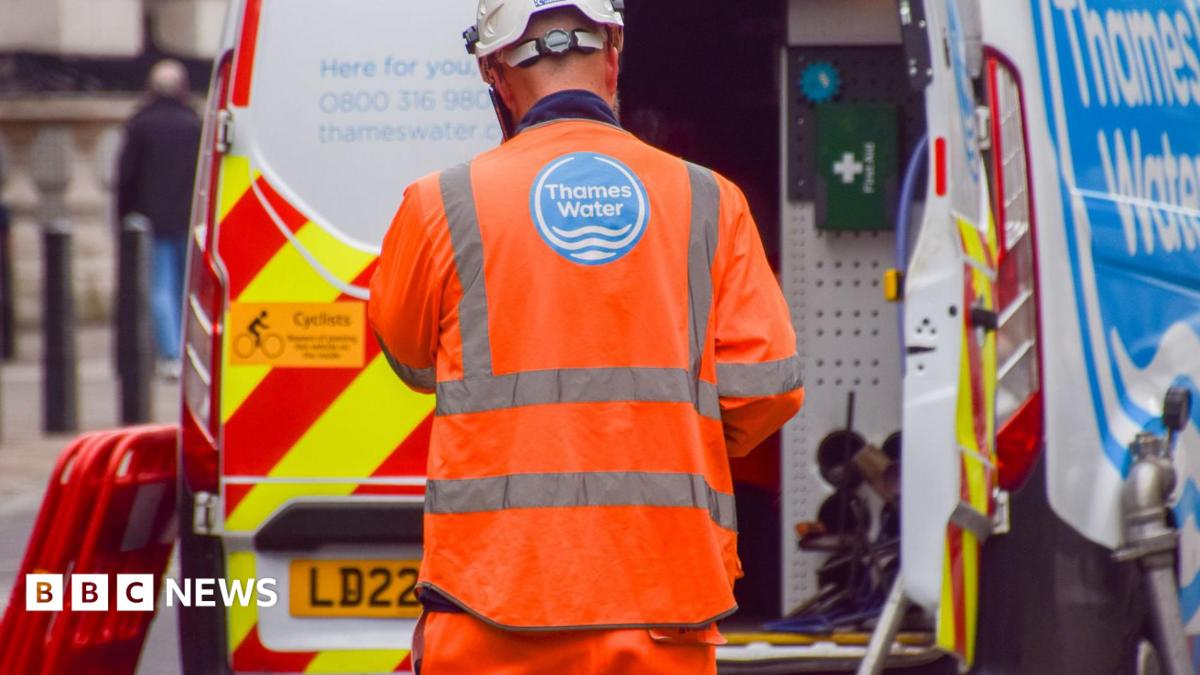
Thames Water's main lenders are offering the government a "golden share" and more control for local authorities in a bid to stop the troubled supplier from being nationalised.The government recently rejected a previous rescue proposal, and the BBC understands the lenders are preparing a legal challenge in case the new Andy Burnham-led government takes the firm into public hands.The "golden share" would give the government veto powers over major decisions such as mergers.The lenders are also proposing giving local authorities greater involvement in the firm, similar to the relationship between United Utilities and Greater Manchester agreed when Burnham was the city's mayor.In his first speech as prime minister on Monday, Burnham said he wanted to see greater public control of "life's essentials".Sources close to the creditors have told the BBC that in the event of full nationalisation they would pursue payment in full of the outstanding debts, as has happened in previous cases, which could leave the government with a multi-billion-pound bill.The London & Valley Water (L&VW ) consortium of lenders had already proposed a £10bn deal to prevent Thames Water from entering administration. It would involve writing off nearly half of its debt and injecting new cash in return for leniency on future pollution fines. The deal was rejected by the government in June, with then-environment secretary Emma Reynolds saying it did not do enough for consumers or the environment.Sources close to the new deal said the creditors had sweetened it with hundreds of millions in new money on top of the existing offer. A golden share would give the government veto power over major decisions such as mergers and acquisitions. Golden shares are seen as a way for the government to retain a stake in companies of national significance or importance, such as Royal Mail or Rolls Royce.Any new proposals would have to be reviewed by Ofwat, the regulator.A government spokesperson said Thames Water "remains financially stable, but we stand ready for all eventualities, including applying for a Special Administration Regime [SAR] if that were to become necessary"."The government will always act in the national interest on these issues," they added.An SAR is a form of temporary nationalisation which would allow the government to recoup some taxpayer cash if Thames was sold again to a private buyer.L&VW said on Tuesday that the new offer had "material improvements" on the old one, and would benefit customers.A spokesperson said: "We continue to believe that the L&VW plan is by far the fastest and most reliable route to solving Thames Water's complex problems and improving outcomes for customers and the environment."They said the new deal "achieves this without any government funding or cost to taxpayers".Fears first emerged three years ago that Thames Water could collapse and it has recently warned it could run out of cash by November.If the company does go bust, households will still have drinking water and sewerage services.Thames Water announced a hosepipe ban for all of its customers on Tuesday morning, citing the UK's "exceptionally warm and dry spring".The company, which supplies water and wastewater services for 16 million people across London and parts of southern England, was handed a £122.7m fine last year, the biggest ever issued by the industry regulator Ofwat, for breaching rules on sewage spills and shareholder payouts.Sources close to the creditors have previously told the BBC that in the event of full nationalisation, they would pursue payment in full of the outstanding debts as has happened in previous cases, which could leave the government with a multi-billion-pound bill.
Thames Water lenders offer 'golden share' to head off nationalisation
Full Article
Original Source
Read the full article at Bbc →KhanList aggregates and links to publicly available news content. We do not host full articles from third-party sources. Always verify important information with original sources.