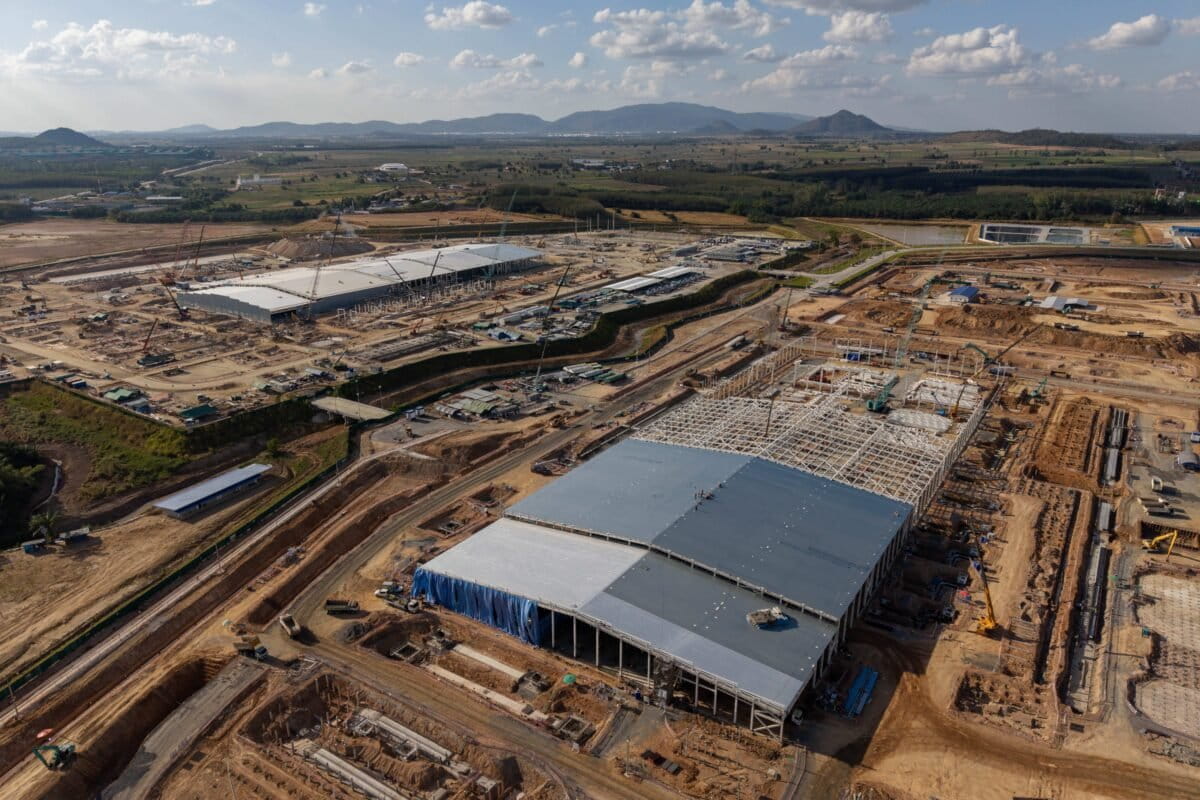
A Thai member of parliament has called for the formation of a new committee to scrutinize the development of new data centers.Experts have warned that Thailand needs to find a balance between economic development and the water and energy resources required to fuel data centers.Despite these concerns, international tech companies are spending billions of dollars on data centers in Thailand, sparking fears over water scarcity and energy infrastructure. BANGKOK — An opposition member of Thailand’s parliament has called for the creation of a parliamentary committee on the regulation of data centers. The call comes amid a raft of new project approvals linked to the sector, which requires large amounts of water and electricity. “I believe Thailand needs to rethink its overall approach to data center development,” Sahassawat Kumkong, a member of the reformist People’s Party, told Mongabay in an interview. “The objective should not simply be to attract investment as quickly as possible. We also need to ensure that development is environmentally sustainable, that local communities are protected, and that the economic benefits are shared more fairly.” Sahassawat represents Constituency 7 in Chonburi, a coastal province in eastern Thailand where at least 13 data centers are in the construction or planning phases, with four more already operational, according to public records, news coverage and, in some cases, on-the-ground reporting by Mongabay. Part of his responsibility in this role, he said, was to safeguard the interests of his constituents, who largely depend on natural resources that data centers may put under strain. The MP said he intends to do this by forming a parliamentary committee to scrutinize the government’s approval and regulation of data centers. This will involve a comprehensive review of Thailand’s current policy framework, including long-term planning for water and energy resources, stronger environmental safeguards, greater transparency, meaningful public participation and mechanisms to ensure that communities sharing the costs of these projects also share in their benefits, he said. While the Ministry of Digital Economy and Society remains the lead regulator of data centers, developers require approval from a host of government agencies to begin operations. The Thai FastPass, a government program launched on June 23, aims to streamline the work of eight agencies involved in that process by removing regulatory hurdles for key industries, including data centers. “The Government is transitioning from a regulatory body to a proactive business facilitator,” the prime minister’s communication office said in statement on the launch of the Thai FastPass program. People catch fish in front of a truck pumping water from the Khlong Luang reservoir in Chonburi province, Thailand. Image by Andy Ball for Mongabay. Sahassawat believes the government should adjust its approach, which is currently “largely focused on attracting investment rather than managing its consequences,” he told Mongabay. Tech companies spend hundreds of billions of dollars annually on massive data centers to provide the computing power behind the artificial intelligence boom. These facilities also strain water and electricity resources around the world. Thailand has marketed itself as a regional hub for the sector in a bid to attract investment, but concerns over resource use persist. In a recent interview with local media, Kwanpadh Suddhi-Dhamakit, senior country officer for World Bank Thailand, reportedly suggested that Thailand could apply more scrutiny to water and electricity use by data centers. Thailand’s Ministry of Digital Economy and Society did not respond to Mongabay’s emailed questions. Thailand’s energy minister has reportedly floated charging data centers more for electricity, with the surplus revenue either reinvested in renewable energy infrastructure or used to subsidize household power bills. The ministry did not respond to a request for comment. Mongabay catalogued more than 70 data center projects in Thailand in a report published in March, with some 40 operational, around 20 under construction, and around 10 said to be in the planning phase. The projects are concentrated in Thailand’s Eastern Economic Corridor (EEC), a special economic zone encompassing several provinces near Bangkok, including Chonburi. Farmers in the area, which already grapples with severe water shortages, said they fear the influx of data centers could make the problem more severe. Sarayuth Sonlacksa inspects his crab farm, some 10 km from the construction site of a new data center in Chonburi province. Image by Andy Ball for Mongabay. In May, Thailand’s Board of Investment announced the approval of three more data centers, including a $25-billion project by a subsidiary of Chinese company ByteDance, which owns TikTok. The Thai Data Center Association did not respond to multiple requests for comment from Mongabay. In an interview with Mongabay, Somnuck Jongmeewasin, research director at civil society organization EEC Watch, called on government agencies to collaborate to understand the long-term viability of data center expansion. He said that, in addition to legally required environmental impact assessments, the government should undertake a strategic environmental assessment for the sector as a whole, which would calculate the resources needed to sustain the current and planned volume of data centers across Thailand. Without proper oversight, Somnuck warned, Thailand could become a haven for reckless data center projects. “We have a lot of problems with water stress, including water-grabbing, and electricity blackouts [in the EEC] so, there is no way that all new data centers that have been approved in the EEC area are going to be sustainable when they become fully operational,” he said. “Even if they buy their own water and power, these water and power supplies are from our shared supplies, from the same water reserves and power grids we rely on.” Banner image: A data center under construction in Chonburi province, Thailand, that local residents said is being built to host Google and TikTok servers, in December 2025. Image by Andy Ball for Mongabay. Credits Topics
Thai MP calls for new committee to scrutinize AI data centers’ environmental impact
Full Article
Original Source
Read the full article at News →KhanList aggregates and links to publicly available news content. We do not host full articles from third-party sources. Always verify important information with original sources.