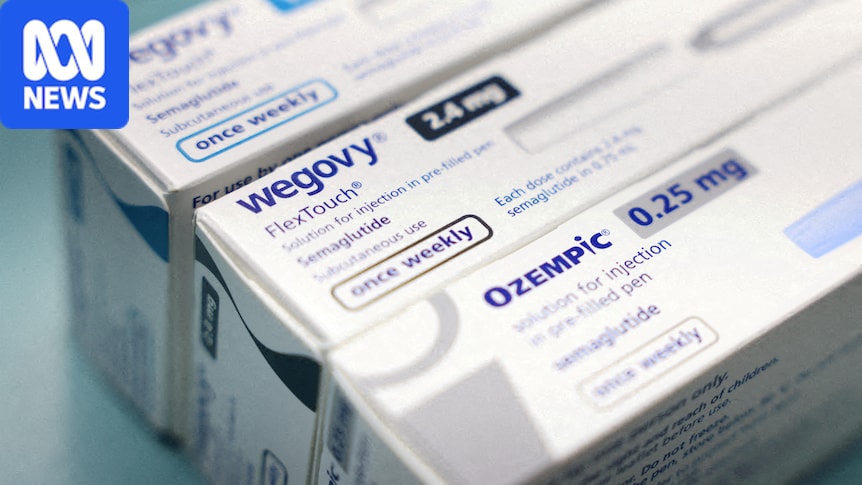
The medicines regulator has issued a new safety warning for GLP-1-based drugs, like Ozempic, which could potentially cause a rare, but serious eye disorder.The Therapeutic Goods Administration's (TGA) warning covers the following glucagon-like peptide-1 (GLP-1) receptor agonists which are used to treat type 2 diabetes and obesity:Semaglutide, sold as Ozempic, WegovyTirzepatide, sold as MounjaroDulaglutide, sold as TrulicityLiraglutide, sold as SaxendaThe TGA said the products had the potential to cause an eye disorder called non-arteritic anterior ischaemic optic neuropathy (NAION)."… (NAION) may result in permanent visual impairment, including blindness, and no treatment has been shown to improve visual acuity outcomes," the TGA's safety warning stated.NAION is caused by a disruption in blood flow to the optic nerve at the back of the eye and typically presents suddenly upon waking and without pain. The regulator said anyone taking GLP-1 medicines should be alert to any signs of vision loss and stop taking the medicine and seek urgent medical attention if any changes were noted.So far, 36 cases of the eye disorder associated with GLP-1 drugs, have been reported on the national database of adverse events, the TGA warned.Twenty-three of those were among people taking semaglutide, three were taking liraglutide and 10 were using tirzepatide.The TGA said it first identified the potential association between GLP-1 drugs and NAION in 2024 when a study was published in the Journal of the American Medical Association (JAMA) Ophthalmology.The study examined almost 17,000 US patients and found those prescribed semaglutide had a higher risk of NAION than those taking non-GLP-1 medications for diabetes.The TGA has issued a product warning for all GLP-1 RA medicines due to a risk of a rare, but severe form of eye disorder. (Flickr: Chemist 4 U)The TGA said since this study it conducted its own independent assessment of the potential association between GLP-1 RAs and NAION and sought advice from the Advisory Committee on Medicines.Optometry Australia, which represents the largest community of optometrists in Australia, said patients should not be unnecessarily alarmed by this update and do not need to stop taking a GLP-1 drug unless they had a change in their vision.The professional body advised optometrists to ask patients presenting with sudden or unexplained vision loss whether they were currently using, or had recently used, a GLP-1 medicine.Dr Flora Hui said about 70 per cent of people do not recover their vision if they develop the condition. (Supplied: Centre for Eye Research Australia)Optometrist and vision scientist Dr Flora Hui from the Centre for Eye Research Australia said around 70 per cent of people don't recover their vision and someone's risk of developing NAION is also increased if they have diabetes, sleep apnea or hypertension.People are also anatomically disposed to NAION if they have a crowded optic disc. The optic disc is where the optic nerve connects to the retina and when it is crowded nerve fibers are more vulnerable to blood supply problems.Dr Hui said people should not panic about the TGA's updated advice."There is a small risk of developing NAION with these drugs so making informed choices are important, especially if you have many of the risk factors associated with NAION," she said."Reduce your other risk factors associated with NAION by improving heart health, blood pressure and cholesterol."Most importantly have regular eye tests with your optometrist or ophthalmologist whilst you're being treated and letting them know that you're taking these medications."Professor Garron Dodd, head of the Metabolic Neuroscience Laboratory, at the University of Melbourne thinks there's still a question mark over whether the GLP-1 based drugs actually cause NAION considering most people taking the drug already have known risk factors."Nearly all the evidence is retrospective, drawn from insurance claims and electronic health records … separating the drug from the condition it treats is the hard part, and no study has managed it cleanly."He said it was important people did not stop taking their medication on the basis of this safety update."For someone with type 2 diabetes or significant obesity, the cardiovascular, kidney and metabolic benefits [of these medications] are large and well established, and stopping abruptly carries its own risks, so any change should be a conversation with your prescriber," he said.Last June the World Health Organisation issued a warning about the risk of NAION from semaglutide medicines and The European Medicines Agency (EMA) recommended updating product information. The EMA said NAION was a very rare side effect that potentially affected up to 1 in 10,000 users.
TGA issues warning over rare eye disorder linked to Ozempic-like drugs
Full Article
Original Source
Read the full article at Abc →KhanList aggregates and links to publicly available news content. We do not host full articles from third-party sources. Always verify important information with original sources.