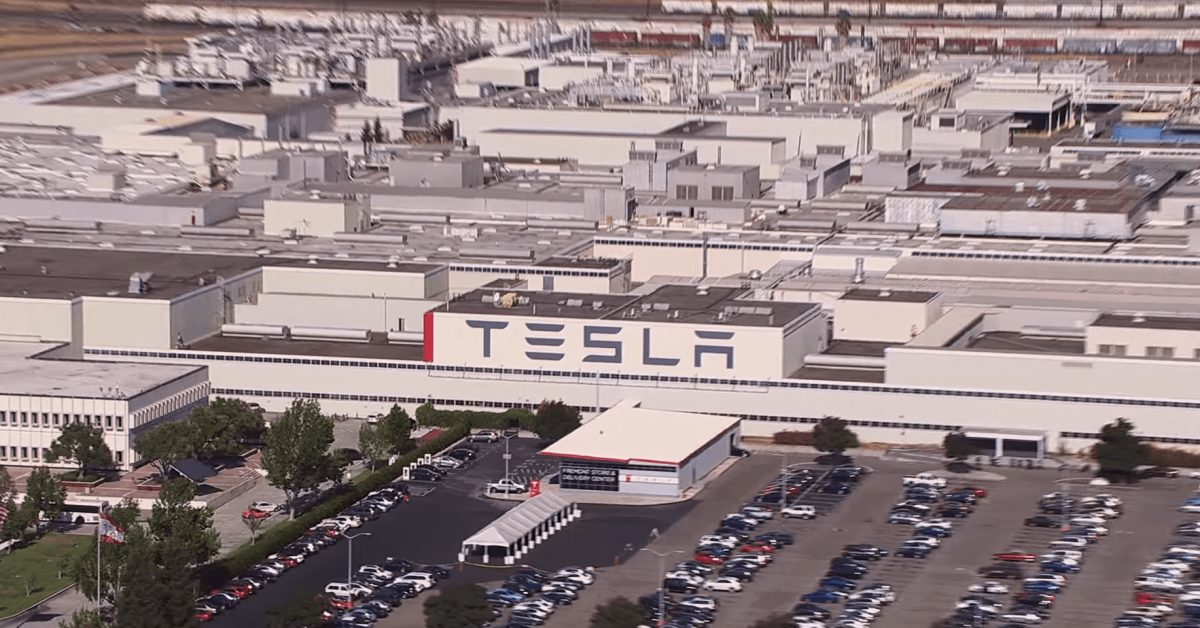
Tesla has confidentially settled with three of the five named plaintiffs in the racism lawsuit that has been hanging over its Fremont factory since 2017. That doesn’t end much. Up to 580 Black workers are still suing over conditions at the same plant, and California’s civil rights agency is taking its own case to a jury. What actually settled The three workers are Marcus Vaughn, who filed the original complaint in 2017 and gave the case its name, plus Titus McCaleb and Monica Chatman. Terms weren’t disclosed. A court filing on June 3 revealed the agreement, and an Alameda County Superior Court judge has ordered the parties back on September 11 to finalize it. Two named plaintiffs, Garret Parker and Chanel Hendrix, are still in. So Tesla bought out three people. The case number, RG17882082, is still open, and it’s now the smallest piece of what the company is facing over Fremont. Here’s how it got this big. In May 2024, the court certified Vaughn as a class action covering roughly 6,000 Black workers. Tesla fought the certification and won it back after plaintiffs’ lawyers couldn’t line up enough workers to testify for a manageable trial plan. The judge decertified. But that didn’t make the claims go away. It just converted one case into many. A state appellate panel later cleared five grouped lawsuits to proceed, and plaintiffs’ counsel says hundreds more workers are holding right-to-sue letters from the state and haven’t filed yet. We broke down Tesla’s total litigation exposure in April, and the Fremont race cases were the single largest bloc in it. What the workers say happened This is the part that keeps getting flattened into “racial discrimination lawsuit” in headlines. Strip the dateline off the filings and read them cold, and you’d place them in the Jim Crow South. A segregated worksite, slurs used openly by supervisors, nooses left where Black workers would find them, and firings for anyone who complained. That’s not the 1950s. That’s the factory that built the Model 3. The workers landed on the same comparison. They called the plant “the plantation” and “the slaveship,” and said the production leads “cracked the whip.” California’s Civil Rights Department, which sued Tesla in February 2022 after a three-year investigation, documented specific language in its complaint: the n-word, “porch monkey,” “monkey toes,” “boy,” “hood rats,” “go back to Africa,” plus the Spanish-language slurs “mayate” and “negrita.” One worker told investigators he heard slurs 50 to 100 times a day. The agency also alleged the factory was effectively segregated, with an area where Black workers were concentrated known internally as the “porch monkey station.” Workers reported coworkers displaying Confederate flag tattoos to intimidate them. The EEOC’s own federal complaint, filed in September 2023 in the Northern District of California, adds graffiti: swastikas, threats, and nooses scrawled around the facility, going back to at least 2015. Then-EEOC Chair Charlotte Burrows called it “shameful racial bigotry.” Among more than 200 worker declarations gathered in the state case, about two-thirds said they saw anti-Black graffiti. Dozens said complaining got them retaliated against, including fired. One declaration from worker Virshon Meadows describes an older Black woman collapsing on the line. When he went to help, he says a non-Black supervisor told him, “Boy, you better get back on the line.” Tesla disputes all of it. The company argued in court filings that the workers failed to establish harassment based on race, and submitted declarations from 228 employees who said they saw nothing. Elon Musk has posted about it twice. In 2018 he wrote that “if someone is a jerk to you, but sincerely apologizes, it is important to be thick-skinned.” In 2022 he wrote that “Tesla strongly opposes all forms of discrimination and harassment.” The case Tesla should actually be worried about The state’s case is the one with real teeth, and it survived Tesla’s last exit ramp. On May 27, the court denied Tesla’s motion for summary judgment and cleared the Civil Rights Department’s claims for a jury. Trial was calendared for July 20 in Oakland. The state isn’t just alleging slurs. It’s alleging Tesla structurally couldn’t handle complaints. CRD found Tesla had 33 HR staff covering 19,916 California workers in 2016, one HR person for every 604 employees, and that the ratio got worse by 2020, hitting roughly one per 740. The department also says Black workers averaged $1,533 less in monthly compensation than white workers between June 2018 and June 2024. The federal case is quieter, and that’s by design. Tesla and the EEOC agreed in January to move into private mediation, which under the Administrative Dispute Resolution Act means no transcripts and destroyed notes. We wrote at the time that it was a smart play for a company that keeps losing in public. Because it does keep losing in public. A jury hit Tesla with $137 million in the Owen Diaz case in 2021. Tesla got it knocked down to $15 million, then a retrial produced $3.2 million, then Tesla settled confidentially rather than run it a third time. Electrek’s Take Musk has said Tesla would “never settle” a case it finds unjust. He’s said it more than once, publicly, as a matter of principle. Which means every confidential settlement Tesla signs is Tesla saying the quiet part. That’s the whole problem with the strategy here. Tesla is doing the thing companies do when they think the underlying facts are bad: pay the loudest plaintiffs, seal the terms, push the rest toward mediation, and grind on procedure until the class falls apart. It worked on the class certification. It worked on Diaz, eventually, after two juries. And it just worked on Vaughn, McCaleb, and Chatman. But it doesn’t scale. You can settle three people. You can’t quietly settle 580, and you definitely can’t settle a state agency that has spent seven years building a record and now has a courtroom date. The CRD case is going to put HR staffing ratios, pay data, and 200-plus worker declarations in front of a jury in Oakland, and Tesla doesn’t get to seal that. Here’s what we keep coming back to. These allegations run from 2012 to the present. Not one bad supervisor in one bad year. A decade, across the factory that built the cars that made Tesla a household name. Tesla’s answer has been 228 declarations from people who say they didn’t see it and a blog post about being thick-skinned. That’s not a defense. That’s a company hoping the lawyers outlast the workers. Nine years in, some of them are still there. If you’re driving an EV, the cheapest miles you’ll ever get come from your own roof. With electricity rates up almost 10% last year and expected to keep climbing, going solar is one of the best ways to protect yourself against rising costs. And with lease and PPA options, you can do it with zero upfront cost and start saving immediately. If you want to find the best deal, check out EnergySage. It’s a free service with hundreds of pre-vetted installers competing for your business, so you save 20 to 30% compared to going it alone. No sales calls until you pick an installer. Get your free quotes here. FTC: We use income earning auto affiliate links. More.
Tesla partly settles racism lawsuit as hundreds of workers press on
Full Article
Original Source
Read the full article at Electrek →KhanList aggregates and links to publicly available news content. We do not host full articles from third-party sources. Always verify important information with original sources.