
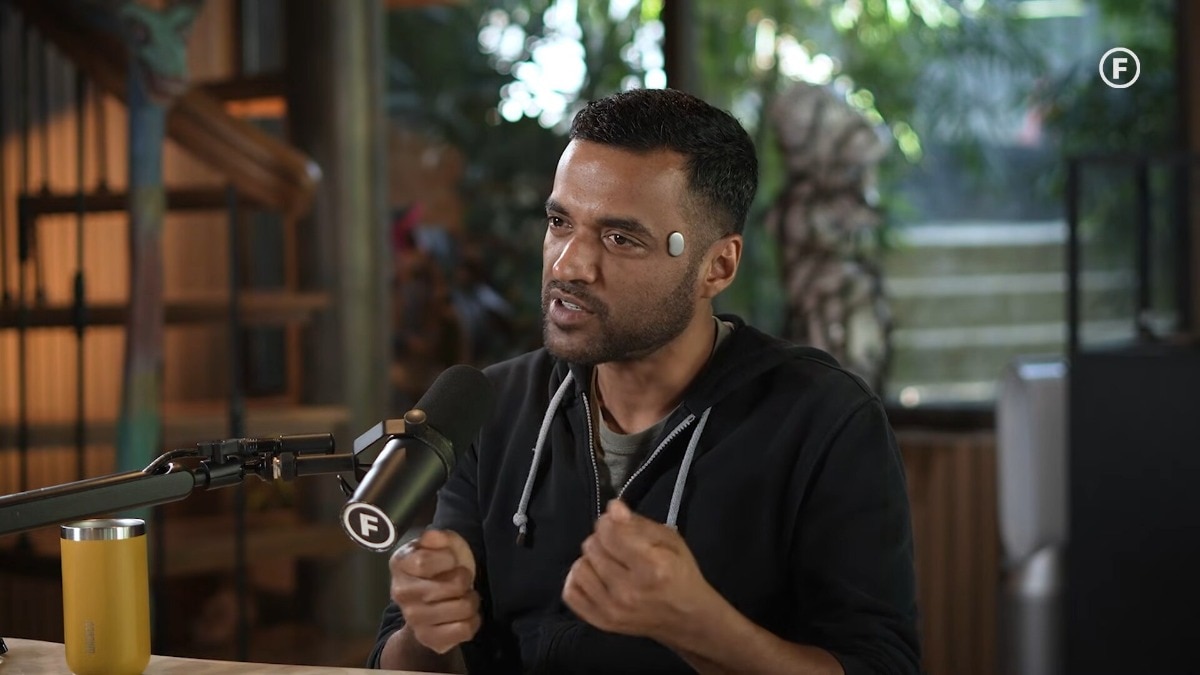
Traditionally, wearable devices were used for simple health tracking like counting steps or checking sleep quality. Zomato founder Deepinder Goyal is now taking on a very different challenge, introducing a health-tech wearable called Temple that is meant to track blood flow to your brain. It first got people talking when Goyal wore it on Raj Shamani's podcast, and badminton star PV Sindhu has since been spotted wearing it during live matches. Now the device has shrunk, pre-orders are close, and Goyal has been answering fan questions on X nonstop.What exactly is Temple?Temple is a small, pill-shaped wearable that sits between your forehead and your ear, which is where it gets its name. A smartwatch mostly keeps an eye on heart rate, steps and sleep. Temple wants to look at the brain instead. Its system, called BrainFlow, tracks real-time blood flow to the brain, plus signals like oxygenation, cognitive load and entropy. Goyal calls it the first continuous, wearable measurement of brain blood flow.Why does that matter? Goyal's pitch is simple. Your brain uses about 20 per cent of your blood supply, and that supply helps keep your hormones, sleep, immunity and repair in check. With age it starts to drop, and most people never measure it. Even hospitals only get a snapshot. His big goal is to help people stay healthy for longer. He has also named the four scientists behind BrainFlow: Dr. Divya Gulati and Dr. Sanchit Gupta from IISc Bengaluru, Dr. Yukti Chopra from SISSA Trieste, and Nitish Kumar from IIT Bombay.What's it like to wear?Temple stays on with single-use tapes called Grips. Goyal says inventing the right Grip was as hard as building the device, and the team has now got it right for 99 per cent of people. The price includes an unlimited supply of the grips. Goyal calls the device "super sticky," so you can run and jump and it won't budge. Showers, swimming and saunas are fine too. Only scuba diving is off the table, and that's a limit of the device, not the tape. The edges are smooth, so clothes slide right over it, and it's slim enough to sit under your glasses. You can put skincare, sunscreen and even makeup over it, but the Grip itself needs completely clean skin.One Grip lasts about seven days, which matches the battery life. The company still suggests changing it every two to three days, especially if you're dusty or sweaty, and you should never reuse one. Goyal says it takes about five minutes to get used to. What about kids? Goyal says nothing in the PPG sensor can hurt a developing brain, but he sees little reason for anyone under 18 to use it, unless they're training for something like the Olympics.What could Temple do in the future?Athletes are the obvious first fans. Instead of only knowing how hard you trained, Temple could offer clues about fatigue, recovery, focus and sleep.Goyal's ideas get bigger from there. He'd like pilots to wear it to check if they're fit to fly, and the air force to use it to pick who's fittest for a mission. He also says a research team is working on turning thoughts into text. Don't hold your breath, though. That's still several years away and may only arrive with the third or fourth Temple.When can you buy it, and how much will it cost?Goyal says pre-orders for a limited launch edition could open as early as next week, "hopefully," once a couple of items are sorted. Shipping should start before the end of 2026. People on the early-access waitlist get priority, and you can still apply on Temple's website. The latest version is less than half the size of the earlier one, which Goyal says makes it the smallest wearable on the market by volume.The launch edition comes in six colours: True Gold, Rose Gold, Black Mirror, Real Jade, Deep Blue and Purple Funk.Price? Still remains a mystery. It could be around Rs 72,000, while Goyal himself has teased roughly $1,000, or about Rs 1 lakh.- Ends
Temple by Deepinder Goyal: Everything you need to know before it launches
Full Article
Original Source
Read the full article at Indiatoday →KhanList aggregates and links to publicly available news content. We do not host full articles from third-party sources. Always verify important information with original sources.