
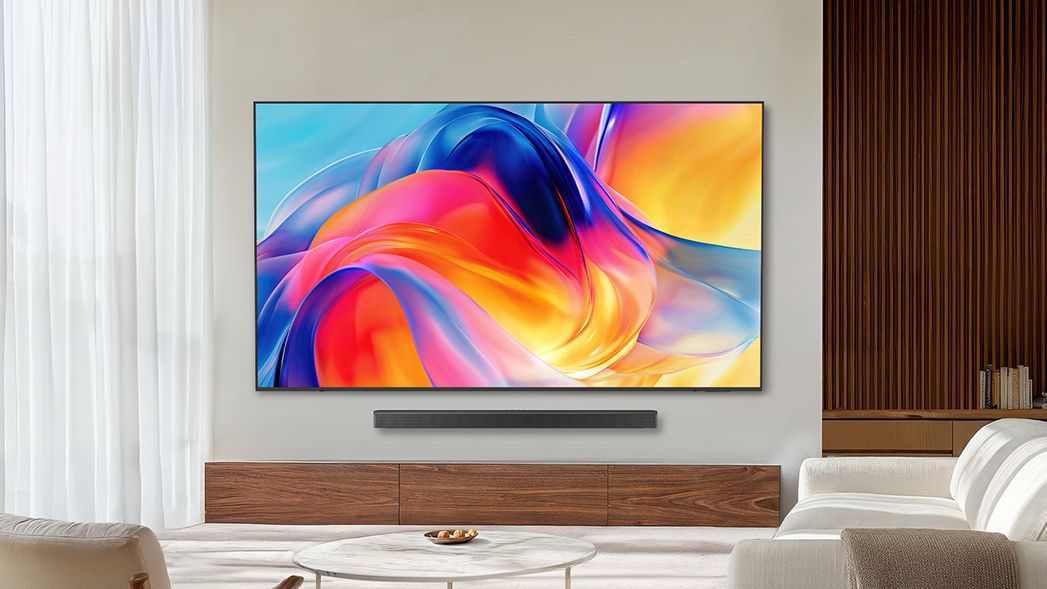
(Image credit: Samsung) What makes a Mini-LED TV a Mini-LED TV? That’s the question at the heart of a recent lawsuit against Samsung, in which TCL alleges that two of Samsung’s Mini-LED TVs don’t actually use Mini-LED technology at all.The complaint, filed Monday by Los Angeles law firm Larson LLP, states that “[Samsung] took a cheap, non-Mini LED model from a recycled product line and peddled it to the public as a ‘supreme’ Mini LED model at an attractive price point.”Obviously, nobody wants to learn that the TV they thought they were buying isn't as advertised. But is there any truth to the claims laid out in TCL’s lawsuit? To better understand the situation, let’s start with which models are being called into question.Samsung’s M Series TVs and “Supreme Mini LED Dimming” (Image credit: Samsung)The claim centers around Samsung’s 2026 M Series lineup, including the M70H, M80H and M90H TVs. In the complaint, TCL alleges that these models, specifically, “contain none of the technological advancements associated with Mini LED technology, including FALD [full-array local dimming].”Instead, TCL says, “Samsung merely recycled its pre-existing low-end standard LED televisions, the Crystal UHD line, and re-labelled them as ‘Mini LED.’” The complaint cites a page on Samsung’s website that describes Mini-LED technology as involving both “backlight control” and “local dimming” — two features that, according to TCL, aren’t accounted for across Samsung’s M Series lineup.The claim includes the M70H, M80H and M90H TVs.In other words, TCL alleges Samsung’s edge-lit, Mini-LED-based TVs as not meeting Samsung’s own criteria for what makes Mini-LED technology worth buying over a standard QLED TV.A spokesperson from Samsung stated that the brand intends to “vigorously defend against” the lawsuit, and that Samsung “stand[s] behind the quality and accuracy of our product descriptions.”Get instant access to breaking news, the hottest reviews, great deals and helpful tips.Samsung’s M Series lineup sits below the brand’s Neo QLED family of TVs, the latter of which has historically combined both Mini-LED backlighting and quantum-dot color — hence its higher-end status.Curiously, when I compared Samsung’s official spec sheets for the M70H (the entry model in the M Series) and the QN70H (the brand’s entry-level Neo QLED TV), I noticed that the “Lighting Technology” labels differ, but their respective “Dimming Technology” classifications are the same. (Image credit: Samsung)You’ll notice, however, that the M70H’s “Supreme Mini LED Dimming” designation is joined by a footnote indicator. And, if you follow that footnote, you’ll find a disclaimer stating that the M70H’s “Supreme Mini LED Dimming” is “[s]oftware-based (not full-array hardware-based) technology.”What we’re left with, then, are two TVs — currently separated by about $500 at the 65-inch size point — that are stated by Samsung to use the same dimming technology. However, on only one of these models is this technology described as being software-based rather than hardware-based.This is called out directly in TCL’s complaint. It states:"Samsung’s specification sheets identify the dimming feature available on its Mini LED televisions as 'Supreme Mini LED Dimming,' which, when coupled with its descriptions of Mini LED local dimming on its website, is purposefully designed to suggest dimming that is a better version of typical Mini LED FALD than that of its competitors such as TCL. This is reinforced by the fact that Samsung uses the same terminology— 'Supreme Mini LED Dimming'—to describe its high-end Neo QLED televisions."It's worth noting that this wouldn't be the first time Samsung released a TV with edge-based lighting under the designation of "Mini-LED TV." One of the brand's latest lifestyle TVs — The Frame Pro — is billed as a Mini-LED-based set with some type of dimming, despite the fact that these LEDs are not arranged in a traditional, backlit array.This raises an important question: Are edge-lit Mini-LED TVs — the sort that the M70H and M80H are alleged to be — truly a downgrade compared to Mini-LED models with proper local dimming?Can "software-based dimming" be a stand-in for FALD? (Image credit: Shutterstock)TCL claims that the inclusion of "Supreme Mini LED Dimming" on the lower-end M70H misleads people into thinking that the M70H features the same dimming technology as the higher-end Neo QLED, or that the version of Mini-LED dimming found on the M70H is somehow superior to full-array, hardware-based dimming on TCL TVs.Should this move to a trial, that'll be up for a court to decide how much water those claims hold.For me, the more interesting question is: Are the higher-end QN70H also leveraging edge-lit Mini-LEDs driven by software-based dimming? After all, their spec sheets list identical dimming technologies.Back in May, when I was evaluating the QN70H, I reached out to Samsung with this exact question, and a spokesperson from Samsung responded with the following: "Samsung can confirm that both the QN70H and M70H support software-based Supreme Mini LED Dimming."Samsung can confirm that both the QN70H and M70H support software-based Supreme Mini LED Dimming.Samsung RepresentativeWhile one can certainly make the argument that traditional, hardware-based dimming is driven in part by software, this could be the first time a TV-maker has used the term "software-based dimming" as a means to describe a TV with full-array local dimming.We'll be following this story closely as it evolves, but let us know in the comments below if you purchased one of the aforementioned TVs and if you've seen any issues with its contrast.In reporting this story, Tom's Guide reached out to Samsung to clarify TCL's claims and a spokesperson said that the brand will “vigorously defend against” the lawsuit, and that Samsung “stand[s] behind the quality and accuracy of our product descriptions.” Follow Tom's Guide on Google News and add us as a preferred source to get our up-to-date news, analysis, and reviews in your feeds. More from Tom's GuideBest TV Brands 2026: We just graded them on price, performance and more — here’s how their report cards stack upRoku and TCL accused of 'bricking' TVs with poor software updates in new class action lawsuitSamsung TV report card 2026: 'You can rely on Samsung to deliver exceptional performance' Michael Desjardin is a Senior Editor for TVs at Tom's Guide. He's been testing and tinkering with TVs professionally for over a decade, previously for Reviewed and USA Today. Michael graduated from Emerson College where he studied media production and screenwriting. He loves cooking, zoning out to ambient music, and getting way too invested in the Red Sox. He considers himself living proof that TV doesn't necessarily rot your brain.
TCL is suing Samsung for false advertising on its Mini-LED TVs — here’s how to tell if your TV is included
Full Article
Original Source
Read the full article at Tomsguide →KhanList aggregates and links to publicly available news content. We do not host full articles from third-party sources. Always verify important information with original sources.