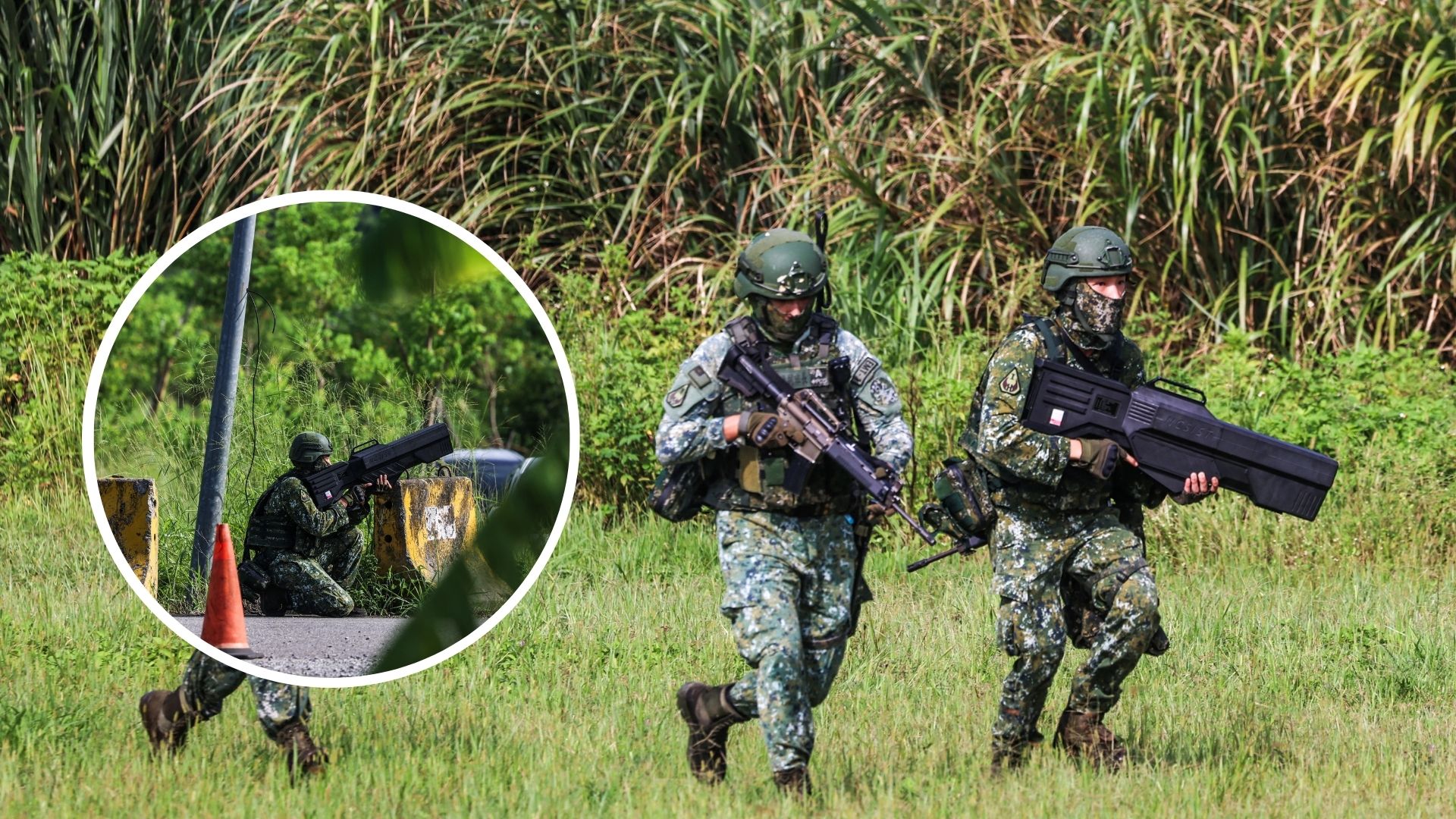
Taiwan’s efforts to build a modern counter-drone network are facing renewed scrutiny after an official audit found technical gaps in a $111 million fixed-site defence programme. The system, developed to protect airbases and other military facilities, cannot currently detect or jam some frequencies used by newer Chinese drones and has limited protection against emerging threats. The findings come shortly after a separate army procurement for 26 fixed-site counter-drone systems was terminated following repeated testing failures. Together, the setbacks also highlight a broader challenge for Taiwan, which is developing a layered defense system while drone technology evolves faster than traditional military procurement programmes can adapt. While officials say upgrades are already being developed, analysts question whether they will arrive quickly enough. Counter-drone system fails to keep pace with evolving PLA drones According to Taiwan’s Audit Office, the fixed-site system developed by the National Chung-Shan Institute of Science and Technology, the island’s main weapons developer, cannot detect or jam the 5.1GHz frequency used by newer PLA drone models. The system also does not fully cover parts of the BeiDou-3 satellite navigation system and has limited capabilities against emerging fibre-optic and AI-guided drones. The audit found the programme was already six to 12 months behind schedule because of construction delays and shortages of key components. It warned that the technical and scheduling problems could undermine protection for military bases. The army had planned to acquire 26 fixed-site systems from local contractor Tron Future Tech, but the company failed its third and final acceptance test. Taiwan’s defense minister Wellington Koo Li-hsiung said the system struggled to combine information from search and passive radar systems when faced with multiple waves of drones, making it difficult for operators to identify targets accurately. Taiwan’s defense ministry said many of the technologies highlighted in the audit emerged after the counter-drone programme began in 2021. Ministry spokesman Sun Li-fang said NCSIST had already verified jamming capabilities for the newer frequency and would introduce them through future upgrades. The ministry also noted it was accelerating development of systems capable of dealing with fibre-optic and AI-guided drones. One system cannot counter every drone Military analysts explain that the problem goes beyond Taiwan and reflects a bigger challenge for armed forces trying to respond to evolving drone technology. Shu Hsiao-huang, a senior analyst at the Institute for National Defence and Security Research, noted that Taiwan should avoid treating every unmanned aircraft as the same threat. Shu also warned that Taiwan’s reliance on electronic jamming could become less effective as fibre-optic and AI-guided drones reduce their dependence on radio-frequency communications. Zivon Wang, a military analyst at the Chinese Council of Advanced Policy Studies, similarly argued that Taiwan needs to find a cheaper way to defeat drones. Using expensive missiles against inexpensive unmanned aircraft, could quickly become economically unsustainable, he stressed. The debate now points toward a more layered approach combining electronic warfare, radar, sensors, kinetic systems and lower-cost interceptors. For Taiwan, the challenge is not simply developing better counter-drone technology, but creating a system that can keep adapting as the threat changes. Get the latest in engineering, tech, space & science - delivered daily to your inbox.Bojan Stojkovski is a freelance journalist based in Skopje, North Macedonia, covering foreign policy and technology for more than a decade. His work has appeared in Foreign Policy, ZDNet, and Nature.
Taiwan’s counter-drone shield exposed by testing failures and China’s new threats: Report
Full Article
Original Source
Read the full article at Interestingengineering →KhanList aggregates and links to publicly available news content. We do not host full articles from third-party sources. Always verify important information with original sources.