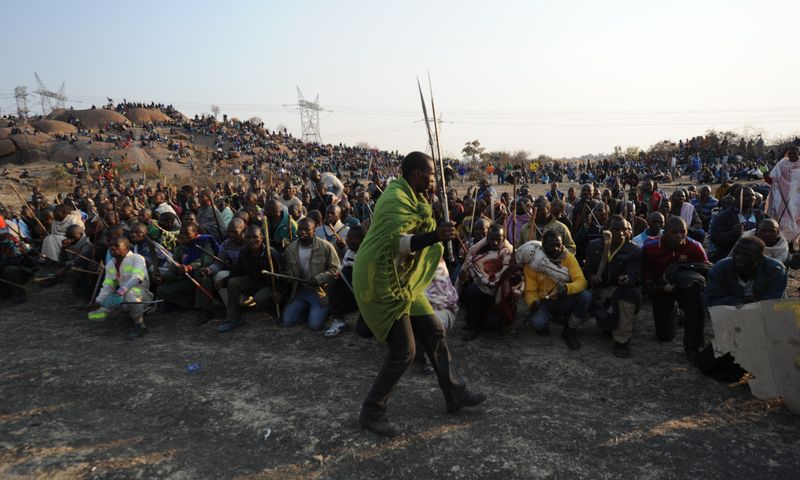
Fourteen years after the Marikana Massacre, survivors, victims’ families and trade unions are still calling for accountability. The massacre resulted in a total of 40 deaths and 78 injuries, with mineworkers accounting for the vast majority of casualties. On 16 August 2012, 34 miners participating in a wildcat strike at the Lonmin platinum mine at Marikana, near Rustenberg, to demand pay of R12,500 a month up from R4,000 a month, were gunned down by the South African Police Services (SAPS) at two separate killing sites. The SAPS had been ordered to disperse the miners following escalating violence throughout the week that had already claimed 10 lives, including security personnel and other strikers. The incident has since been referred to as the most lethal use of force by police since the 1976 Student Uprising. Yet to date, no one has been held criminally liable for what happened. The Farlam Commission of Inquiry into the massacre absolved key political figures implicated, including current president Cyril Ramaphosa and the late former minister of police Nathi Mthethwa, but recommended that the National Prosecution Authority (NPA) investigate and prosecute those involved in the massacre. Nine police officers were charged in connection to the events of that week and were all acquitted. Justice delayed Marikana miners chant songs while gathered at the koppie outside Nkaneng informal settlement near the Lonmin mine in Rustenburg, demanding a wage increase. (File photo: Felix Dlangamandla) Livhuwani Mammburu, spokesperson for the National Union of Mineworkers (NUM), told Daily Maverick that the victims who were killed in the lead-up to the massacre have not been officially recognised. “They were workers who were members of the NUM, who were shop stewards and branch leaders of the NUM, who were killed and assassinated before the Marikana tragedy could happen. Their families haven’t found justice and they are not recognised,” he said. He added that Lonmin (which was bought by Sibanye-Stillwater in 2019) and Impala Platinum, which operates a mine near the Marikana complex, have yet to be held accountable for their role in the massacre. “The reason why we are saying this as the NUM is that the mining companies, Lonmin and Impala, allowed a non-protective strike to happen and they did not do anything to stop it. Because for them, they were only interested in production. As long as they were getting production, they did not care about the lives of the mine workers who were brutally murdered at that time,” Mammburu told Daily Maverick. The Socio-Economic Rights Institute (Seri) represents 34 of the 36 mineworkers’ families, totalling more than 300 dependents. The institute published a statement on 11 August commemorating the anniversary, stating that justice had yet to be served. “Thus far, the State has only paid out approximately R352-million, settling some civil claims from injured survivors, unlawfully arrested miners and the families. Of this, 34 of the 36 families Seri represents received about R71-million in loss of support, which is only one of the five prayers in the families’ civil claim. Over 120 people from the families received nothing,” Seri said. “Civil liability without criminal accountability is not justice, but the price the state has agreed to pay to avoid it.”“However, these settlements do not amount to justice. They do not provide the families with the truth about what happened to their loved ones, nor do they prevent the same patterns of policing from recurring. Civil liability without criminal accountability is not justice, but the price the state has agreed to pay to avoid it.”Further, trade unions argue that the economic conditions of miners and mining-affected communities have not improved since the massacre.In an open letter SERI Executive Director, Nomzamo Zondo said “We remember Marikana because we wonder what mining-affected communities would look like if the group of young people who conceptualised a strike that would grind a nation to a halt between soccer matches were still together. Youth who pondered, spoke, and planned to hand their children brighter lives than the ones they spent walking in dark tunnels so that they could drill platinum. Who questioned the mining elites who benefitted from their labour and gave nothing back to the communities who raised them.Their demand for a wage commensurate to dignified Black lives, made it out of their conversations, soccer games, their young cohort, the rock drill operators, the Karee shaft, their trade unions, out of their mine and even out of this nation.”Wages and wealth A mineworker on the top of the koppie at Marikana at a commemoration in 2024. (File photo: Aisha Bahadur) There are some indications that conditions for miners have improved. Sibanye-Stillwater spokesperson Thabisile Phumo told SABC News that the basic salary for entry-level employees is now R20,000 per month, rising to R31,000 if benefits such as living-out expenses are included. However, nonprofit organisation Mining Affected Communities United in Action (Macua), have argued that mining companies continue to benefit at the expense of communities, and have recorded profits while job opportunities for miners stagnate. “Marikana belongs to a much longer history in which state power has repeatedly been deployed to create the conditions in which mineral wealth can be extracted while the people who carry the costs of extraction remain politically and economically marginalised. Those with capital continue to enjoy extraordinary access to the institutions of the state, while poor communities spend years writing letters, submitting petitions, attending consultations and pleading with Parliament merely to be heard,” Macua said in a press release. The massacre was once again commemorated by the Association of Mineworkers and Construction Union (Amcu) at the koppies where the massacre took place. The event was attended by families, survivors and current mineworkers. DMMarikana victims killed on 16 August 2012 Sitelega Meric Gadlela (50)Thembinkosi Gwelani (27)Patrick Akhona Jijase (26)Semi Jokanisi (29)John Kutlwano Legingoane (24)Jackson Lehupa (48)Janeveke Raphael Liau (47)Mafolisi Mabiya (28)Julius Tokoti Mangcotywa (61)Thembelakhe Mati (50)Anele Mdizeni (29)Bongani Mdze (28)Makhosandile Mkhonjwa (28)Telang Mohai (37)Khanare Elias Monesa (36)Thabiso Mosebetsane (49)Thobile Mpumza (26)Babalo Mtshazi (26)Michael Ngweyi (39)Ntandazo Nokhamba (36)Mgcineni “Mambush” Noki (30)Bongani Nqongophele (31)Mongezeleli Ntenetya (34)Andries Ntsenyeho (42)Molefi Osiel Ntsoele (40)Henry Mvuyisi Pato (35)Motisaoitsile Van Wyk Sagalala (60)Fezile David Saphendu (24)Pumzile Sokanyile (48)Mzukisi Sompeta (37)Thabiso Johannes Thelejane (55)Mphangeli Tukuza (41)Nkosiyabo Xalabile (30)Cebisile Yawa (24)Bonginkosi Yona (32)Thobisile Zibambele (39)
REMEMBERING THE FALLEN: Marikana massacre 14 years on — Victims’ families still await criminal accountability
Full Article
Original Source
Read the full article at Dailymaverick →KhanList aggregates and links to publicly available news content. We do not host full articles from third-party sources. Always verify important information with original sources.