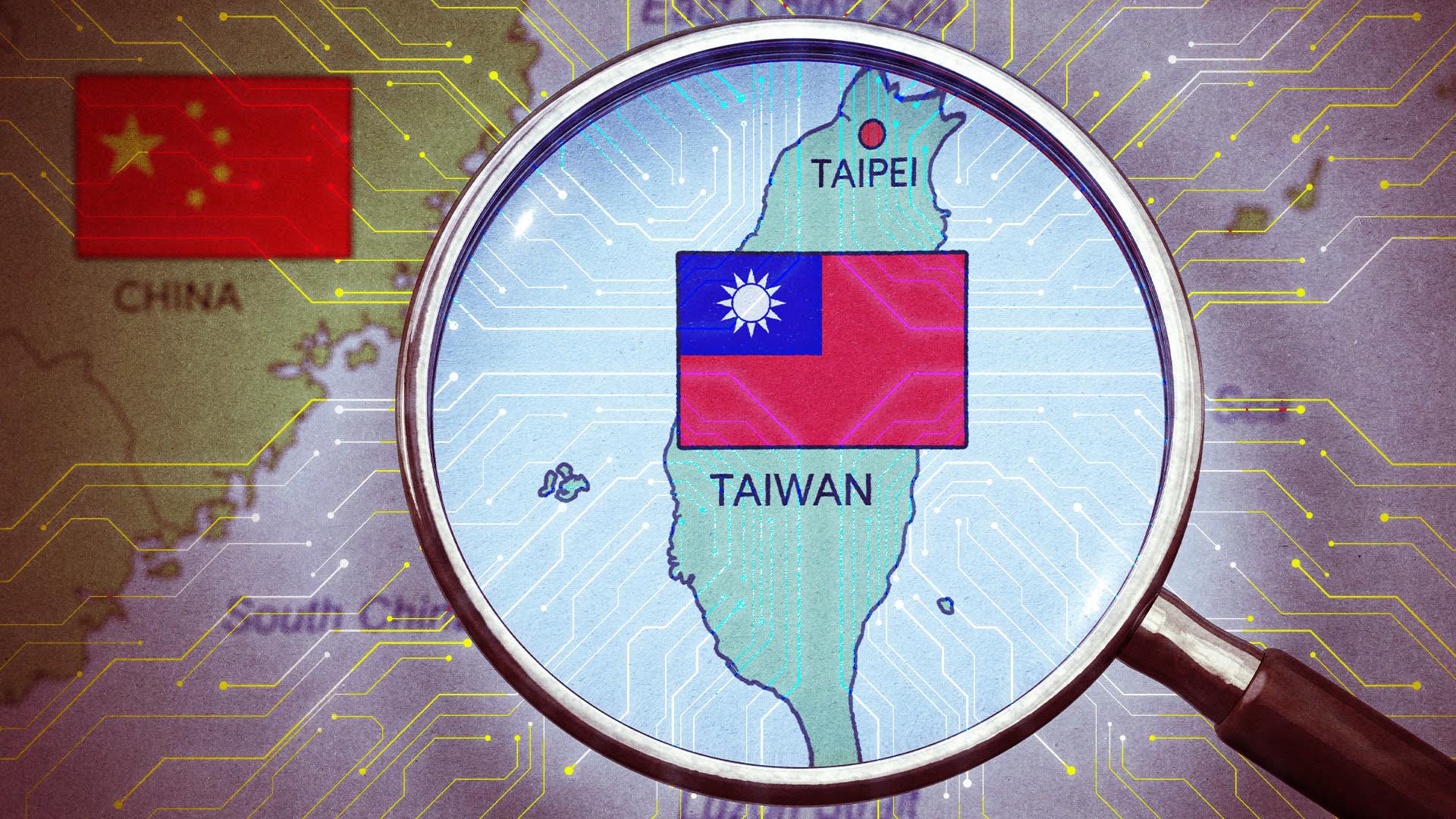
The Philippines has a lot to learn from Taiwan as we both are targets of China’s political and information warfare A foreigner visiting Taiwan for the first time said he expected to see soldiers on the streets and grim-faced people, as he had been closely following news reports on the People’s Liberation Army (PLA) planes hovering around Taiwan’s airspace and civilian defense drills organized by the Taiwanese government, including simulations of air raids, disaster response, mobile internet outages, and evacuations. The first-time visitor also anticipated feeling tension in the air as Taiwanese prepared for 2027, the year Xi Jinping set to modernize the PLA, which many interpret as the date for a possible invasion or blockade of Taiwan. To his surprise and amazement, he saw Taiwanese going about their commute, smiling and spirited, chilling out in parks, shopping, and enjoying meals in food stalls and night markets. He did not spot any armed, uniformed men guarding malls, office buildings or train stations. (That’s more like a scene from Manila.) In my trips to Taipei, I’ve often asked how residents felt about potential Chinese aggression—anywhere from blockade to quarantine to invasion. I didn’t feel their nervousness or sense of panic in our conversations. They’ve been used to these threats for many years, they say, a situation just like the boy who cried wolf. There’s also trust in their government; they believe their leaders will do their best to avoid a monumental crisis. In my latest trip to Taipei, I noticed something was abuzz: the palpable support from the outside world, transforming Taiwan into a frontline in the battle for democracy—a hub for civil society groups and activists pushing back against authoritarian rule. That was the spirit of the back-to-back conferences I attended: the strengthening of democratic resilience, the ability to absorb shocks and recover from them. It was my first time to attend the China in the World Summit (CITW), an annual gathering organized by a leading think tank in Taiwan, the Double Think Lab, known for its work in defending the digital space from massive Chinese disinformation and malign influence. The CITW has been held in various parts of the world and this year’s iteration in Taiwan has been the largest, so far, with 75 countries represented by more than 300 participants. The second conference was an Asia workshop of the US-based International Republican Institute (IRI), an annual meeting held in different parts of the region to exchange ideas and share best practices on countering foreign authoritarian influence. I am familiar with some of the IRI’s work; they have come up with an open-source toolkit on understanding and taking action on China’s information manipulation, among others. Wow! moment The CITW was a gathering of hundreds of China watchers, an entire village of academics, think tankers, journalists, and activists sharing their research findings on a wide range of issues, from China-Pakistan diplomacy and mediation on the US war on Iran to China’s presence in Timor Leste to the technological leap of China in electric vehicles. It was a wow! moment for me, a two-day learning experience on China beyond the security issues that usually dominate our news stories here. Taiwan’s vice president, Hsiao Bi-khim, set the tone by talking about “China’s growing influence in the Global South through security partnerships and economic engagement, and increasingly sophisticated AI-driven disinformation campaigns and coordinated online messaging…. and the export of surveillance technologies and economic coercion.” Taiwan’s approaches, Hsiao said, revolve around these priorities: strengthening whole-of-society resilience against hybrid threats, including support for secure digital tools for journalists and human rights defenders; building trusted semiconductor and AI supply chains with like-minded partners; enhancing deterrence through investments in asymmetric defense capabilities; and deepening partnerships with democratic governments and civil society organizations worldwide. Not just military strength My main takeaway is this: China is expanding its global influence not only by strengthening its military capabilities but also by broadening the battlefield to include the information space, politics, technology, economy, and supply chains. Bonnie Glaser, managing director of the German Marshall Fund’s Indo-Pacific Program, put it well in her keynote address: “Even as Beijing continues to increase its military capabilities, China has made a strategic bet that it can achieve many of its objectives through non-military means.” She cited the China Index, a project of the Doublethink Lab that measures China’s influence in more than 100 countries. It shows that Beijing’s impact is weakest in the military domain but strongest in foreign policy, technology and the economy. Glaser thus called for “comprehensive resilience,” urging countries to secure their supply chains, foster independent media, technological innovation, cyber resilience, and strong international partnerships: “Together, these strengths create societies that are harder to intimidate, harder to manipulate and harder to divide.” The Philippines has a lot to learn from Taiwan as we both are targets of China’s political and information warfare, although more so with our neighbor. Let me know what you think. You can email me at marites.vitug@rappler.com. Till next newsletter! Related articles: How does this make you feel? Loading
Taiwan is on the frontlines in battle for democracy
Full Article
Original Source
Read the full article at Rappler →KhanList aggregates and links to publicly available news content. We do not host full articles from third-party sources. Always verify important information with original sources.