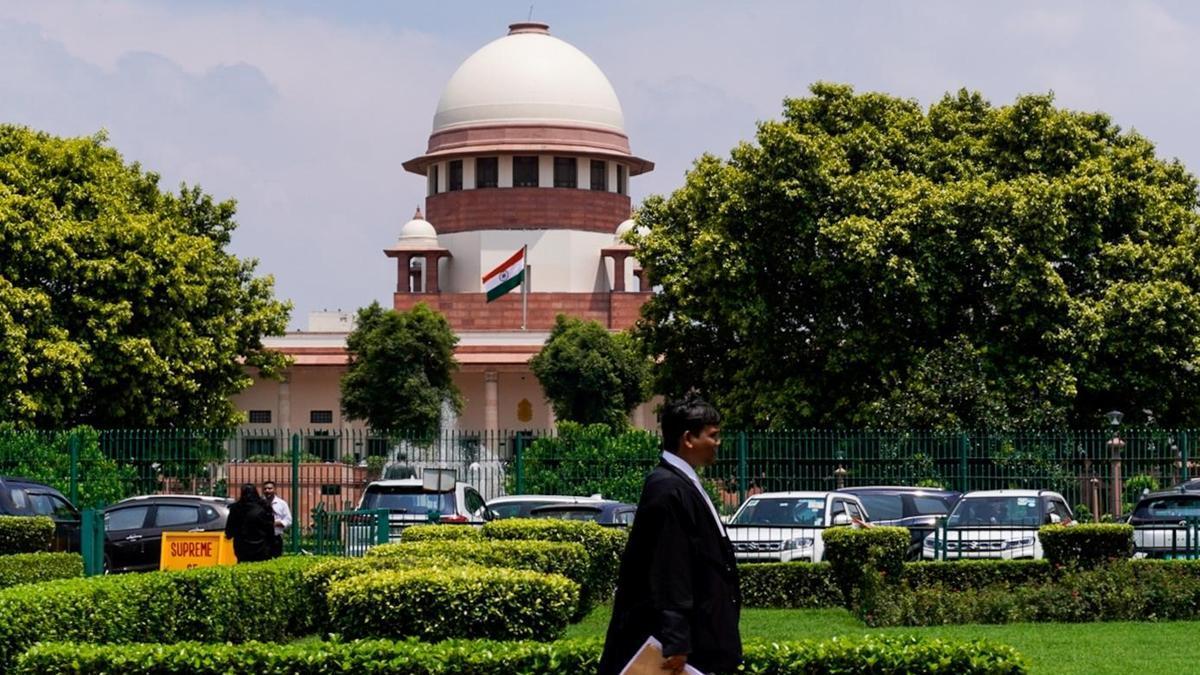
The Supreme Court on Friday (July 24, 2026) indicated that it would closely monitor the Centre’s proposed overhaul of the National Eligibility-cum-Entrance Test (NEET). The court was hearing a batch of petitions filed by the Federation of All India Medical Association (FAIMA), the United Doctors Front (UDF), and others seeking to replace the National Testing Agency (NTA) with an independent statutory body to conduct the exam.A Bench of Justices P.S. Narasimha and Alok Aradhe directed the Union government to file a detailed response outlining whether it plans to transition NEET-UG to a computer-based test (CBT) and what safeguards will be implemented to protect examination data.The Bench also called out extraordinary measures, such as deploying the Indian Air Force to transport question papers of this year’s NEET examination, as temporary fixes.“We cannot let such a situation go on like this. We have to focus on institutionalisation... Here, because of what had happened, you deployed the Air Force, but that is only an ad hoc arrangement, not a permanent one,” the Bench observed.The hearing came a day after Prime Minister Narendra Modi addressed the NEET paper leak controversy for the first time, announcing the creation of fast-track courts to expedite the trial of such cases amid the ongoing protests led by the Cockroach Janta Party (CJP).‘Going 10 extra miles’Solicitor General Tushar Mehta, appearing for the Union Government, submitted that the Centre was making every possible effort to address students’ concerns.“The government is going 10 extra miles as children’s problems have to be addressed... I can assure you from my personal knowledge, it is being monitored, supervised, and everything is being done at the highest executive level,” Mr. Mehta said.The Bench then addressed the reforms proposed by the seven-member High Level Committee of Experts (HLCE), constituted by the Ministry of Education in 2024 under former ISRO chairman K. Radhakrishnan to review the functioning of the NEET examination system. The committee, which submitted its report in October 2024, recommended a series of structural reforms, including shifting to a computer-based test. The court also referred to the NTA’s affidavit outlining the progress made in implementing those recommendations.Questioning the proposed transition, Justice Narasimha expressed concern over the security of data to prevent further incidents of paper leaks. “Please reflect on that also and tell us... How is data transferred? How does data protection occur? That’s very important because when you shift to this, leaks could occur, making data unsafe. And the entire thing breaks down,” he said.The judge directed the Centre to file an additional affidavit outlining its road map for implementing the reforms detailing the proposed cybersecurity framework, the designated agency for its implementation, and the safeguards to prevent data breaches.“Computer assistance is another thing which the committee has spoken about... Encryption of question papers... This falls into the same category. If you digitise it, how will you secure it?” Justice Narasimha asked.Mr. Mehta informed the court that there had been developments since the earlier proceedings and that he would apprise the court of the proposed measures on the next hearing.“I have instructions to say that the government may go even beyond what the Committee recommended. I will present a holistic view if the court grants me time. With children, there cannot be an adversarial approach,” Mr. Mehta said.Advocate Tanvi Dubey, appearing for the petitioners, submitted that they too had proposed reforms to strengthen the examination system, including a switch to a computer-based format.The Bench posted the matter for further hearing on August 3 Growing concernsEarlier, Justice Narasimha had raised serious concerns over the cancellation of the examination following the allegations of paper leak, describing the development as “very traumatic” for students and their families. The court had underscored the need for accountability in the face of lapses affecting lakhs of candidates, and directed the Union government and the NTA to place on record the measures taken to prevent recurrence of such incidents.Following the 2024 NEET-UG paper leak, which had also seen judicial intervention by the top court, the Centre had set up a seven-member committee to review the examination process and suggest remedial measures.To implement the recommendations, the Centre had constituted another committee in November 2024 and also enacted the Public Examinations (Prevention of Unfair Means) Act, 2024.
Supreme Court seeks Centre’s response on NEET reforms
Full Article
Original Source
Read the full article at Thehindu →KhanList aggregates and links to publicly available news content. We do not host full articles from third-party sources. Always verify important information with original sources.