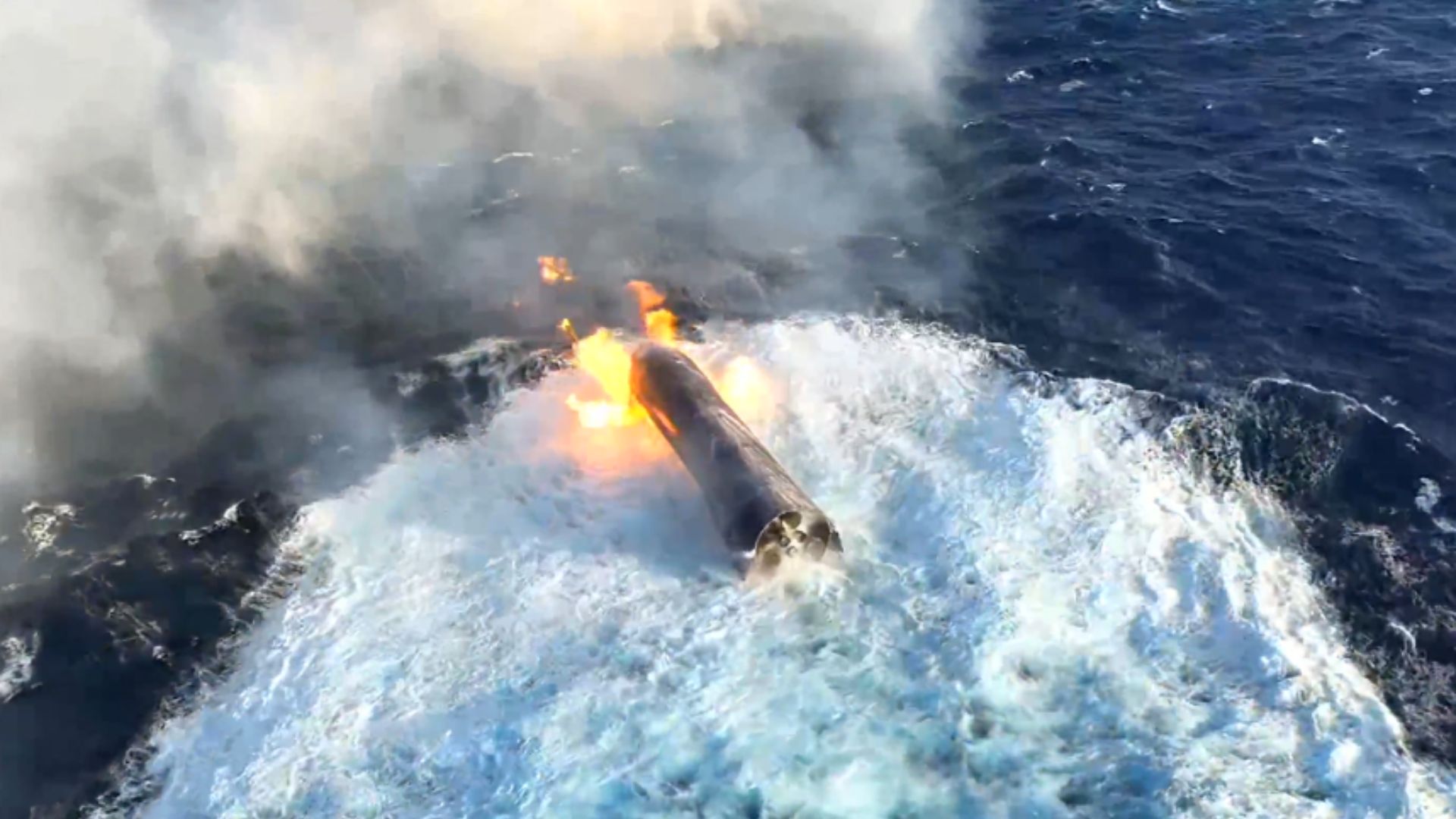
SpaceX has completed another major milestone in the development of its fully reusable Starship launch system, successfully deploying the first batch of next-generation Starlink V3 satellites during the rocket’s 13th integrated flight test while returning the upper stage in what appears to be its most controlled splashdown to date. Launched from Starbase, Texas, the roughly 122-meter (400-foot) rocket completed several key objectives, including deploying 20 Starlink V3 satellites, relighting a Raptor engine in space, and gathering extensive data during atmospheric re-entry. Although the Super Heavy booster failed to complete a soft water landing after multiple engines did not reignite, the mission nevertheless marked another significant step toward SpaceX’s long-term goal of a fully reusable launch system. First operational Starlink deployment from Starship According to SpaceX, Flight 13 was the first Starship mission to deploy operational Starlink V3 satellites rather than mass simulators used during earlier test flights. The mission released 20 satellites while following a suborbital trajectory, allowing engineers to validate the vehicle’s payload deployment system under realistic flight conditions. The satellites briefly established contact with the existing Starlink network before re-entering Earth’s atmosphere and burning up as planned, since the mission was designed to test deployment procedures rather than place the spacecraft into operational orbit. Reuters noted that the upgraded Starlink V3 satellites are expected to provide greater bandwidth and support future capabilities such as direct-to-cell connectivity. A smoother return through Earth’s atmosphere One of the mission’s biggest successes came after payload deployment. SpaceX carried out another demanding atmospheric re-entry campaign, including an in-space Raptor engine relight and a controlled descent into the Indian Ocean. The company intentionally flew the vehicle through challenging re-entry conditions to collect data on its thermal protection system, flight controls, and structural performance. SpaceX reported that Flight 13 resulted in Starship’s “softest splashdown ever,” with the vehicle remaining largely intact after touchdown. The publication also noted that improvements to the heat shield were evident, despite engineers deliberately testing the system under increasingly demanding conditions. Booster recovery remains a work in progress Not every objective was achieved. During its return toward the Gulf of America, the Super Heavy booster experienced engine restart problems that prevented a fully controlled splashdown. According to SpaceX, some of the booster’s engines failed to reignite during the landing burn, causing the first stage to impact the water harder than planned. While the booster was lost, SpaceX has repeatedly emphasized that Starship’s flight-test campaign follows an iterative development strategy in which every mission is intended to gather engineering data rather than achieve operational perfection. The company described Flight 13 as another opportunity to evaluate vehicle performance across ascent, stage separation, payload deployment, and re-entry. Building toward fully reusable spaceflight Beyond testing the rocket itself, Flight 13 also demonstrated Starship’s growing role in SpaceX’s future launch architecture. Successfully deploying operational Starlink satellites, validating in-space engine relight, and returning the upper stage largely intact represent important steps toward routine Starship missions. The vehicle is expected to become the primary launcher for future generations of Starlink satellites while also supporting NASA’s Artemis lunar program and, eventually, SpaceX’s long-term ambitions for Mars exploration. Although challenges remain, particularly recovering the Super Heavy booster, Flight 13 demonstrated measurable progress across several of the program’s most important technologies. With each successive test, Starship continues moving from experimental prototype toward the fully reusable heavy-lift launch system SpaceX believes will support its next generation of commercial, lunar, and interplanetary missions.Recommended ArticlesGet the latest in engineering, tech, space & science - delivered daily to your inbox.Kaif Shaikh is a journalist and writer passionate about turning complex information into clear, impactful stories. His writing covers technology, sustainability, geopolitics, and occasionally fiction. A graduate in Journalism and Mass Communication, his work has appeared in the Times of India and beyond. After a near-fatal experience, Kaif began seeing both stories and silences differently. Outside work, he juggles far too many projects and passions, but always makes time to read, reflect, and hold onto the thread of wonder.
Starship launches Starlink satellites, achieves most successful splashdown yet
Full Article
Original Source
Read the full article at Interestingengineering →KhanList aggregates and links to publicly available news content. We do not host full articles from third-party sources. Always verify important information with original sources.