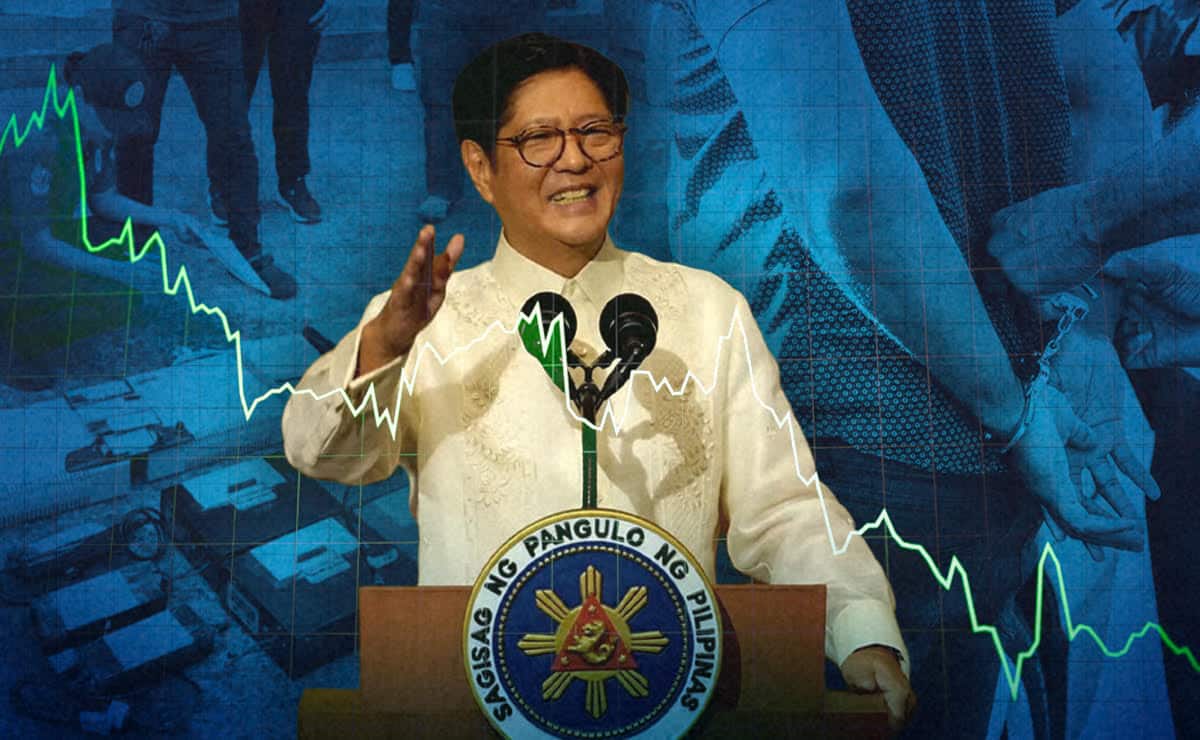
President Ferdinand Marcos Jr. MANILA, Philippines — President Ferdinand Marcos Jr. used nearly half of the 119 executive orders (EOs) he issued from 2022 to 2026 to address governance and administration, offering a look at where he most often exercised presidential power that does not require congressional approval. An analysis by University of the Philippines (UP) Diliman Associate Professor and Inquirer data scientist Dr. Rogelio Alicor Panao found that 53 EOs, or 44.5 percent of the total, fell under governance and administration—far more than those covering the economy, health, agriculture, infrastructure, education and other sectors. The next largest category, budget, finance and taxation, accounted for 13 orders, or 10.9 percent. Health and social welfare had 9, or 7.6 percent; economic development and trade, 8, or 6.7 percent; and energy and natural resources, 7, or 5.9 percent. Article continues after this advertisement Agriculture and food security, labor and employment, justice, peace and security, and science and technology each accounted for six orders, or 5 percent. Infrastructure and housing accounted for 3, or 2.5 percent, while education and culture accounted for only 2, or 1.7 percent. For Panao, the numbers do not represent a ranking of the administration’s entire policy agenda. Rather, they show the areas in which Marcos turned to a particular presidential instrument that allowed him to act without first securing congressional approval. “Executive orders are among the few policy instruments presidents can issue without congressional approval,” Panao said. “As such, they offer a window into what an administration considers urgent enough to exercise its unilateral authority,” he added. Article continues after this advertisement The findings come as Marcos delivers his fifth State of the Nation Address (Sona) on Monday, July 27, with two years left in his term and as Filipinos look for answers on inflation, jobs, corruption, education, food security and the West Philippine Sea. Panao’s analysis provides another way of examining the administration’s priorities: by looking not at everything the government has done, but at the issues where Marcos chose to use executive authority—and those where broader action depended on Congress, public spending and implementation by the bureaucracy. Article continues after this advertisement Keeping government running Governance and administration accounted for 53 of the 119 EOs examined, dwarfing every other category. The emphasis was evident early in the Marcos presidency. Among his first executive orders were EO No. 1, which abolished the Presidential Anti-Corruption Commission, and EO No. 2, which reorganized the Presidential Communications Office. Many other orders reorganized agencies, clarified responsibilities, or created mechanisms for coordination across the bureaucracy. “The distribution reflects the kinds of problems the administration believed could be addressed through presidential action alone,” Panao said. The figures, however, do not necessarily mean that governance received more government resources or attention than every other sector. EOs are only one of several policy instruments available to a president. Government programs can be pursued through department action, while broader reforms may require legislation, appropriations, and years of implementation. For Panao, this distinction is crucial to understanding what the numbers show. “The pattern suggests that executive orders served less as a blueprint for the administration’s entire reform agenda than as a tool for addressing issues requiring speed, coordination and executive control,” he said. Responding to economic pressures Beyond reorganizing the government, Marcos also used executive authority to respond to immediate economic pressures. “Others responded to immediate economic challenges by adjusting rice import policies, modifying pork import quotas, introducing palay price interventions, and strengthening food security measures as inflation weighed on households,” Panao said. Budget, finance and taxation was the second-largest category, with 13 executive orders, while economic development and trade accounted for eight. Agriculture and food security had six. The issues remain relevant as Marcos delivers his fifth Sona. An EON survey of 1,200 respondents conducted from July 7 to 10 found that 67.1 percent wanted the President to discuss the economy and inflation, the most selected issue. Jobs and wages followed at 56.2 percent, education at 53.2 percent, agriculture and food security at 47.3 percent, health at 44.7 percent, cost of living at 43.3 percent, crime and public safety at 42.4 percent, and corruption at 42.2 percent. When asked what they wanted to hear from Marcos, 48.3 percent selected “solutions to current national problems,” compared with 22 percent who selected “the administration’s accomplishments.” “Respondents place immediate action and accountability ahead of accomplishment reporting in what they want to hear from the president,” EON said. READ: More Filipinos want to hear solutions, not achievements in Sona — survey The survey reflects public expectations for the Sona rather than the effectiveness of the EOs analyzed by Panao. Food security, for example, extends beyond policies implemented through EOs. Marcos’ Walang Gutom Program reached its target of 600,000 households in May 2026, but the latest Social Weather Stations survey showed involuntary hunger rising to 23.2 percent of Filipino families in March from 20.1 percent in November 2025. READ: SONA 2026: Did Marcos’ ‘Walang Gutom’ curb rising hunger? The DSWD attributed the increase partly to tensions in the Middle East and higher oil prices contributing to rising food costs. The figures do not establish the effectiveness of any particular government intervention. They provide context for the economic and food security concerns that persist as Marcos delivers his fifth Sona. Using presidential power for maritime security Executive authority was also used in matters involving maritime governance and the West Philippine Sea. Justice, peace and security accounted for six EOs, or 5 percent. Panao’s classification includes maritime security measures such as patrols in the West Philippine Sea. “Executive authority was also deployed to reinforce national sovereignty,” Panao said. Measures strengthening maritime governance culminated in the designation of 131 maritime features in the West Philippine Sea. Panao said this signaled “that territorial integrity had become an area where the administration was prepared to act directly through presidential authority.” The finding comes as maritime tensions remain among the issues facing Marcos ahead of his Sona. A July 20 confrontation near Ayungin Shoal left two Philippine Navy sailors wounded, according to Inquirer reporting, prompting condemnation from the National Task Force for the West Philippine Sea and another diplomatic dispute between Manila and Beijing. Marcos subsequently summoned Chinese Ambassador Jing Quan and expressed his intention to “reset” relations between the two countries. READ: AFP: China Coast Guard assaults PH Navy man at Ayungin Where executive orders were used least While governance dominated the data, some sectors frequently discussed in Marcos’ Sonas appeared only sparingly. Infrastructure and housing accounted for three EOs, or 2.5 percent, while education and culture had only two, or 1.7 percent. This does not mean either sector received little government attention. Instead, Panao said their limited presence in the data underscores how many major reforms require more than an executive order. “Major reforms in education, infrastructure, labor, and other social sectors scarcely appear in the data, underscoring that many of the government’s broader ambitions ultimately depended on legislation, public spending, and implementation by the bureaucracy,” he said. Education illustrates that distinction. Marcos pledged during his 2025 Sona to add 40,000 classrooms before his term ends in 2028, while the Second Congressional Commission on Education has put the existing classroom backlog at more than 166,000. From July 2022 to July 2025, the Department of Education (DepEd) and Department of Public Works and Highways (DPWH) completed a little more than 22,000 classrooms nationwide. As of July 23, DepEd said it had mobilized P49.8 billion of its P67.9-billion school infrastructure allocation for 2026, with an initial 14,601 classrooms expected through several implementation channels. READ: SONA 2026: Where does Marcos’ 40,000-classroom promise stand? Panao noted that broader reforms in these sectors often depend on government action beyond EOs. “Major reforms in education, infrastructure, labor, and other social sectors scarcely appear in the data, underscoring that many of the government’s broader ambitions ultimately depended on legislation, public spending, and implementation by the bureaucracy,” Panao wrote. What requires Congress In a separate analysis, Panao also examined the administration’s legislative agenda, including priority measures that require congressional action. Nearly a year into the 20th Congress, only one of the 52 measures identified by the Legislative-Executive Development Advisory Council (Ledac) as priorities had been enacted as of Panao’s assessment. Thirty-one remained at the committee stage in either the House or Senate. “The numbers reveal the challenge of converting legislative priorities into policy outcomes,” Panao said. The analysis also noted that Marcos was entering the final two years of his six-year term, “when presidential influence traditionally becomes harder to sustain.” Governance under scrutiny Governance, which accounted for the largest share of the EOs in Panao’s analysis, is also among the issues facing Marcos as he delivers his fifth Sona. Investigations into the alleged flood control irregularities that Marcos denounced during his 2025 Sona have since led to cases before the courts. Malacañang said at least 45 individuals face charges before the Sandiganbayan and regional trial courts, including lawmakers, former lawmakers, former DPWH officials and contractors. The filing of charges does not establish guilt. Marcos had also created the Independent Commission for Infrastructure (ICI) through an executive order to investigate alleged flood control anomalies and recommend charges. The commission ceased operations on March 31 and turned over its findings to the Office of the Ombudsman, which conducted a parallel investigation. Ateneo School of Government nonresident research fellow Michael Henry Yusingco said the Ombudsman, rather than the President, is responsible for prosecuting corruption cases. “Prosecuting and jailing the corrupt is not within the president’s area of responsibility because that belongs to the Ombudsman,” Yusingco said. “But he could ensure that all agencies in government will cooperate with the Ombudsman’s efforts to go after officials involved in the flood control corruption.” READ: SONA 2026: What happened after Marcos’ ‘mahiya naman kayo’ rebuke? Two years left Marcos will deliver his fifth Sona before a joint session of Congress at the Batasang Pambansa Complex on Monday, July 27, with two years remaining in his term. The address is expected to report on his administration’s performance and outline its priorities as Congress opens its second regular session. Ahead of the Sona, Marcos said he would discuss how the government was trying to “navigate this very difficult period” as the Philippines deals with external challenges, including geopolitical tensions in the Middle East. Panao’s analysis, however, covers only one policy instrument available to the president and does not account for the administration’s entire agenda. “The pattern suggests that executive orders served less as a blueprint for the administration’s entire reform agenda than as a tool for addressing issues requiring speed, coordination, and executive control,” he wrote. Your subscription could not be saved. Please try again. Your subscription has been successful. “In that sense, the executive orders reveal not only the Marcos administration’s immediate priorities, but also the practical boundaries of presidential power,” Panao wrote. /mcm Visit our Sona 2026 live coverage to stay updated with the latest #SONA2026 news and stories.
Sona 2026: Marcos’ EOs show where he used presidential power most
Full Article
Original Source
Read the full article at Newsinfo →KhanList aggregates and links to publicly available news content. We do not host full articles from third-party sources. Always verify important information with original sources.