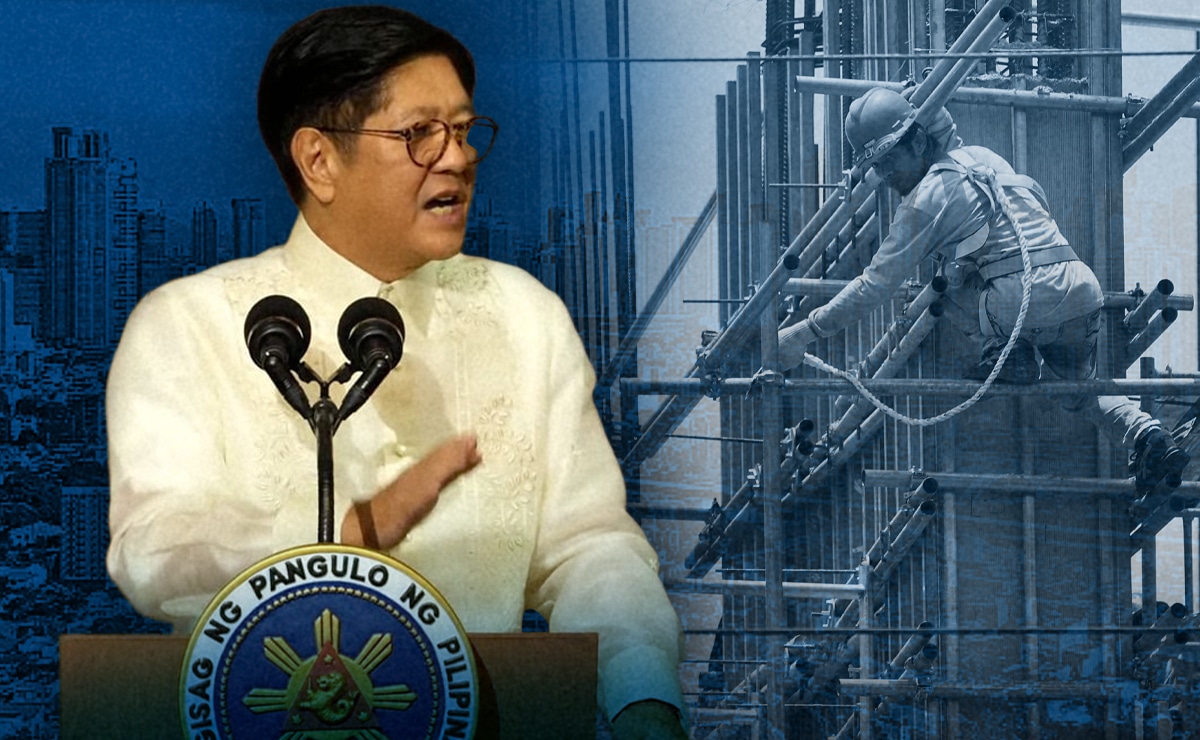
Composite image from INQUIRER files MANILA, Philippines — President Ferdinand Marcos Jr.’s “Build Better More” program has been one of the centerpieces of his administration’s agenda. In his fourth State of the Nation Address (Sona), Marcos promised further improvements in transportation and infrastructure. A year later, how many of those promises have been delivered? Marcos vowed to expand infrastructure projects nationwide, including bridges, roads, railways, airports, ports and housing. He also said more projects would be completed this year and before his term ends in 2028. Article continues after this advertisement READ: Full transcript: Marcos’ fourth State of the Nation Address, July 28, 2025 With transportation and infrastructure projects affecting mobility and access to opportunities, Filipinos are watching whether projects funded by public money are being completed as promised. Are we on track? Several bridge projects have faced years of delays, disrupting the daily lives of many Filipinos. In his last Sona, Marcos highlighted the repair and completion of bridges as among his administration’s priorities. He cited the Cabagan-Sta. Maria Bridge in Isabela, which took 10 years to complete and was damaged on Feb. 27, 2025. Article continues after this advertisement Construction of the P1.2-billion project began in November 2014 and was completed on Feb. 1, 2025. READ: Isabela bridge collapse initially traced to ‘under-design’ Article continues after this advertisement More than a year after one of its segments collapsed due to overloading, the bridge reopened to light vehicles on March 2. Marcos also said the rehabilitation of the Guadalupe Bridge in Makati would be completed before his term ends. The project is expected to be finished in February 2028. The rehabilitation of the Guadalupe and Lambingan bridges in Sta. Ana, Manila, is part of the Metro Manila Priority Seismic Improvement Project, undertaken with assistance from the Japan International Cooperation Agency (Jica). The P10.4-billion project aims to improve the bridges’ resistance to earthquakes. Marcos had said construction of the 32-kilometer Bataan-Cavite Interlink Bridge would begin before the end of 2025. Public Works and Highways Secretary Vince Dizon said Monday that the agency would soon award critical contract packages for the bridge, while the awarding of other packages was underway. Dizon also said the bridge would not be completed before Marcos’ term ends. The project aims to cut travel time between Mariveles, Bataan, and Naic, Cavite, from five hours to 45 minutes. The country’s railway system is also expected to expand under the administration, although some projects will be completed after Marcos leaves office. READ: Hopes on track: How are PH railway projects going? A demonstration run for the 33-kilometer Metro Manila Subway Project is targeted for 2028, while full completion is expected by 2032. Jica is financing the more than P488-billion project under a loan agreement approved in September 2021 by the then-National Economic and Development Authority Board, now the Department of Economy, Planning and Development. In February 2026, Marcos said the project was ahead of schedule as he led the groundbreaking for the Kalayaan Avenue and Bonifacio Global City stations in Taguig City. The subway will run from Valenzuela City to Parañaque City, with a spur line to Ninoy Aquino International Airport Terminal 3. The Department of Transportation (DOTr) earlier said partial operations of the 22-kilometer Metro Rail Transit Line 7 and the 147-kilometer North-South Commuter Railway were scheduled for the second quarter and the third or fourth quarter of 2027, respectively. Transportation Secretary Giovanni Lopez acknowledged that right-of-way acquisition had delayed the construction and completion of railway projects. The agency continues to relocate families affected by the projects. The administration also offered discounted train and bus rides in 2025 and 2026. The “Love Bus,” first launched in the 1970s, was revived in Cebu and Davao to provide free rides. In March 2026, the Metropolitan Manila Development Authority relaunched the service between Robinsons Galleria and Eastwood City. Last year, the 1+3 Pamilya Pass became available every Sunday on Metro Rail Transit Line 3 and Light Rail Transit Lines 1 and 2. A 50-percent fare discount was also offered to persons with disabilities, students and senior citizens on the three rail lines. In March 2026, the DOTr announced a 50-percent discount for all MRT-3 and LRT-2 passengers because of the conflict in the Middle East. The DOTr also ordered the sanitation and inspection of MRT-3 trains after photos showing tiny pests inside a train handrail went viral. A notice to explain was issued to Sumitomo Corp., the train system’s maintenance provider. Keeping tabs READ: Transport strikes, protests to continue until demands met — Piston The conflict in the Middle East, which began in February, triggered a series of major oil price increases that disrupted the livelihoods of many public utility vehicle drivers and operators. Transport groups, including Manibela and Piston, staged strikes nationwide. They called for the removal of excise and value-added taxes on fuel products, lower fuel prices, the repeal of the Oil Deregulation Law and a fare increase. The Land Transportation Franchising and Regulatory Board approved fare increases for jeepneys, buses, airport taxis and transport network vehicle services that were to take effect on March 19, 2026. Marcos suspended the increases a day before their implementation, saying it was not the right time because of the war in the Middle East. The suspension provided relief to commuters but drew criticism from the public transportation sector. Because of the conflict’s impact, Marcos declared a state of national energy emergency. The government then adopted the Unified Package for Livelihoods, Industry, Food and Transport as a framework for maintaining the domestic energy supply and ensuring the uninterrupted delivery of essential services. READ: What billions look like: Visualizing the staggering scale of flood control corruption Several investigations into alleged corruption involving flood control and other infrastructure projects were launched in 2025. The investigations implicated major contractors and several government officials and lawmakers. Your subscription could not be saved. Please try again. Your subscription has been successful. The allegations prompted thousands of Filipinos to join anti-corruption protests demanding accountability, particularly from those accused of receiving kickbacks from infrastructure projects. /dm Visit our Sona 2025 live coverage to stay updated with the latest #SONA2025 news and stories.
SONA 2026: Are Marcos’ transport, infrastructure promises on track?
Full Article
Original Source
Read the full article at Newsinfo →KhanList aggregates and links to publicly available news content. We do not host full articles from third-party sources. Always verify important information with original sources.