
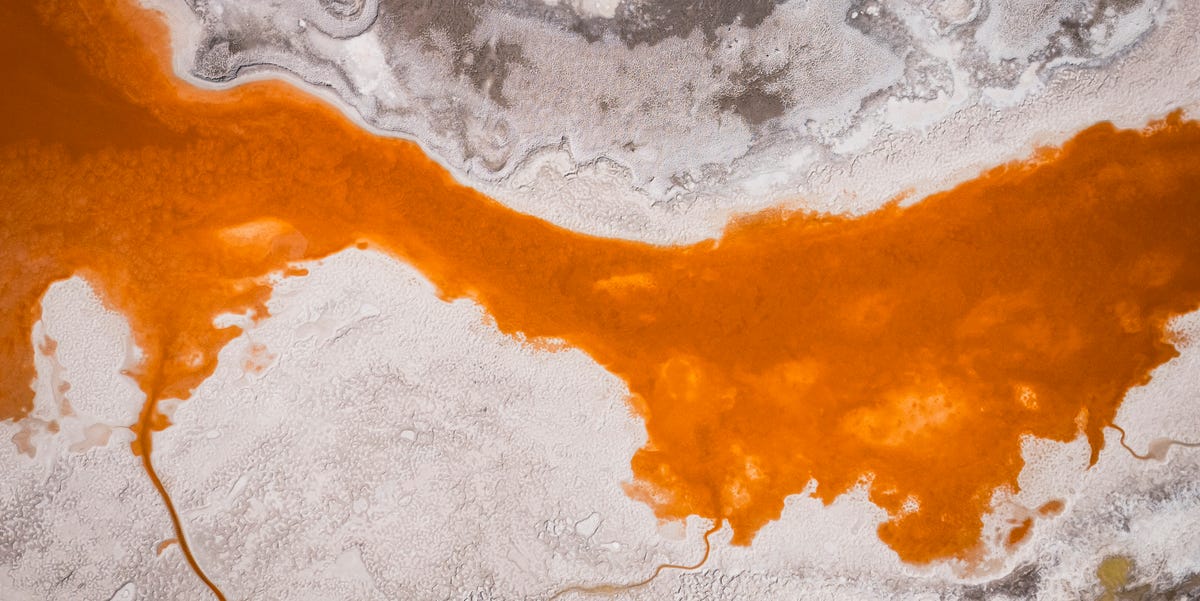
3 min readNo place on Earth is insulated from the impacts of climate change, and that includes the remote Alaskan wilderness. Here, pristine streams criss-cross the landscape and support a diverse ecosystem of fish, mammals, and birds, but in 2018, scientists studying these ecosystems noticed something particularly troubling.“We were out there in 2017 and everything was great—we were collecting fish and collecting macroinvertebrates,” Mike Carey, a research fish biologist with the United States Geological Survey (USGS), said in 2024. “Then we came back in 2018 and the whole river, the whole small tributary had turned orange…I couldn’t find any fish in the stream.”Initially, researchers believed this strange rust-colored phenomenon was a one-off event, but soon they noticed more rivers sporting the strange orange hues. In the end, they collected over 70 cases of similar water changes throughout remote Alaska. With collaboration from the University of California (UC) Davis, National Park Service, and USGS, a study published in 2024 in the journal Communications Earth & Environment detailed how this unanticipated event was caused by climate change thawing permafrost.According to the study, as permafrost thaws, water seeps into soils that’ve been frozen for thousands of years, and when these minerals oxidize, they release all kinds of metals including. iron, aluminum, manganese, zinc, nickel, cadmium, and other rare earth elements. A follow-up study by the same agencies examined six Alaskan watersheds to gauge the impact of the changing water chemistry. Published in the journal AGU Advances, the research found metal levels up to 70 times higher than normal at sites roughly 60 miles downstream.“The good news is the river’s mainstem did not become more acidic. It’s buffering the pH, indicating there is some resiliency in this system,” UC Davis’s Brett Poulin, senior author of the study, said in a press statement. “But there are metals that increased downstream, and those can be transported very long distances.”From 2022 until 2024, the team spent summers collecting samples from watersheds to analyze the impacts of this “acid rock drainage,” which describes the process of oxidized minerals releasing sulfuric acid and metals. Typically, orange rivers like this are seen near mines, but the discolored Alaskan waterways occurred far from any known mining operation.The researchers also discovered that warm, wet periods in the region, specifically from 2018 until 2019, exacerbated the issue. July 2019, for example, remains Alaska’s hottest month on record, and that scorching summer preceded a particularly snowy winter, which set the stage for the incredible influx of acid rock drainage the scientists observed.“When you have more snow, it insulates the soil, preventing refreezing,” UC Davis Ph.D. student Taylor Evinger, lead author of the paper, said in a press statement. “We think water went deeper into the soil because of soil thaw, interacted with these minerals, and all of these watersheds were triggered around the same time.”The phenomenon isn’t limited to Alaska. It has also been reported in Canada and other permafrost-rich boreal forests. Evinger notes that despite higher metal concentrations, researchers haven’t seen massive fish die-offs or water quality problems for local villages. Still, the results show that even the world’s most remote places bear the visible marks of climate change.Darren lives in Portland, has a cat, and writes/edits about sci-fi and how our world works. You can find his previous stuff at Gizmodo and Paste if you look hard enough.
Something Ancient Is Waking up Under Earth’s Surface—and It’s Turning Water Orange and Toxic
Full Article
Original Source
Read the full article at Popularmechanics →KhanList aggregates and links to publicly available news content. We do not host full articles from third-party sources. Always verify important information with original sources.