
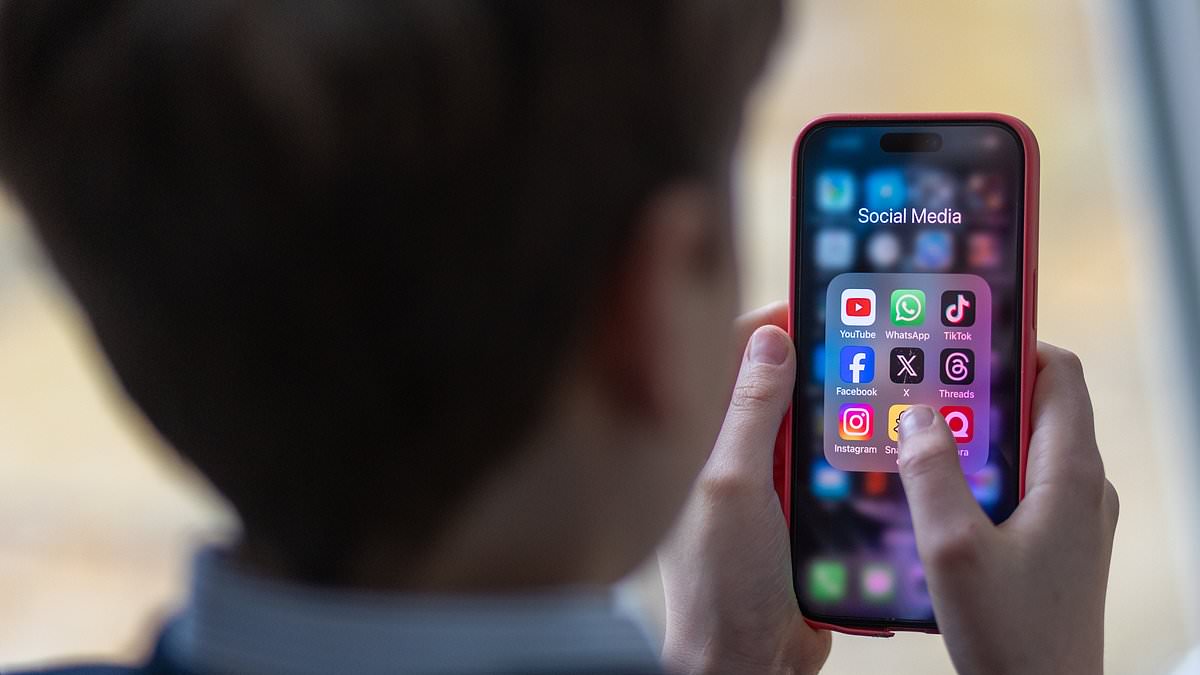
Children across the UK will soon be forced to hand in their phones at the school gates under new Government plans aimed at tackling classroom disruption.But will this phone ban – set to be rolled out from September – really work? Speaking to the Daily Mail, experts have warned the crackdown could backfire – with studies suggesting blanket smartphone bans do little to improve children's mental health, behaviour or academic performance. And they say there is little evidence that school phone bans alone solve the wider problems linked to smartphone and social media use.Sonia Livingstone, Professor of Social Psychology at the London School of Economics, told the Daily Mail: 'The evidence that phones at school undermine learning is weak.'Clearly, being distracted by phones can undermine both learning and socialising. But many schools are managing this just fine.'This risks being a heavy–handed approach to lend authority to the schools that are not managing children's phones well.'But we have no evidence that schools struggling with discipline will find this helpful – nor that they have the spare cash to introduce pouches or lockers.' Children across the UK will soon be forced to hand in their phones at the school gates under new Government plans aimed at tackling classroom disruption. But will this phone ban – set to be rolled out from September – really work? (stock image)The debate comes amid growing concern about the impact smartphones and social media are having on children's mental health, sleep and development.Ministers believe tougher restrictions will help tackle classroom disruption and reduce children's exposure to harmful online content.A spokesman for the Department for Education said strengthened guidance 'will make clear that schools should go beyond 'not seen, not heard' – where phones may remain in pupils' bags – and adopt whole–school strategies that keep phones out of use and inaccessible throughout the school day.'But critics say such policies risk focusing on the wrong problem, arguing that harmful social media use often takes place at home rather than in the classroom.Some studies have even found that pupils subjected to strict restrictions compensate by spending more time on their devices after school, potentially sacrificing sleep and exercise in the process.'I haven't seen evidence that phones at school are significantly contributing to problems,' Professor Livingstone said. 'Most evidence concerns phone use at home, especially at night, and for this schools could provide stronger guidance to children and parents.'The problems are not really with phones but with social media companies' business models which push content at children via attention–grabbling feeds, push notifications and the like. I would focus on effective regulation of the companies rather than the children.'Schools have been ordered to make pupils hand in phones at the start of the day instead of allowing them to be kept in bags under new changes to statutory guidance. Pictured: Education Secretary Lucy Powell Professor Livingstone's previous research on smartphone policies in schools found some benefits for academic performance when phone use is restricted, especially for disadvantaged pupils.But it concludes: 'However, the results are mixed, with some studies showing no benefits or even harmful effects.'Her concerns are echoed by a growing body of research suggesting that school phone bans alone are unlikely to solve wider problems associated with technology use.Victoria Goodyear, professor of Physical Activity, Health and Wellbeing at the University of Birmingham, said: 'Implementing phone policies in schools places a significant demand on staff time – with around 100 hours each week needed.'In restrictive schools, most time is spent applying behavioural sanctions for policy breaches, for example detentions and parent communication.'The concern is that time spent by staff on enforcing school phone policies could divert time away from other wellbeing promoting activities such pastoral support, extra–curricular and enrichment activities.' Professor Goodyear's own work found 'no difference in mental health, wellbeing, educational attainment, disruptive behaviour and other outcomes' between pupils attending schools permitting phones and those that ban themThe SMART Schools study, led by the University of Birmingham, found that banning smartphones in schools alone is not enough to tackle the negative impacts of phone and social media use.'[There was] no difference in mental health, wellbeing, educational attainment, disruptive behaviour and other outcomes between pupils attending schools permitting phone use and those attending schools which ban phones,' Professor Goodyear said.'We found that restrictive policies bring a mixture of benefits and unintended consequences.'For example, restrictive policies can improve in–person interactions in school, that can lead to improvements in pupil friendships, but these policies also result in an increase in in–person conflicts.'Our findings suggest that school phone policies don't eliminate issues from occurring, but they change how and when they arise in young people's lives.'She explained that students in schools which allow phones often show stronger self–management habits, such as charging devices outside their bedrooms, setting screen–time limits, or deleting apps to reduce usage.She added: 'Students' relationships with their phones is effectively 24/7, regardless of the school phone policy.'Phone and social media–based activity and interactions outside school frequently spillover into the school day, even if phones are not permitted – shaping issues such as bullying, conflict and distraction.'Banning phones is not enough to tackle the negative impacts of phone and social media use.'
Should children be forced to hand in their phones? As UK schools are ordered to stop pupils keeping devices in bags, experts warn bans could backfire
Full Article
Original Source
Read the full article at Dailymail →KhanList aggregates and links to publicly available news content. We do not host full articles from third-party sources. Always verify important information with original sources.