
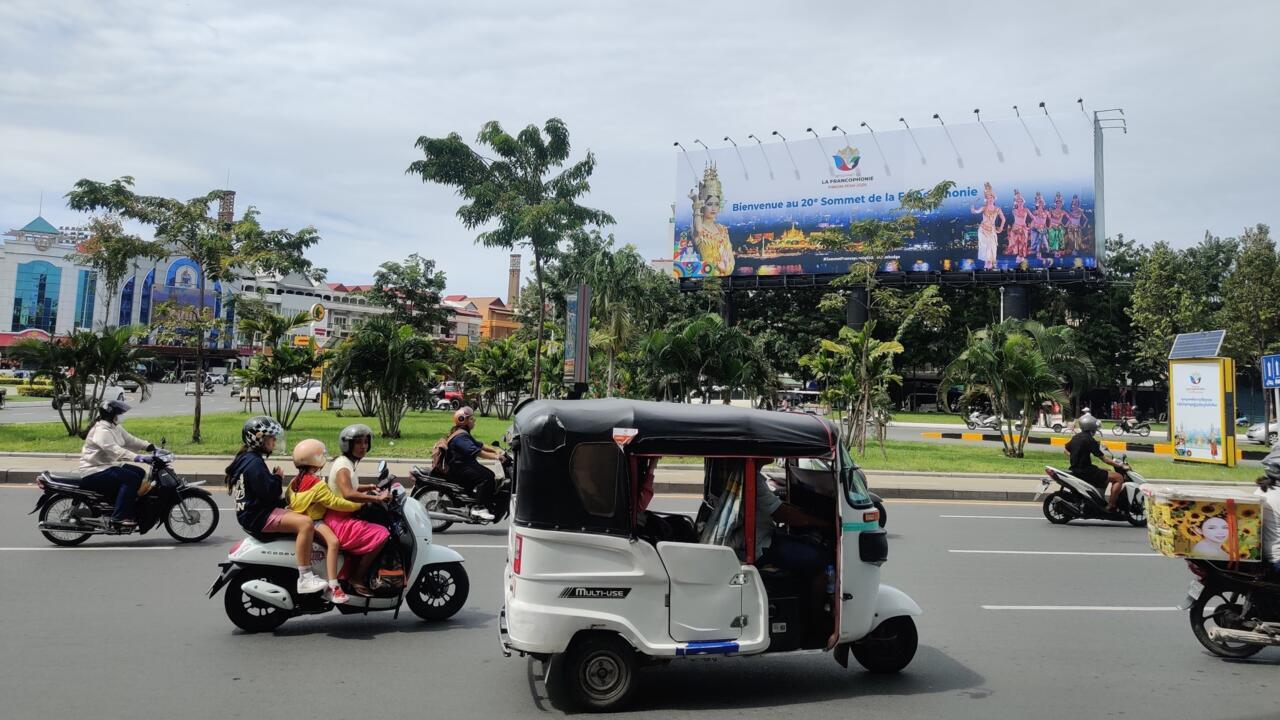
Phnom Penh is hosting the 20th Francophonie summit, which opens on 15 November. But with tensions with Thailand rising and tourism in decline, the summit comes at a challenging time for Cambodia. Issued on: 15/11/2026 - 09:33 3 min Reading time "The Khmer smile, the smile of La Francophonie"... "In French, please"... "Welcome to the kingdom of wonders"... From the airport to the city centre, amidst the heavy traffic of the Cambodian capital, numerous posters advertise the Francophonie summit, taking place from 15 to 16 November. Almost 30 years after the 1997 summit in Hanoi, this is only the second International Organisation of La Francophonie (OIF) summit to be held in Asia. It serves as a tribute to the legacy of the late King Norodom Sihanouk, a key figure in Cambodia’s modern history and one of the founders of the OIF, alongside Léopold Sédar-Senghor, Hamani Diori and Habib Bourguiba. Tensions with Thailand The summit represents an opportunity for Cambodia to raise its profile on the international stage and add another card to its diplomatic hand, as the country continues to seek to diversify its partners. It also serves as a welcome opportunity for Cambodia to make its voice heard amid tensions with neighbouring Thailand. The long-running border dispute between the two countries remains critical, one year on from a sharp escalation that displaced hundreds of thousands of people and claimed dozens of lives. The theme of this year's summit is "Reinvest in peace for shared prosperity and lasting stability", ad its website states unequivocally that "the border disputes that have marked the region’s history" continue to be an obstacle to this. But the issue is a thorny one for France, which finds itself in a difficult position. Rwanda-DRC tensions threaten to overshadow Francophonie election The origin of the conflict dates back to the colonial era, with the Franco-Siamese Treaty of 1907 which defined the borders between Thailand (then the Kingdom of Siam) and French Indochina. Despite the International Court of Justice's 1962 ruling awarding the Preah Vihear temple to Cambodia, the demarcation of the surrounding areas remains disputed and a source of persistent tension. The ceasefire brokered in December 2025 remains in force, but the situation remains fragile with Phnom Penh accusing Bangkok of illegally occupying its territory. The event could give Cambodia a chance to gain support from other Francophone countries. The Parliamentary Assembly of the Francophonie adopted a resolution last July calling for strict respect for Cambodia’s sovereignty. However, the idea that the issue could be on the summit agenda has not been well received by Thailand, which has accused Phnom Penh of seeking to "internationalise" the conflict and has explicitly requested the matter not be raised, against a backdrop of diplomatic pressure. Economy and tourism Another key priority for the host country is the economy. Between the France-Cambodia Business Forum, the FrancoTech fair and the Francophone Entrepreneurs’ meeting, the events taking place on the fringes of the summit are expected to attract hundreds of businesses and investors. By welcoming thousands of delegates, exhibitors and visitors from around the world, Cambodia expects to boost its tourism sector, which has struggled since the start of the year. France's Macron to pay state visit to Cambodia during Francophonie summit Global tensions and soaring airfares – and, more locally, the border crisis with Thailand and the issue of online scam centres – have put a damper on foreign visitor numbers over the first nine months of 2026. Reviving tourism is one of the aims of the Village de la Francophonie, a cultural event open to the general public from two days before the summit. Phnom Penh also intends to use the summit to strengthen its economic ties with the Francophone world, which, according to the OIF, accounts for 16 percent of global GDP and 20 percent of international trade in goods. However, another key issue at the summit is Cambodia's language policy, as French continues to lose ground in the country. French speakers are estimated to account for around 3 percent of the population, while English and Chinese are gaining in popularity. While the OIF has signed a five-year plan with Cambodia to boost French-language teaching, French is now largely a language of specialisation, confined to Francophone institutions, some higher education courses and family heritage. This article has been adapted from the original version in French by Baptiste Condominas.
Tensions and economic turbulence in Cambodia, as it hosts Francophonie summit
Full Article
Original Source
Read the full article at Rfi →KhanList aggregates and links to publicly available news content. We do not host full articles from third-party sources. Always verify important information with original sources.