
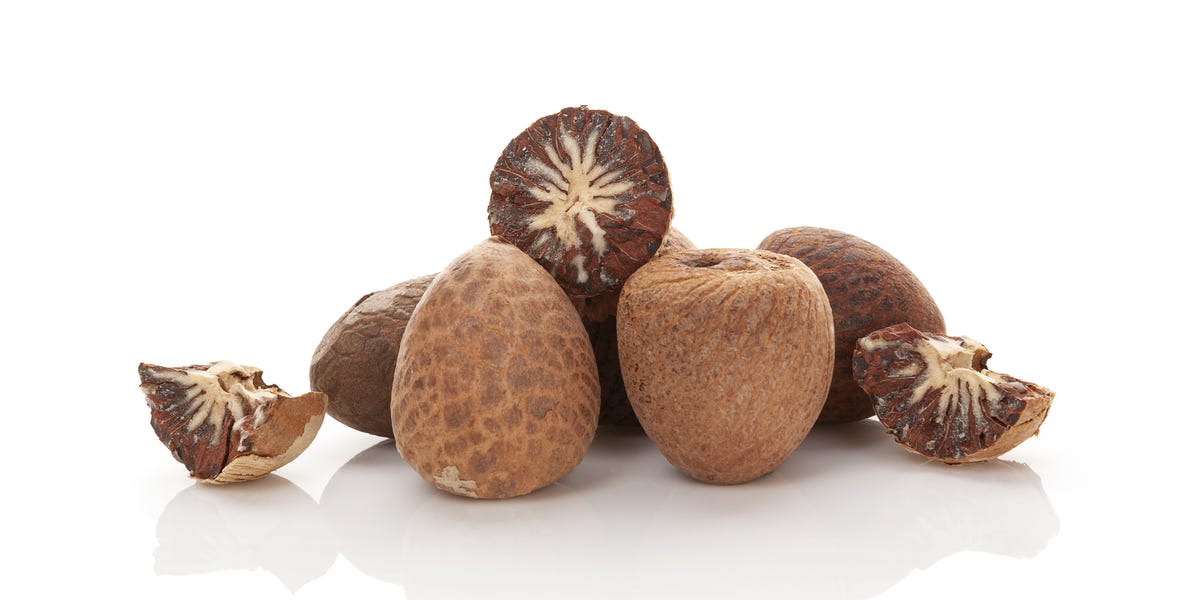
4 min readHere’s what you’ll learn when you read this story:While betel nuts are still chewed today in many parts of Asia and Oceania, the practice probably began when ancient hunter-gatherers sucked on them for toothaches.Researchers examined teeth from two individuals and found excessive wear from sucking and occasionally gnawing on these hard seeds of the areca palm.It’s likely that the wear from sucking betel nuts led to more pain and subsequently to frequent use to manage that pain, so these individuals might have been constantly high.Humans were ingesting psychoactive substances long before the Beatles immortalized tripping on LSD in Lucy in the Sky With Diamonds. Beer was first brewed from barley in Israel 13,000 years ago. The hallucinogenic San Pedro cactus and Mescal bean, which comes from the pale purple pods of the mountain laurel, were both being used for ritual and medicinal purposes in Peru and Texas about 10,400 years ago. Peruvians were also chewing coca leaves while peoples in the Sahara were seeing visions from psilocybin mushrooms 8,000 years ago.Humans have used psychoactives and psychedelics for thousands of years, but one drug became a habit even earlier. The highly addictive betel nut (also known as areca) has been a known stimulant in many parts of Asia and Oceania for millennia. Today it’s wrapped in a betel leaf with slaked lime and chewed to intensify its effects, but the earliest users needed no such preparation. When a team of researchers were excavating in a cave on the island of Sulawesi, Indonesia, they discovered the molars and jawbone of an ancient hunter-gatherer and found evidence they were sucking on betel seeds between 16,000 and 25,000 years ago. Teeth from an individual at a younger site, from 6,300 to 7.600 years ago, also showed damage from frequently chewing betel nuts.“We report here skeletal remains of two adult foragers from preagricultural Sulawesi, both of which exhibit a form of dental pathology (rounded, hollowed-out tooth grooves) that has not previously been recognized and formally described in the literature,” the researchers said in a study recently published in Science Advances.The oldest dental specimen belonged to a hunter-gatherer who lived during the Late Pleistocene. This individual is estimated to have been at least 35, though possibly much older, at the time of death, and all that survived are their right maxilla and molars. It soon became evident that they also suffered from periodontal disease. There was also a pattern of wear on the molars that suggested an object—specifically a hard round object—being stored in the back of the mouth and repeatedly moved from one side to the other. This probably meant it had been sucked on, causing the molars to wear down over time. Further analysis revealed the object had about the same dimensions as a betel nut. The younger individual from the middle Holocene also showed declining oral health, along with tooth loss and wear similar to that of their ancestor.Something other than chewing wore down both sets of teeth. The two foragers are now the only people known from prehistoric Sulawesi with this pattern of wear, though preagricultural remains from the island are rare. Modern chewing of betel nuts is known to be associated with painful dental problems. These include extreme tooth wear, periodontal disease, enamel and root fractures, staining, and a high accumulation of plaque that can cause cavities and other issues. Missing from this list is dental wear resulting from the constant passing of an object around the mouth. While the teeth of both ancient individuals show some discoloration, whether this is from betel nut stains (unlikely unless they were chewed), age, or taphonomic processes after death is unknown.What the research team could see was that the dental wear on both individuals was consistent with shelled betel nuts from the wild areca palm known as Areca catechu. They clenched the hard, abrasive nuts between their teeth, gnawed them occasionally, and moved them from cheek to cheek with the tongue and oral muscles. Because there’s no nutritional value in betel nuts, they’re thought to have been used as medication for dental disease, and this eventually led to addiction. As the nuts continued to wear teeth down, sometimes to the pulp, as was seen in the younger individual, they were increasingly needed for pain relief.To find out what psychoactive compounds are released by sucking on a betel nut rather than chewing, the researchers ran an experiment. Arecoline is a compound in betel nuts that activates certain receptors in the brain and triggers a high similar to nicotine. Arecoline latches onto the brain’s muscarinic and nicotinic receptors for acetylcholine, the neurotransmitter behind attention, learning, memory, arousal, and involuntary movements like blinking. Whole nuts soaked in a saline solution released less arecoline than nuts that had been crushed to simulate chewing. Sucking them would still release enough of it for a high, though.Both tooth specimens tested positive for arecoline and other compounds found only in A. catechu. Water soaked with whole nuts still triggered human acetylcholine receptors grown in frog eggs, proving that sucking, though weaker than chewing, released enough arecoline to blunt a toothache. The nuts were essentially prehistoric painkillers.“Physical dependence was significant enough to cause severe dental damage,” the researchers concluded. “It thus seems probable that managing the effects of addiction and other adverse health consequences of drug use was a part of human experience long before the oldest of our most common psychoactive substances, such as alcohol, had emerged.”Elizabeth Rayne is a creature who writes. Her work has appeared in Popular Mechanics, Ars Technica, SYFY WIRE, Space.com, Live Science, Den of Geek, Forbidden Futures and Collective Tales. She lurks right outside New York City with her parrot, Lestat. When not writing, she can be found drawing, playing the piano or shapeshifting.
Scientists Found Evidence of the World’s Oldest Drug Habit in 25,000-Year-Old Teeth
Full Article
Original Source
Read the full article at Popularmechanics →KhanList aggregates and links to publicly available news content. We do not host full articles from third-party sources. Always verify important information with original sources.