
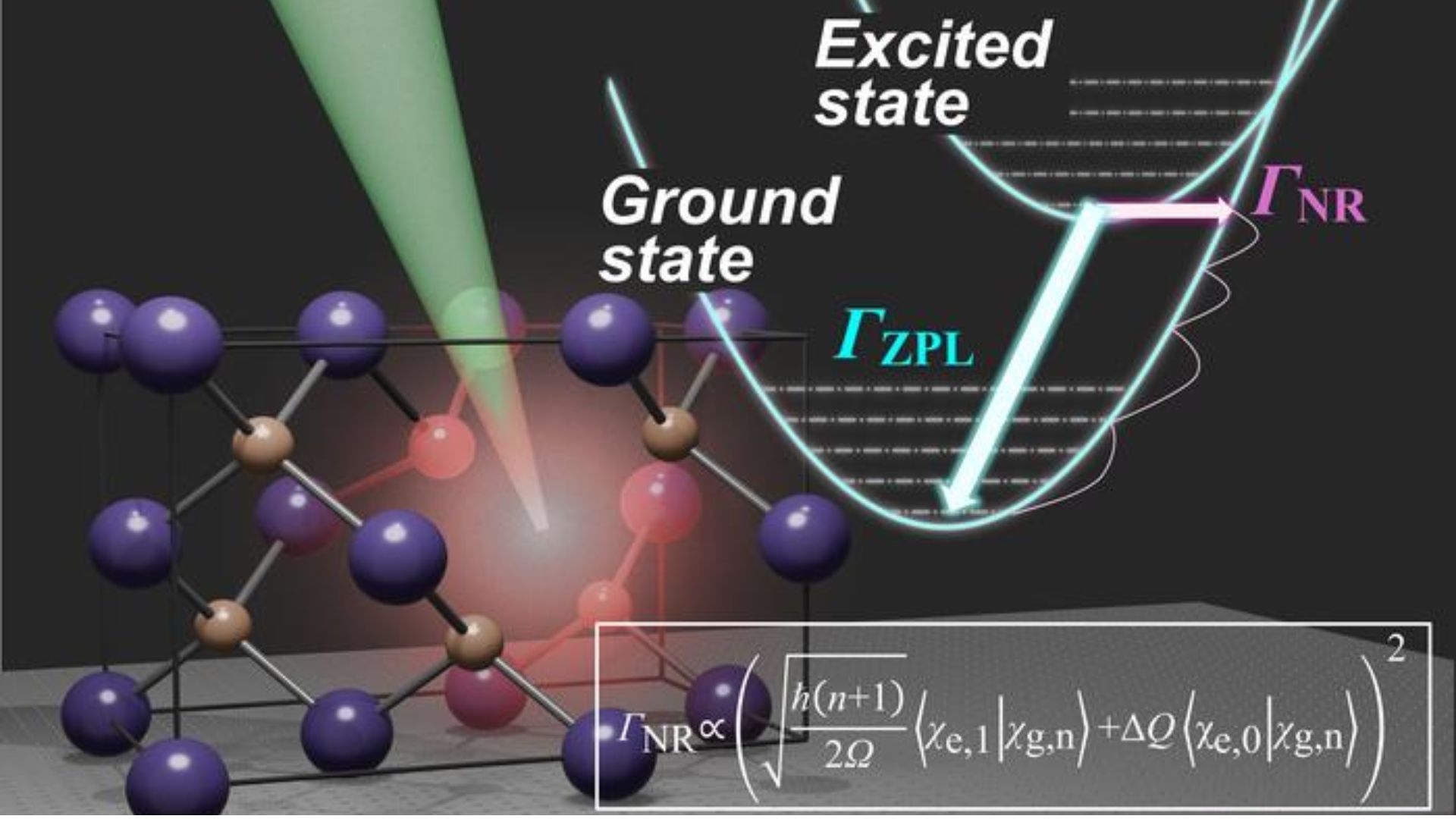
Scientists at the University of Osaka have developed a new prediction framework that can accurately evaluate if a material has quantum properties or not without performing complex and time-consuming simulations. The first principles framework works across different material types without losing its accuracy, thereby supercharging the hunt for new quantum materials. Advances in science and technology are leading us to a quantum age, where scientists can tap into properties like entanglement and superposition to carry out functions far beyond what classical physics can even explain. We are already seeing these being applied in the form of quantum sensing, communication, and even computing, but we have barely scratched the surface with these technologies. For a full-fledged quantum age, we still need to explore and find new materials that display these quantum properties and can be used in such applications. However, the search for such quantum materials is painstakingly slow. Typically, this involves evaluating whether the material displays quantum features and emits quantum light and requires computationally intensive simulations. Researchers at the University of Osaka used first-principles thinking to avoid these intense computations and developed a new framework to identify quantum materials. Working with color centers For much of the research in quantum technologies, scientists turn to color centers, which are crystal defects that absorb specific wavelengths of light and cause a display of vivid colors. Typically, at the center of the crystal is a defect such as a missing ion, which is either filled by unpaired electrons or teams up to display these color patterns. These crystals are becoming relatively easy to make and can be used across quantum applications. They are also important because they have the ability to preserve quantum information and still emit individual photons. Scientists have struggled to validate their efficiency since it requires complex computations to determine how much energy is lost to vibrations inside the crystal rather than emitted as light. These are complex computations that are intensive and slow and have a much larger impact on the pace of quantum material discovery. This is why the research team decided to do away with complex computations and replace it with a simpler, faster framework. Compact theoretical formula To replace the previous approach, the researchers developed a compact theoretical formula that can calculate complex optical losses caused by nonradiative processes and introducing an effective approximation instead. The approximation still ensures that the results are in agreement with conventional methods but removes the need for extensive computations. To demonstrate that their approach works, the researchers used silicon carbide and successfully identified several promising spin-qubit candidates, while also identifying emitters that conventional methods had already identified. “Because the prediction method is independent of the host material, it can be used to efficiently evaluate color centers across a wide variety of semiconductors,” explained Sosuke Iwamoto, a researcher at the University of Osaka, who was involved in the research in a press release. “It also applies to emitters spanning a broad spectral range, from ultraviolet to telecommunication wavelengths.” Identifying bright, efficient quantum emitters while also accounting for light emission and optical losses using a simple framework is expected to rapidly advance the discovery of new quantum materials. The research findings were published in the journal npj Computational Materials. Get the latest in engineering, tech, space & science - delivered daily to your inbox.Ameya is a science writer based in Hyderabad, India. A Molecular Biologist at heart, he traded the micropipette to write about science during the pandemic and does not want to go back. He likes to write about genetics, microbes, technology, and public policy.
Scientists accelerate search for quantum materials with new prediction framework
Full Article
Original Source
Read the full article at Interestingengineering →KhanList aggregates and links to publicly available news content. We do not host full articles from third-party sources. Always verify important information with original sources.