
We tend to finish Samanta Schweblin’s books feeling shaken, and with a bitter taste in our mouths. We emerge from each of her works half-intoxicated, as if we had spent hours breathing tainted air. From the stories of Pájaros en la boca (Mouthful of Birds) and Siete casas vacías (Seven Empty Houses) to the family tale of Distancia de rescate (Fever Dream) and the technological parable of Kentukis (Little Eyes), the author has created some of the most unique works to have come from Spanish-language literature. They are dedicated to exploring the strangeness that lies within supposed normality, in our relationships and in our bodies.Her latest book, El Buen Mal (Good and Evil and Other Stories), opens with the story of a mother who straps an anvil to her body, jumps into the lake and, after failing in her suicide attempt, goes home to make dinner. The epigraph features a line from Silvina Ocampo that serves as a warning: “Strange is always truer.”We asked Schweblin to look back on her career, and she agreed. She meets us in Berlin, where she has lived since 2012, at a bar in her neighborhood on the eastern edge of Kreuzberg, near the River Spree, where neo-Nazi protests often pass by.Question. Your characters rarely experience outright fantastical events. Instead, reality bends slightly until the monstrous becomes ordinary.Answer. I like that description. I’m interested in the moments in which the impossible or unthinkable suddenly appears and breaks down the very structured ideas we have as to what is normal and acceptable. We are very much encapsulated by those definitions. These situations may appear fantastical, but they form part of our reality.Q. In the appendix of Good and Evil and Other Stories, you talk about where each story came from and how much real-life experience can be found in the work. Why did you decide to be so transparent?A. I was also surprised. Ever since I started the book, the idea for that appendix was present. I thought, “I can always take it out…” But when I finished writing it, it seemed like so much a part of the book that I told myself it should be published. I have always been very reticent in speaking about my personal reasons to write. With this book, all that has changed. It may be my most personal book yet.Q. Why do you feel less inhibited now?A. It may be a question of age, of losing one’s fears. It’s as if I were able to turn down the volume of my anxiety when I write. In this book, the stories are very long. I was afraid that the process would be too long, and soon I discovered that the length created an emotional connection with the characters that was much deeper. I didn’t achieve that easing of anxiety through writing, but rather in my own life. And it came through in my writing.Q. Caregiving is among the central themes of Good and Evil. Is this a book about caregiving gone wrong, about the impossibility of caring well? For you, are tenderness and harm inseparable?A. Yes and no. There’s no way of shaping another person without misshaping them, especially if we are talking about fatherhood and motherhood. At the same time you are trying to protect, heal and care, you are exercising power over the other person. You can’t escape your own fears, prejudices and pains, the rules you inherited, the ideas you have about the world. And in this book, the reverse process also emerged: how many times do people come to hurt us, and suddenly that jolts you awake, shifts your life’s priorities, and transforms you into a different person — someone stronger, smarter, and more perceptive. Sometimes evil creeps in and leaves you in such a state of shock that, for the first time in a long time, you actually pay attention.Q. What does paying attention mean to you? You often repeat the phrase.A. It is humanity’s greatest superpower. The other day at a dinner, someone said something I will never forget: “You don’t need to be talented anymore; all you have to do is work with real focus for two hours a day.” That alone puts you above average. Why is it a superpower? Because not everyone can do it anymore. Not a single time do I take the subway without noticing that 99% of the people are looking at their phones. We’ve shut off our awareness of the world around us.Q. Can that be extrapolated to the political situation?A. Yes, that awareness has also been turned off in the political realm. Bombs are falling just a few hours away by plane, and yet it feels as though it’s happening in a parallel reality, one that gets mixed into our social media feeds between ads for skincare products and tips on how to consume more protein. We’re confronting new forms of media, but we still haven’t decided how to behave in relation to them.Q. In Little Eyes, you seemed to anticipate an era in which privacy not only disappears but is willingly handed over to strangers. What drew you to that subject?A. I was thinking about how 1984 and Brave New World seem more contemporary today than when I read them as a teenager. I asked myself how one could write about technology without getting bogged down in technical jargon, which quickly becomes outdated. The “kentukis” device [from Small Eyes] allowed me to concentrate on something more relevant: not speaking about technology itself, but rather what we turn into when we try to relate through it. We are hyper-technologized, at this point, we are androids with miraculous extensions in hand. But we normalize what is in front of us, and we don’t pay attention to its consequences.Q. What happened to privacy? Does that concept still exist?A. Perhaps privacy, like concentration, has become a small luxury or an act of resistance. For me, it continues to be essential. I associate it with solitude, which is where I think, understand and pay attention the best. I try to protect it. Last year, I set myself a rule of only looking at social media on Sundays, and I follow it to the letter. I have a VPN installed on my computer. I always have my phone on silent, and I don’t take it out of my backpack if I’m with someone. And I never post personal things.Q. In 2018, you said that technology had transformed all of the arts, save for literature. Does artificial intelligence change that assessment?A. No, I still think that. Technology changed film, theater, dance, music. Up to this point, it has only changed literature in terms of digital support. It hasn’t undergone any radical shift. Artificial intelligence could do that in future; it would be naive to think it couldn’t. But it hasn’t yet taken that step. The best fiction takes a leap outward, discovers something new, rises above the author. Artificial intelligence can be smarter, faster, better informed than we are, but that is not intelligence — it is a language of predictions. There’s no way for it to take a leap outward. Its advance is trapped in its probabilities. To put it another way, it has all the tools to produce bad literature. The deep mechanisms of great fiction have not changed yet. And that almost moves me. How wonderful that this heart of human thought continues to beat in the same way…Q. Your work is full of strange, lost and damaged children and teenagers. Why does that figure interest you?A. A child has a wisdom that is no better or worse than an adult, but it is distinct and very valuable. It is something that is recovered in old age. What happens in between is that we become little rule-following adults, flattened by what we should be and do. I’m curious as to what will happen with the new generations, who are beginning to consider the unique, the foreign, the strange as something positive. It is the first generation in which being a nerd is good, and I love that. That would have saved me years of bullying, fears and traumas. They shed light on a new truth, closer to that which we really are. What they’re doing is wise and healthy.Q. Many of your books feature a mother on constant alert, afraid of failing in her duty to care for her children. Where does that idea come from?A. It’s true. In Fever Dream, for example, I spoke about the distance that separates us from the people we want to care for in the case of an accident. There is an apparently distracted mother and her two-year-old daughter at the edge of a pool, but that mother is doing calculations the whole time: if my daughter falls into the water, how long would it take me to grab her? The more fears you have, the shorter that distance becomes. But the closer you are and the more control you exercise, the more damage you do. People often ask me how I could write that book without being a mother. And I reply that I’m not a mother, but I’ve been a daughter for 48 years. When Mom pulls on one side, I feel it on the other.Q. Illness and contamination are also recurring themes in your work. Your stories unfold in a strange atmosphere, as if something toxic were hanging in the air. And by the end, readers often feel a little intoxicated too...A. I’ll take that as a compliment. I associate what’s toxic with something harmful that’s unwelcome: you always get poisoned without meaning to, or without fully realizing it. And that’s where the issue of control comes up again. To what extent do we control that poisoning? What’s toxic always comes packaged as a trap. You don’t enter a relationship thinking, “I’m going to get involved with someone toxic.” You only realize it once you’re already trapped. It happens with people, but also with food, information, and ideas. It’s a very contemporary evil.Q. Good and Evil and Other Stories calls into question the two most basic moral categories. Are we still trapped in an overly rigid, binary view of good and evil?A. Yes. It sounds pretentious, but I wanted these stories to find some kind of resolution, even if I didn’t end up finding it myself. I wanted to ask myself the question: given all these forces, good and evil, all these inertias that drive us, is there a force capable of challenging them? That’s the power of “good evil”: that thing that happens to you, that wasn’t planned, that you would have preferred not to happen, but that suddenly makes you really pay attention and allows you to reevaluate who you want to be.Q. You are associated with a group of women Latin American writers who are actually quite different from one another. Do you see that as a reductive reading? Or is there something genuinely shared and generational?A. I see it as a party of strange people who I admire a lot. I understand that they group us together, though the truly interesting part lies elsewhere. Between 2015 and 2017, in Latin America there was a great transgenerational feminist wave, which mobilized thousands of women around abortion, femicides and violence. Those readers started to ask themselves why they were still reading exclusively about men. Suddenly, they started reading women and transformed the small Latin American literary market. The big change lies not so much in who is writing, but in who is reading.Q. You once said: “We are the daughters of parents who had to survive under a dictatorship. The silences in those families gave birth to monsters.” Do those silences feed your literature?A. I don’t speak much about this, because it’s hard for me to be sincere when it comes to offering concrete examples, given that I was a baby during the dictatorship. All that I have left are very oppressive sensations, subjective memories, from the perspective of a little girl. But there is something interesting: in my generation, when a person writes realism or science fiction, a very specific, real, invisible, hidden monster appears who kills without anyone seeing how. That was the dictatorship in Argentina, and it’s in my entire generation, from Mariana Enríquez to Pedro Mairal. I come from a family in which one doesn’t talk about politics. But not talking about it doesn’t mean it’s not happening. That’s where the monsters come from when we write.Q. Was your family apolitical?A. It was hardworking, middle-class and somewhat absent-minded, and under the pretext of looking after us, pretended not to notice what was going on. Later, during my teenage years, I do remember political discussions at home, so I don’t think it was completely apolitical. Perhaps they chose to look in the other direction…Q. Does the place where you grew up resemble the settings in your stories?A. Yes, very much so. I grew up in Hurlingham, which at the time was on the outer edge of Buenos Aires. Walk two blocks one way and you’d come to a corner with traffic lights and a brightly lit pharmacy; walk two blocks the other way and you’d find open fields, chickens, and stables. That mix of internet cafes and cows was very typical of Hurlingham. And there was also a very intense internal division. On one hand, the English and Irish community, with its golf and polo clubs, its mansions. On the other, across the railway tracks, the poorest residents. It was a kind of local dystopia. I grew up between those two worlds. I suppose that’s where the story “None of That” from Seven Empty Houses comes from, about two women who go and visit the homes of wealthy people that are up for sale. They live 10 blocks away, but it’s a different world. And then there was the road: my father brought me to school down a highway that at dawn, had no light, it was full of fog. That road is there, in some form, in many of my stories.Q. You have said that you have been working for years on a novel based on your family history. Why is it proving so difficult?A. I feel like if I tell you what kind of material it is about, I am going to break something I am still working on. I am always working on that story. The problem is that I always write from fiction, even when I’m starting from life experiences. I feel free to do whatever best serves the story. But family history is a dark story and has moral rules. One can’t play with the truth. Suddenly I find myself faced with a lot of things I can’t do, or whose true weight I can’t gauge because I lack the necessary distance. And that hurts me. But sooner or later I’ll learn how to tell this story. I hope it’s before I die.Q. Why did you choose Berlin as your home, and not another city?A. I didn’t choose it as much as it may seem. I came on a grant. That allowed me the blessing of being able to dedicate myself just to writing. Since then, like a good Argentine, I have had three jobs that paid the rent and left me a little bit of free time on the weekend to write. The primary reason why I stayed is not very romantic: buying that time to write in Latin America would have cost me three or four times as much as in Berlin. Here, I could have a very austere life, but one that was happy and dignified, working three days a week and writing four. In Argentina, it was exactly the opposite: I worked from Monday to Saturday, and Sunday was free to write. I have seen very talented friends stop writing completely because they had to pay rent. The loss of talent that Argentina is experiencing is devastating…Q. It is generally assumed you have German heritage.A. Yes and no. My last name is Alsatian, so it’s half German, half French. But I do have a grandfather who emigrated to Argentina and who did come from Germany. He fled at the end of the Second World War, when he was 17 or 18 years old. He went by boat from Portugal to Argentina. On that boat, he met my grandmother, who was Catalan. They got married during the journey. They settled in Bariloche, where my father was born, and later he went to Buenos Aires, where he met my mother. The strange thing is that later, my sister went back to the south of Argentina, very close to Bariloche, and I wound up living in Germany, near where my great-grandfather died. It’s almost a karmic movement.Q. Berlin is deeply marked by the memory of the absolute evil of the 20th century. What relationship do you have with that past?A. It’s another ghost. Something similar to what happened to me with the Argentine dictatorship is happening to me now: when I arrived in Berlin, I didn’t pay too much attention to what the city was always saying. Now I see it with more clarity. I perceive that Nazi past reverberating once again. I live on a street where Nazi demonstrations pass by all the time, with the police guarding them from the front and the back. And at the same time, there are unbearable contradictions, such as the fact that certain protests in defense of Palestine are banned. I find that very hard to accept. And yet I still think Berlin is a city of great freedom, full of small tribes. The big challenge is learning to coexist with them, not to wipe them out.Q. In your books, an anomaly often appears that, through wear and tear or repetition, eventually comes to seem normal. Is that how a society grows accustomed to fascism?A. Yes, completely. What is terrible is that in our society, everything can be normalized. We are creatures that become accustomed to everything very quickly. And in my writing, that normalization of the anomalous is also a way of showing to what extent all our notions of normality arose from an anomaly. Normality is capricious, though that has one advantage: it means that things could also take on a different form and be different. That applies to personal life as much as it does to democracy.Q. What kind of relationship do you have with Argentina today?A. We have a long-distance relationship. Serious, but long-distance. I travel there one or two times a year, and in November and December, I usually spend time in the Andean region where my family lives. From Berlin, I follow the news and feel the pain of every setback, albeit with the privilege of distance. But in literary terms, my world continues to be anchored there. I place my fingers on the keyboard and I’m always in Argentina, thinking of Argentina. I’m an Argentine writer living far away.Q. What do you make of the current political situation? What kind of literary imagination does a leader like Javier Milei inspire?A. The ultra-right took power, and it is destroying everything. There’s no gentler way to put it. It’s a very painful time for my country. In addition to eroding citizens’ purchasing power, they’re dismantling the most tangible achievements, and the ones that best represented us: the middle class, public health care, and free and open universities. Of course, this doesn’t happen overnight, and there’s a history behind this collapse. But this government, in addition to accelerating that process, publicly condones hatred, violence against the most vulnerable, and the legacy of the dictatorship. It has awakened all the monsters of the past and brought them back among us.Sign up for our weekly newsletter to get more English-language news coverage from EL PAÍS USA Edition
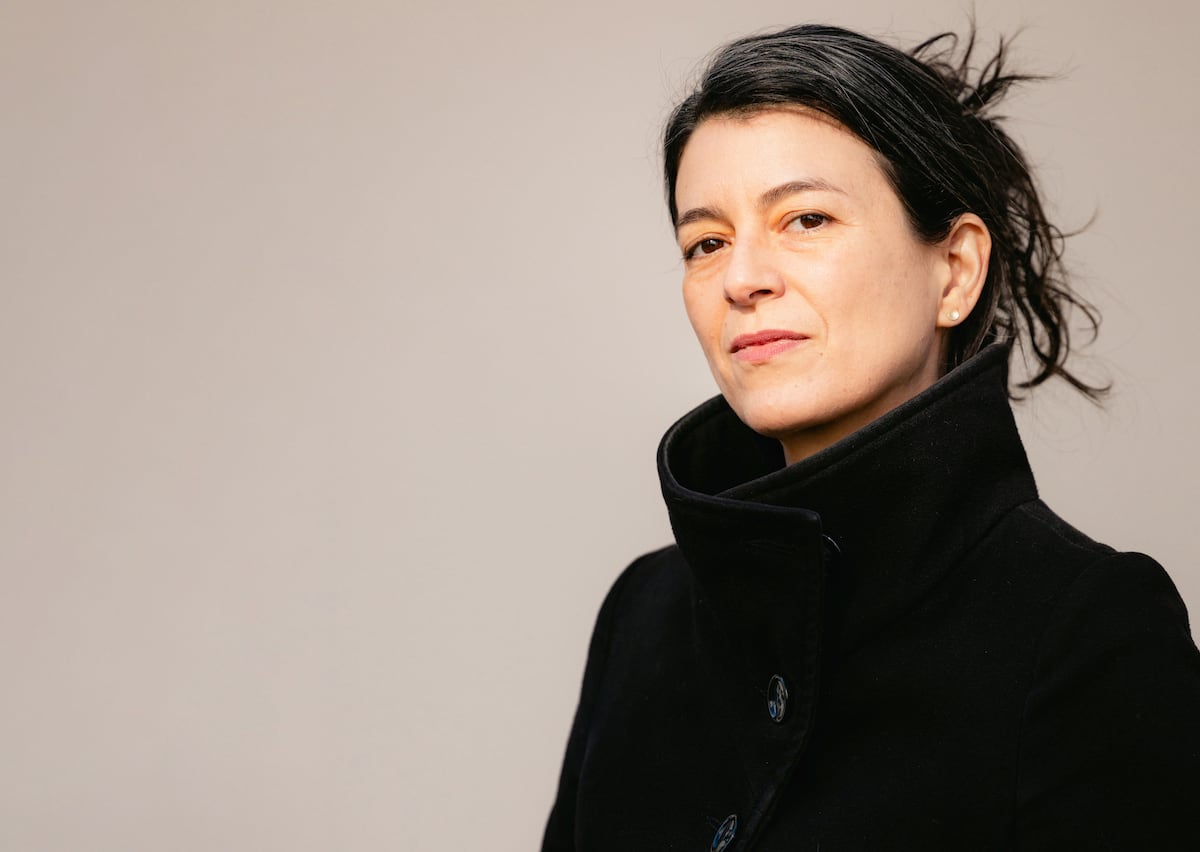
Samanta Schweblin, writer: ‘Paying attention is the greatest superpower. Not everyone is still capable of it’
Full Article
Original Source
Read the full article at English →KhanList aggregates and links to publicly available news content. We do not host full articles from third-party sources. Always verify important information with original sources.