
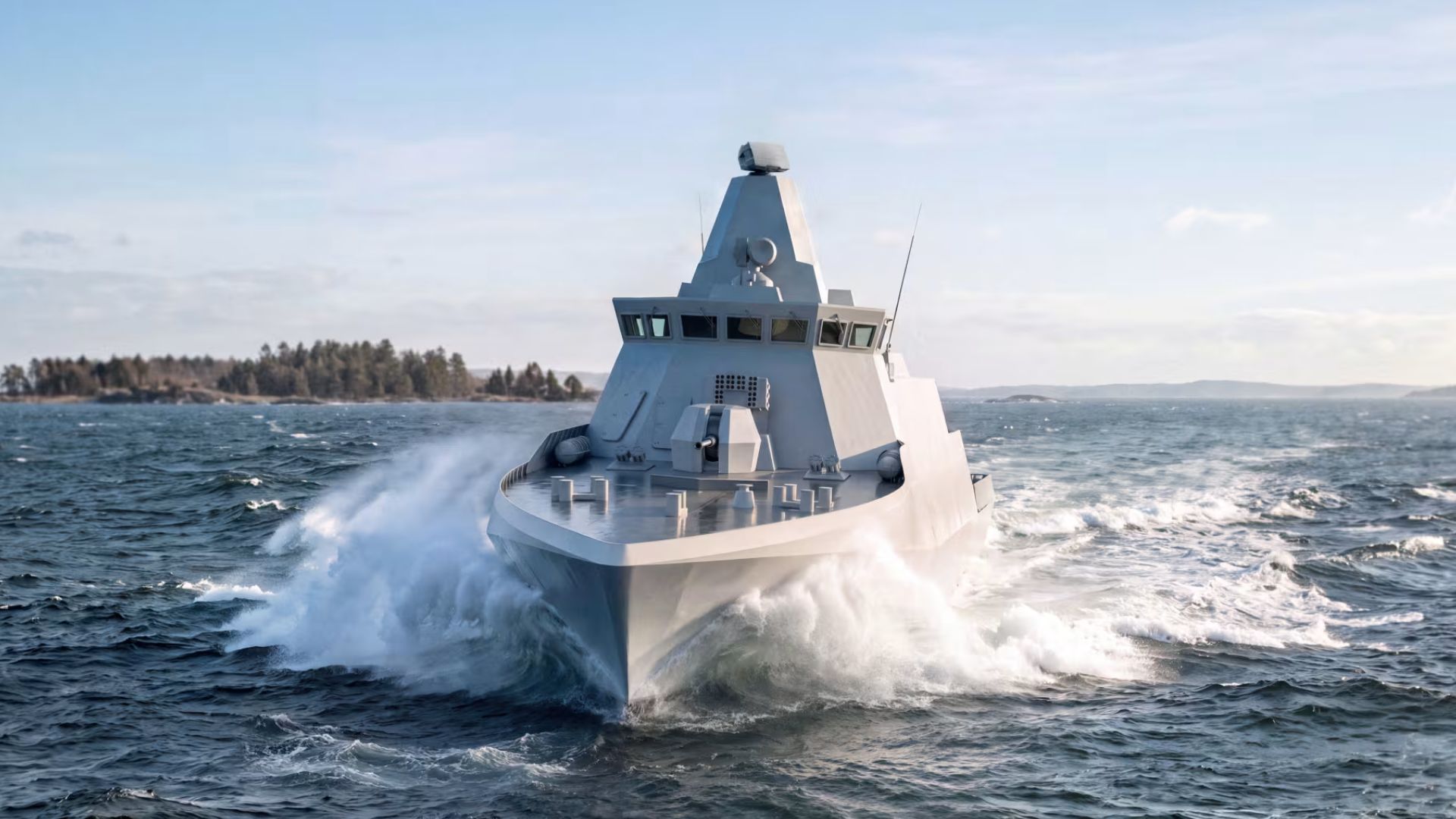
Swedish defense company Saab has introduced Sea Giraffe Agile Multi Beam D (AMB D), a naval radar designed to detect and track aircraft, drones, missiles, and surface vessels. The system offers a reported range of up to 250 kilometers (155 miles) against air targets and 50 kilometers (31 miles) against surface targets. The latest evolution of Saab’s Sea Giraffe AMB radar family combines active electronically scanned array (AESA) hardware with updated software and processing capabilities. According to the company, the system is designed to improve air surveillance while allowing naval forces to adapt its capabilities as threats and operational requirements evolve. Electronic scanning for naval surveillance Sea Giraffe AMB D provides three-dimensional surveillance of air and surface targets, helping naval crews establish a more complete picture of their surroundings. It can detect, track, and classify a range of objects, including aircraft, uncrewed aerial vehicles, missiles, and crewed or uncrewed vessels. The radar uses AESA technology, which employs an array of antenna elements to steer radar beams electronically rather than relying solely on mechanical movement. This allows the system to redirect its beams rapidly and perform multiple surveillance tasks. The multi-beam approach is particularly relevant to naval operations, where a radar must monitor different parts of the surrounding environment while providing timely information about potential threats. Saab has not disclosed all the technical specifications of the AMB D, including its detailed detection performance against individual target types. The advertised ranges should also be understood as maximum figures, as actual detection distances depend on factors such as target size, altitude, and radar signature. Designed to resist electronic interference Modern naval sensors must contend with electronic warfare, including jamming attempts to disrupt radar signals. Saab says Sea Giraffe AMB D incorporates electronic counter-countermeasures (ECCM) to help maintain surveillance performance in environments where adversaries try to disrupt detection and tracking. The radar also features a modular architecture that integrates with other naval systems. This can help ships incorporate its data into broader sensor and combat management networks, although specific integration options will depend on the vessel and its configuration. Its software-defined architecture is another central feature. Saab says the design enables continuous upgrades as operational needs change, potentially allowing new processing capabilities to be introduced without replacing the entire radar system. Building on an established radar family Sea Giraffe AMB D builds on more than two decades of operational experience with Sea Giraffe AMB radars, according to Saab. The company says the new system combines the family’s established radar technology with modern processing and software architecture to enhance air surveillance performance. Saab has also emphasized the radar’s relatively small footprint, an important consideration aboard warships, where antenna size, weight, and available installation space can constrain equipment choices. The company has not provided pricing, delivery schedules, or specific customer orders in its announcement. The introduction therefore establishes a new radar offering, rather than confirming its deployment aboard a particular class of warship. With its combination of air and surface surveillance, electronic-warfare countermeasures, and upgradeable software, Sea Giraffe AMB D is intended to give naval forces a sensor that can adapt to changing threats without requiring a complete hardware overhaul. Get the latest in engineering, tech, space & science - delivered daily to your inbox.Kaif Shaikh is a journalist and writer passionate about turning complex information into clear, impactful stories. His writing covers technology, sustainability, geopolitics, and occasionally fiction. A graduate in Journalism and Mass Communication, his work has appeared in the Times of India and beyond. After a near-fatal experience, Kaif began seeing both stories and silences differently. Outside work, he juggles far too many projects and passions, but always makes time to read, reflect, and hold onto the thread of wonder.
Saab naval radar with 155-mile range resists jamming to detect aircraft and missiles
Full Article
Original Source
Read the full article at Interestingengineering →KhanList aggregates and links to publicly available news content. We do not host full articles from third-party sources. Always verify important information with original sources.