
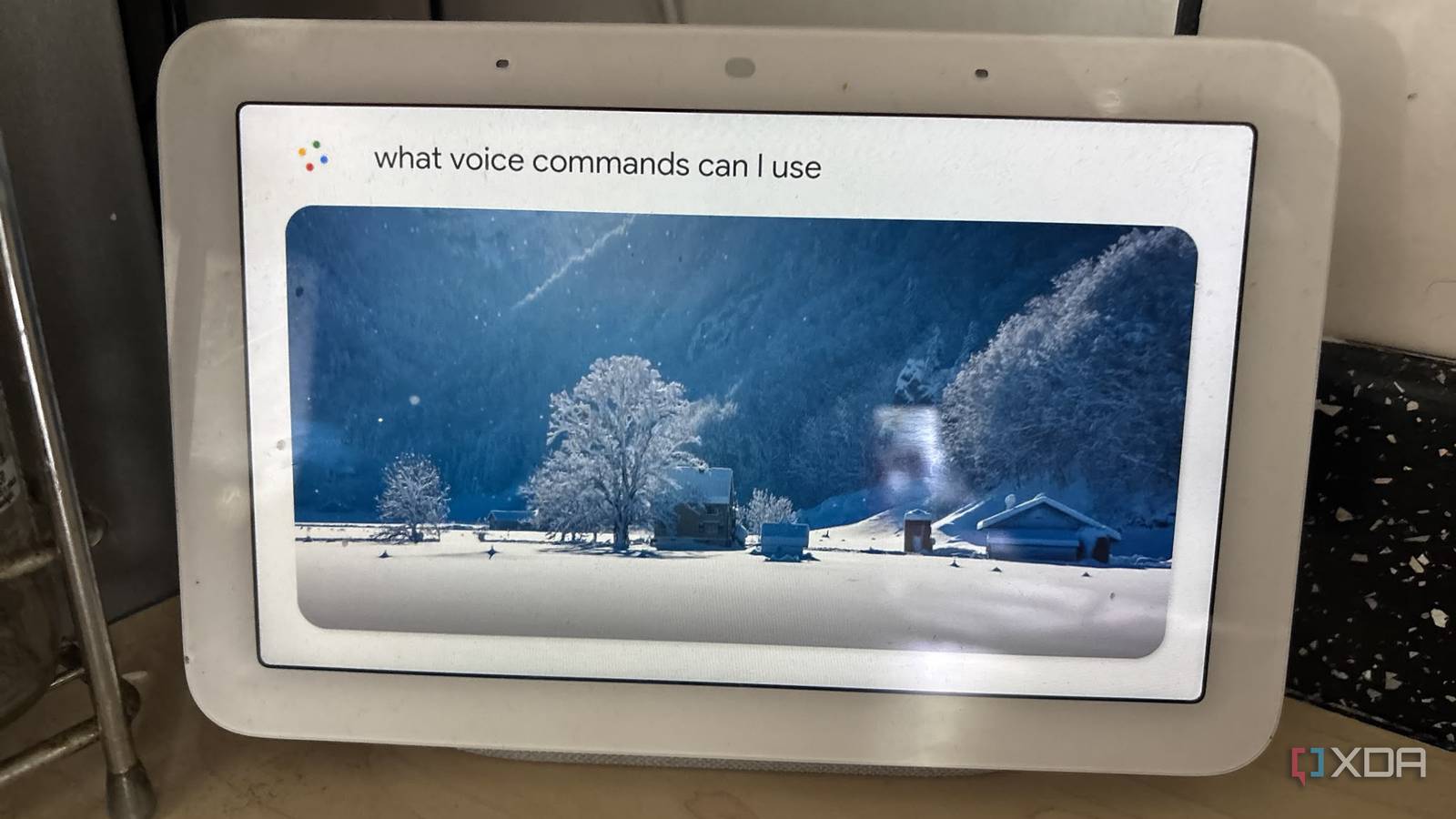
Published Oct 28, 2026, 5:30 PM EDT Jasmine is Software and PC Hardware Author at XDA with years of tech reporting experience ranging from AI chatbots right down to gaming hardware, she's covered just about everything. Whether it's breaking news about the latest AMD NPUs or creating video tutorials on social media platforms, Jasmine has contributed to the world of AI and tech in a variety of ways including interviewing the CEO of Razer, AMD's Director of Product Marketing and the VP of Lenovo. Passionate about gaming and PC technology, she has built countless computers, keyboards and other peripherals - knowing them inside and out. For a lot of people, the typical smart home journey begins with a holiday sale smart speaker, like an Echo Dot or a Google Nest Mini, plugged into a kitchen counter, followed by shouting, "Alexa, turn on the living room lights." Voice assistants offer an accessible low-friction onboarding experience for so many users. But treating voice as the primary control mechanism for an entire household quickly introduces latency, privacy compromises, and domestic friction. Voice control makes a terrible primary automation layer. Building a reliable high-performance smart home requires prioritizing local deterministic inputs (such as physical switches, presence detection, and automated triggers) while relegating voice to a secondary fallback route. Voice control should not be the basis of your smart home Save it for your weird queries Why does voice control fail so largely as an architecture? Voice-first setups are fragile, and voice commands are rarely processed locally. When you're picking up cheap consumer speakers, for the budget entry-level endpoints, audio files must be streamed to cloud servers like AWS for Alexa or Google Cloud for the Google Home products. They must then be passed to remote natural language processing models, matched against cloud-hosted device states, and routed back down via API calls. This introduces multi-second delays compared to local execution. Voice-centric architecture introduces a critical single point of failure because you're depending on the internet. If your broadband connection drops or a regional cloud outage hits, your entire home automation interface grinds to a halt. A local switch shouldn't stop working just because an external DNS server is struggling. It can also lead to a lot of domestic friction with other members of your household. Shouting commands across a room is socially awkward, disruptive during late-night hours, and unnatural compared to flipping a physical switch or letting automation handle the environment silently. Local automation is the basis of the true smart home Make your home work for you When you switch to local automation paired with physical inputs, you get rid of many of the problems outlined above because these devices operate entirely over local network transports. You will never have to contact an off-site server with your smart home. This means state changes execute instantly, consistently achieving sub-100ms response times. It can feel like it's recreated the immediate zero-lag tactile feel of a traditional hardwired wall switch, eliminating that multi-second delay that disrupts a lot of basic home interaction with voice control. Alongside this, you're no longer dependent on an internet connection for your architecture to actually work. Local automation with physical inputs operates on local-first architecture, where the device state machines, automation scripts, and routing tables all run on an on-premises host like a dedicated mini PC or home server. This means you still get full operational integrity even if the WAN fiber connection is completely cut or any upstream DNS servers fail. It guarantees zero-downtime household infrastructure, insulating critical lighting, heating, and access controls from external ISP or cloud platform failures. Finally, local execution preserves strict data privacy. All of your telemetry, sensor logs, and operational states remain strictly on-premises on local storage media, never leaving your private network segment. You don't have to worry about your information being accessed by outside sources. It restores absolute operational predictability while completely eliminating off-premises telemetry streaming, keeping raw household behavioral data under local ownership. Build a better smart home Voice commands should not be important If you want to create a resilient smart home, then the way it should be constructed is by building from the infrastructure up rather than building around a cheap voice-controlled hub. Establish a local control layer first. Deploy a local orchestration platform like Home Assistant running on containerized hardware or a dedicated mini PC rather than relying on third-party manufacturer apps tied to cloud bridges. Next, fix the physical control layer. You can deploy smart switches or smart buttons that maintain power to the circuit while sending discrete local signals, or use a decoupled smart bulb binding so physical wall switches never leave dead zones. The true way to create a home that really feels smart is by automating the environment around you. You can implement presence detection through mmWave radars or Bluetooth proxies, as well as time-of-day logic, so lights and climate controls adjust automatically without requiring any active human input. You should treat voice commands as an edge case. Retain those voice assistants solely for abstract queries, timers, or edge case overrides rather than routing core environmental controls through a cloud microphone. A true smart home doesn't rely on voice commands Local control is the way forward Voice control lowers the barrier to entry when it comes to smart home products, but it scales poorly as your home actually grows. Stop designing your smart home around what you can shout across a room. Instead, build a deterministic local automation foundation that reacts to presence and physical input, and let your house run itself quietly in the background.
Voice control is the worst way to start a smart home, but it's how nearly everyone starts
Full Article
Original Source
Read the full article at Xda-developers →KhanList aggregates and links to publicly available news content. We do not host full articles from third-party sources. Always verify important information with original sources.