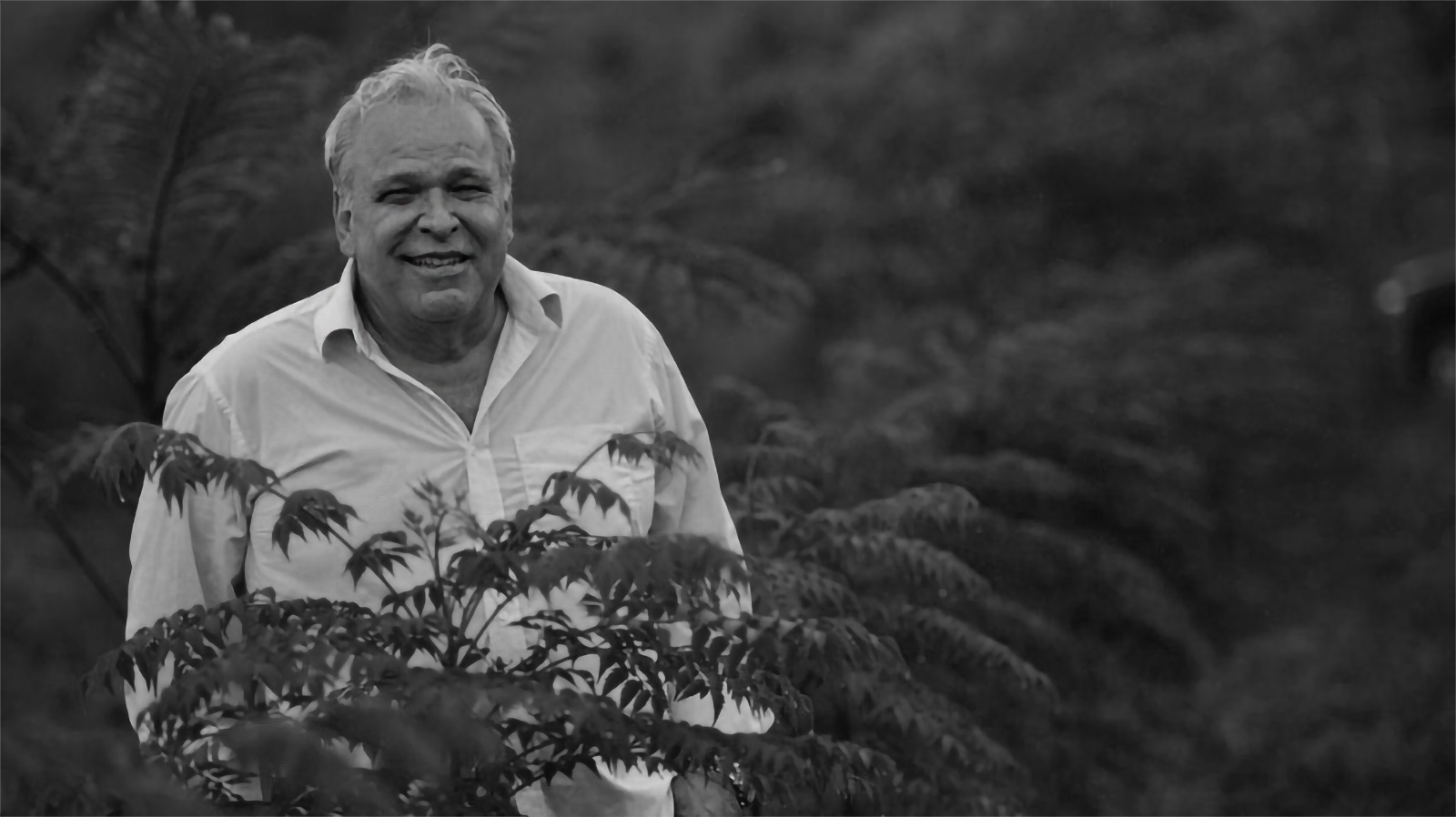
Renato Moraes de Jesus helped transform the Vale Natural Reserve in Espírito Santo into a leading center for Atlantic Forest conservation, research, and restoration.Over more than three decades, he established scientific collections, laboratories, nurseries, and long-term research programs while protecting nearly 23,000 hectares of forest.He later helped design the restoration of Fazenda Bulcão and the technical program that became Instituto Terra.A practical forester and scientist, he developed methods, trained others, and documented his work so that forest restoration could continue without depending on him. In 1977 a young forest engineer arrived at a neglected tract of Atlantic Forest in northern Espírito Santo. A mining company had acquired the property as a source of hardwood for railway sleepers. Two hundred hectares had already been cut. Some specialists proposed harvesting more of the forest or replacing it with eucalyptus. The new arrival found little infrastructure and no settled plan for the land. He moved alone into a deteriorating house inside the forest. At night he heard animals moving through the roof. The supposed ghosts proved to be opossums. One of his first ambitions was to obtain a working telephone. Renato Moraes de Jesus, who died on May 23rd, aged 74, stayed for more than three decades. The property at Linhares became the Vale Natural Reserve, a major center for Atlantic Forest research and restoration. He helped protect almost 23,000 hectares, established biological collections and laboratories, brought scientists into the reserve, and developed methods for returning native trees to land damaged by mines, roads, farms, and industry. Vale gave him no precise instructions. He decided that the first tasks were to prevent fires and hunting, document the forest’s species, and apply what was learned there to damaged land elsewhere. He later joked that the company had forgotten him at Linhares. Its limited attention gave him considerable freedom. The early years could be dangerous. The region was violent, and he dismissed many workers during a reorganization. He carried a revolver for a time and later recalled receiving death threats. When he was assigned to manage a sawmill, he confronted suspected theft and suppliers accustomed to weak oversight. He was direct, impatient with excuses, and willing to make enemies. Little scientific work had been done in the reserve. He began collecting specimens, corresponding with taxonomists, and inviting researchers to study the forest. Over time it acquired a herbarium, seed and wood collections, an insect collection, laboratories, a weather station, and a nursery for native plants. By 2001, he said, more than 2,000 plant species had been recorded there. He insisted that research projects be documented clearly. Experiments in forests may continue for decades, often beyond the careers of the people who begin them. Another researcher needed to be able to recover the methods, data, and purpose of each project. When executives considered reducing the research budget, he offered his own job instead. The work had been recorded, he told them. They could dispense with Renato, provided they preserved the information. His interest in forests began in Rio de Janeiro. He grew up among six children on Ilha do Governador, when parts of the island still retained Atlantic Forest vegetation. A wooded area stood opposite the family home. Adventure films about forests and the Canadian mounted police gave him the idea that a person might live among trees and protect them. By secondary school he had decided to study forestry. At the Federal Rural University of Rio de Janeiro, he supported himself through jobs and teaching assistantships. After graduating in 1975, he repeatedly approached the officials responsible for the RADAM project until they agreed to review his qualifications. The project was producing the first extensive maps of the Amazon’s natural resources. At 24, he flew over large areas by helicopter, interpreted radar images, and joined field teams examining soils and vegetation. Forestry in Brazil was then closely associated with timber inventories, plantations, and the commercial value of trees. At Linhares, Moraes de Jesus concentrated on the structure and recovery of native forest. Seeds, specimens, field observations, and long-term research plots provided the basis for restoration projects elsewhere. He described his method as learning by doing. Planting seedlings was only an early stage in restoring a forest. Recovery depended on soils, suitable combinations of species, reliable seed supplies, ecological succession, and years of maintenance. He traveled, wrote technical papers, exchanged material with specialists, and adjusted his methods as results became available. He had little interest in environmental conferences that produced no practical work. In the late 1990s, Lélia Wanick Salgado and Sebastião Salgado asked for his help at Fazenda Bulcão in Minas Gerais. They wanted to restore the exhausted cattle farm where Sebastião had grown up. Moraes de Jesus helped design the planting strategy, organize the production of native seedlings, and establish the technical program that became Instituto Terra. He served as an environmental and technical director as forest began to return to the hills. The institute also established a school to train others in restoration. He later argued that commercially managed native forests could help finance restoration. Such work required nurseries, trained workers, dependable seed supplies, research, and markets for timber grown under appropriate conditions. He became involved with Symbiosis, a company seeking to establish plantations of native Atlantic Forest trees for timber production. Public accounts credited him with coordinating the planting of millions of native seedlings through projects connected to Vale, Instituto Terra, and other organizations. The published totals vary and combine work from different institutions and periods. His contribution is clearer in the nurseries, research programs, restoration methods, and teams he helped establish. He completed a doctorate at Unicamp in 2001, studying the ecological effects and economic sustainability of different levels of forest removal. He received awards for his work in conservation and engineering, though he appeared more comfortable discussing projects than honors. In an oral-history interview, he described himself as one participant in a much larger undertaking. His aim was to make sure that the work did not depend on him and could continue under someone else. At the end of that interview, he was asked what he wanted placed on record. He had spent hours discussing the Amazon, Linhares, research plots, threats, seedlings, and his family. He chose a brief answer. “A thank-you to Linhares,” he said. “That’s all.” Banner image: Renato Moraes de Jesus. Photo courtesy of the Conselho Regional de Engenharia e Agronomia do Espírito Santo (Crea-ES) Credits Topics
Renato Moraes de Jesus was a pioneer of Atlantic Forest restoration in Brazil
Full Article
Original Source
Read the full article at News →KhanList aggregates and links to publicly available news content. We do not host full articles from third-party sources. Always verify important information with original sources.