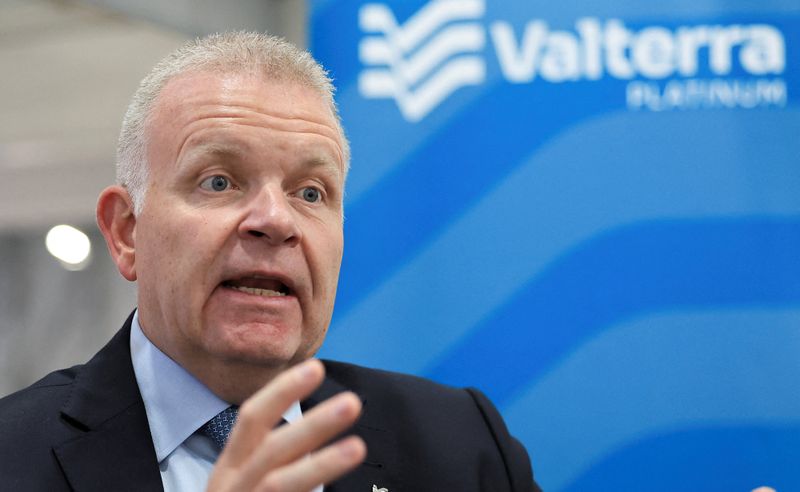
Valterra Platinum unveiled a 16-fold surge in H1 earnings on Wednesday, results that will please the Treasury as much as Valterra’s shareholders, underscoring how the platinum group metals (PGM) rebound is benefiting the wider South African economy. Headline earnings soared to R21.5-billion in the six months to the end of June from R1.24-billion in the same period last year, underpinned by higher prices and the recovery of the Amandelbult operations in Limpopo from a “once-in-a-thousand-year” flooding event.Illustrative image: Valterra's headline earnings soared to R21.5-billion in the six months to the end of June from R1.24-billion in the same period last year. (Photos: Unsplash / LinkedIn) It all adds up to a tax bill of R7.6-billion — a more than 20-fold increase — with 90% of that windfall going to the National Treasury, which needs every rand it can lay its hands on as it strives to stabilise South Africa’s debt levels. Shareholders, meanwhile, reaped R15.1-billion in dividends, a 27-fold hike equal to 70% of the company’s earnings.The Amandelbult recovery added about R5-billion to Valterra’s earnings for the period, CEO Craig Miller told journalists, and the saga highlights how vulnerable the mining sector is to extreme weather events. But the main show was the price rebound. Soaring pricesThe basket price for the PGMs that Valterra produces soared 85% in dollar terms and 66% in rand terms compared with the same period last year, a trend driven by a range of factors including fresh traction for internal combustion engine (ICE) vehicles that require the metals for emissions-capping autocatalysts, and were seen as going the way of the dodo just a few years ago. But in December last year, the European Commission announced that it was effectively lifting the scheduled ban on the sale of ICE vehicles from 2035, a move that shifted PGM prices into a higher gear. Another factor has been the rise of hybrid vehicles, which require more PGMs than their ICE counterparts, and tight supplies. PGM prices have since cooled significantly, in part because of the uncertainties unleashed by the Iran war, but Valterra sees structural support for the industry that will weather this storm. “Analysts agree that for the next 10 years at least, vehicles with internal combustion engines (ICEs), including hybrids, will continue to dominate new vehicle sales,” the company said in its market outlook.“More effective emissions monitoring and the forthcoming round of tougher next-generation emissions standards will push PGM loadings per vehicle higher.”AI demandValterra also pointedly noted that AI is rapidly becoming a key driver of demand across the metals and minerals spectrum: “Alongside established demand from the glass, chemicals and electronics sectors, emerging applications linked to AI are already contributing significant demand through E-glass, crucibles, silicones and hard disk drives.” Then there is the emerging hydrogen economy, with demand on this front seen coming — as is usually the case at this stage of the 21st century — from China, with its current five-year development plan putting a premium on hydrogen and the production of 100,000 fuel cell electric vehicles by 2030, which require platinum. Valterra’s share price zipped more than 5% higher on Wednesday as its results generally exceeded analysts’ expectations, and its peers Northam Platinum, Impala Platinum and Sibanye-Stillwater are also expected to show stout earnings overall when they report for the period.“The other PGM companies will deliver very, very strong cash flows. If the market was surprised by Valterra, I think it will be surprised across the whole sector, and it is a lifesaver for the Treasury. And for the second half, at current prices, things remain cautiously optimistic,” said Bruce Williamson, a mining analyst at Integral Asset Management.One of South Africa’s key competitive advantages on the global economic stage is its PGM endowment, which accounts for about 70% of the world’s supplies and production of these crucial metals. It’s a boost for the wider economy when PGM prices get a lift, and demand stems from a range of new trends, including AI and hydrogen. Viewed through this prism, Valterra’s results are a hopeful sign for the sector as a whole and, by extension, the South African economy. DM
REBOUND: Valterra’s cracking results bode well for SA’s PGM sector — and Treasury
Full Article
Original Source
Read the full article at Dailymaverick →KhanList aggregates and links to publicly available news content. We do not host full articles from third-party sources. Always verify important information with original sources.