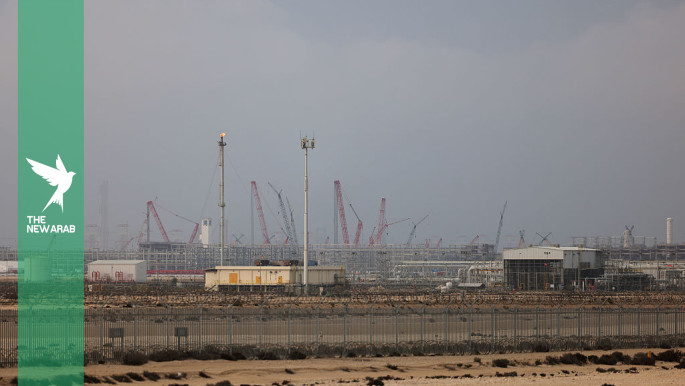
QatarEnergy is readying to extend force majeure on liquefied natural gas shipments through mid-October, Bloomberg News reported on Wednesday. The war has forced QatarEnergy to shut liquefaction trains, declare force majeure on deliveries and suspend exports. [Getty] QatarEnergy is readying to extend force majeure on liquefied natural gas shipments through mid-October, Bloomberg News reported on Wednesday, citing people with knowledge of the matter. Moreover, Asian and European buyers of liquefied natural gas (LNG) plan to ask for lower prices and additional supply guarantees from Qatar and the United Arab Emirates as the US-Iran war raises insurance costs on those deliveries, buyers, traders and industry executives told Reuters. Qatar's vast reserves helped the country become the dominant force in the global gas market. It and the neighbouring UAE, where production volumes are increasing, account for around one-fifth of global LNG export capacity - all of which relies on the strait to reach global markets. Qatari LNG has been among the most competitively priced due to the country's low production costs, while the UAE offers more flexible terms. However, buyers say the higher risk and rising insurance costs will give them leverage in future negotiations to further drive down costs and request even more flexibility. "Anyone entering into new contracts in the Gulf region will also have to take into account potential insurance costs, which are set to increase," Nicola Monti, chief executive of Italy's Edison told Reuters on the sidelines of a recent business event. Long-term LNG contracts from Qatar and the UAE were typically priced at 12.6%-12.7% of the Brent crude price before the Iran war, but some deals signed since have been concluded closer to 12.3%, suggesting buyers were already seeking to factor in the higher regional risk, one industry source said. The war has forced QatarEnergy to shut liquefaction trains, declare force majeure on deliveries and suspend exports. Force majeure is a clause that frees parties from liability if any failure to meet supply obligations is due to events beyond their control. Qatar accounts for about 20% of global LNG exports, all of which transit the Strait of Hormuz, where shipping has ground to a near-halt amid escalating tensions between Tehran and Washington. Purchasers will further want Qatar and the UAE to provide guarantees of replacement cargoes if exports through Hormuz are disrupted, for example from projects elsewhere such as Qatar's Golden Pass LNG terminal in the United States. "Going forward (Gulf suppliers) will have to contend with a new risk profile stemming from what happened in the Strait of Hormuz and from the fact that nobody can rule out the possibility of a recurrence in the future,” Edison's Monti said. Related Articles
QatarEnergy prepares to extend force majeure to mid-October
Full Article
Original Source
Read the full article at Newarab →KhanList aggregates and links to publicly available news content. We do not host full articles from third-party sources. Always verify important information with original sources.