
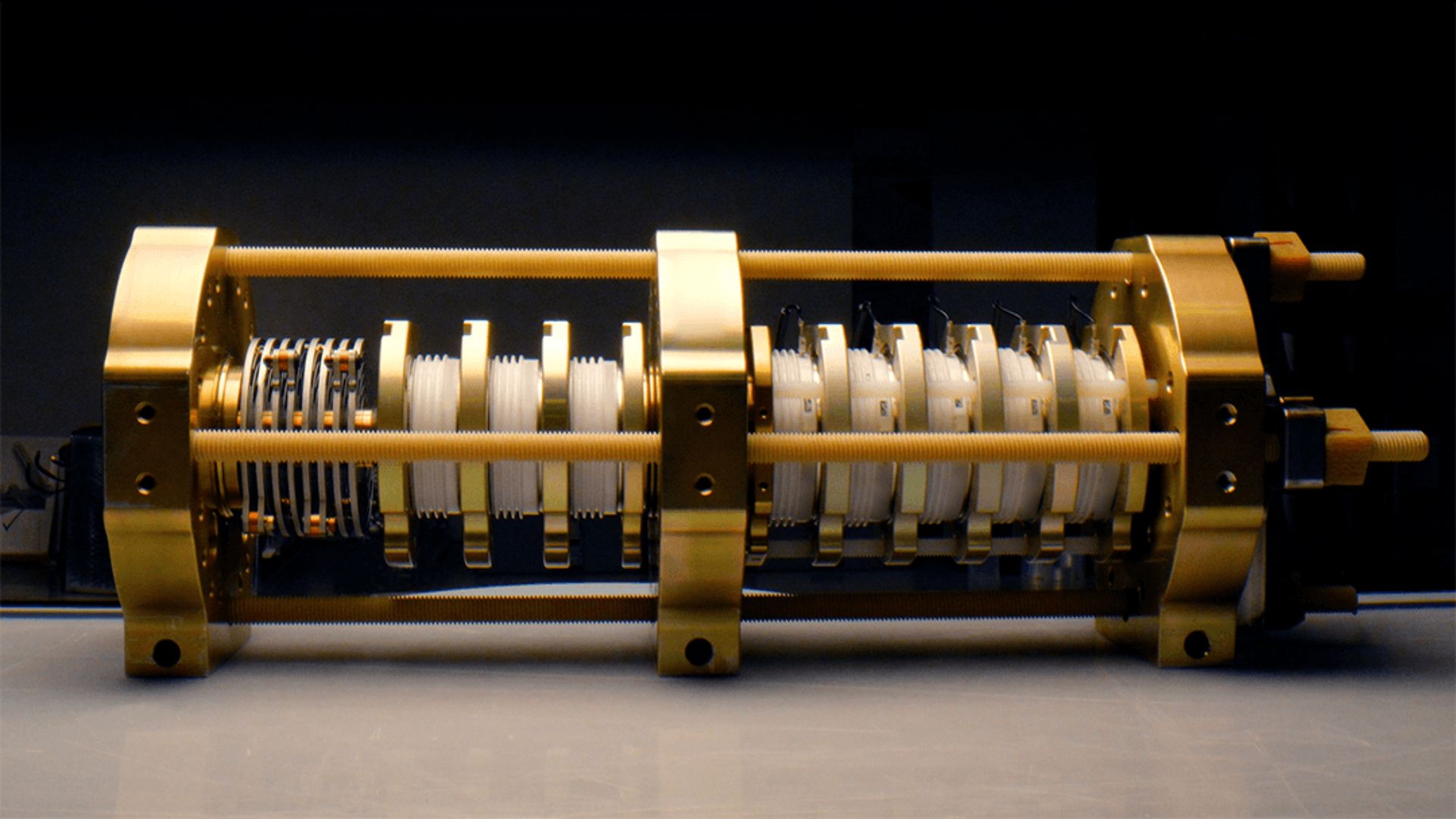
Nuclear fusion promises virtually limitless clean energy, but building a mini-star on Earth requires extreme electronics. In this regard, American fusion developer Helion has taken a major step toward solving that bottleneck. The Washington-based company has reached a preliminary agreement with the US Department of Commerce for up to $175 million in federal funding. Backed by the CHIPS Act, the grant is matched by $50 million from private investors. Together, the $225 million package will fund domestic facilities and production lines to help build the specialized modules needed to run commercial fusion reactors. Utilizing high-power pulsed electrical systems Helion’s approach relies on high-power pulsed electrical systems. These circuits must repeatedly capture, switch, and release colossal surges of electricity in fractions of a second. At present, the robust semiconductors required for these tasks are only made abroad. By manufacturing them in the United States, Helion hopes to eliminate overseas supply chain risks. The new designs are intended to run at higher voltages, stay cooler under stress, and operate reliably for years. “Building fusion power plants at scale requires us to accelerate technologies like semiconductors that are critical to making fusion possible,” said David Kirtley, chief executive of Helion. He noted that the new funding will help produce chips that meet the precise efficiency and performance standards the company needs. Protecting public money The investment will be split across two primary hubs. Everett, Washington, will receive over $100 million to build research facilities and power module manufacturing lines. The project will focus on advanced packaging techniques that bundle multiple chips into compact units. A further $80 million will head to Burlington, Vermont. Working with an industry partner, Helion will design specialized tooling and production machinery to support high-volume manufacturing. The rest of the funds will go toward automated assembly systems. In an unusual arrangement designed to protect public money, the federal government will take an equity stake in Helion. Under the preliminary agreement, the Department of Commerce will receive $175 million worth of non-voting shares, pegged to the company’s recent Series G valuation. US officials say the domestic chip facilities could also yield wider benefits. Bill Frauenhofer, an executive director at the Department of Commerce, pointed out that breakthroughs in high-power switching will aid national power grids and defense applications. Push toward commercial nuclear fusion The funding lands during an intense push toward commercialization. Helion recently closed a $500 million investment round and reported plasma temperatures of 150 million degrees Celsius. Earlier this year, Washington state regulators issued key radiation and air permits, giving Helion clearance to construct the generator building for its flagship plant, named Orion. Fusion generates power by fusing light atomic nuclei such as deuterium and helium, releasing huge energy without long-lived radioactive waste. While Helion has yet to publish peer-reviewed results confirming net electricity generation, it faces an ambitious commercial deadline: delivering 50 megawatts of power to Microsoft data centers by 2028. “Delivering American-made fusion energy to the grid could fundamentally change US strategy from managing energy scarcity to harnessing clean energy abundance, unlocking new industries, strengthening national security, and improving quality of life for all Americans,” concluded Helion in a press release.Get the latest in engineering, tech, space & science - delivered daily to your inbox.An active and versatile journalist and news editor. He has covered regular and breaking news for several leading publications and news media, including The Hindu, Economic Times, Tomorrow Makers, and many more. Aman holds expertise in politics, travel, and tech news, especially in AI, advanced algorithms, and blockchain, with a strong curiosity about all things that fall under science and tech.
Pulsed-power nuclear fusion race drives US advances in high-voltage semiconductors
Full Article
Original Source
Read the full article at Interestingengineering →KhanList aggregates and links to publicly available news content. We do not host full articles from third-party sources. Always verify important information with original sources.