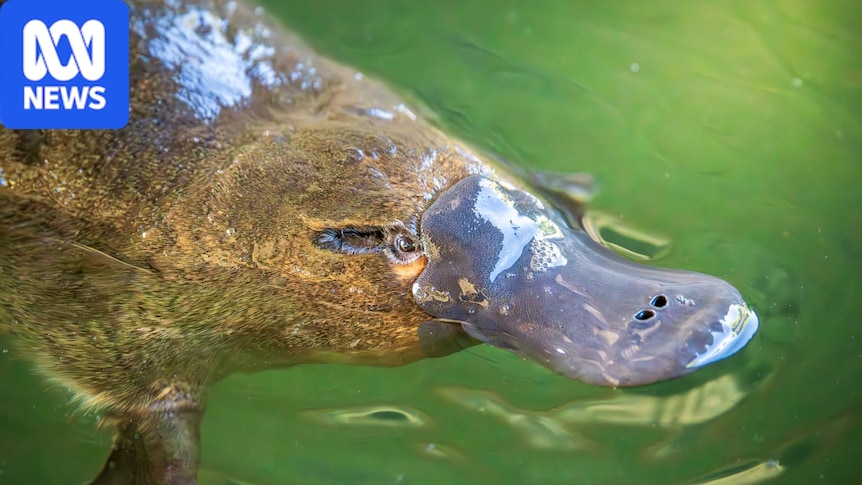
Conservationists say a platypus burrow has been destroyed by contractors using an excavator undertaking remediation works for the local council.The region in Tasmania's north has been susceptible to flooding events, with the works an attempt to prevent future erosion.Local residents are concerned the removal of trees may have killed one or several platypus potentially nesting in the burrow below where trees have been torn down.A young platypus photographed in the Meander River at Deloraine in 2024. (Supplied: Joy Kachina)Meander Valley mayor Wayne Johnston said the council had obtained all the necessary environmental approvals made by the Department of Natural Resources and Environment Tasmania (NRE Tas).When contacted for comment, NRE Tas said it was aware of a report, that an active investigation was underway, and it could not comment further.Conservationists believe the area where the works are happening is home to several platypuses. (Supplied: Joy Kachina )A safe haven for the Australian iconDeloraine local Anne Gilles has been monitoring platypus numbers by the Meander River for the past eight years.Over that time, she has logged 2,000 platypus sightings over an 800-metre stretch of the river for the Australian Platypus Monitoring Network."On Monday evening I spotted a platypus going into that burrow under that tree that was tipped over on Tuesday morning," she said."When it came back on Tuesday the tree had been demolished and presumably so had the burrow."A baby platypus, known as a puggle, photographed by the Meander River in 2025 by Joy Kachina. (Supplied: Joy Kachina Photography)With platypus being nocturnal animals, Ms Gilles said it was possible there was one resting in the den when construction began on Tuesday morning."The platypus in the burrow may have been killed, if it was asleep in its burrow when the heavy machinery rumbled over the top of the den, the vibrations would have killed the animal," she said."They have very sensitive bills for detecting prey with electroreception."Ms Gilles acknowledged it was important that the remediation be undertaken, but that the council had been misinformed that there were no active burrows in that location."This is just like death by a thousand cuts, it's one less tree, it's one less platypus," she said."One day we're going to wake up and we're going to say, 'oh, we used to have platypus in the Meander River, I wonder what happened to them.'"Platypus tourism is very important to Deloraine."Meander Valley mayor Wayne Johnston says he is "pretty confident" the burrow had not been affected, but added "I don't know for sure". (ABC News: Kelsey Reid)Unsure of wildlife impactMeander Valley mayor Wayne Johnston said the remediation works had been in the pipeline for some time and have been in collaboration with NRE Tas, since the works are on crown land."I understand there's some community conversation out there about how we may be damaging platypus habitat, but again, this was ticked off by (NRE Tas) and they're the governing body on it," he said."We hate to see any type of wildlife impacted at all, and I'm pretty confident that there hasn't been. "But having said that, I don't know for sure."Studies completed and signed offThe Meander Valley, and in particular Deloraine, has been susceptible to mass flooding events in recent years.A 400mm deluge in the region in October 2022 caused widespread damage to properties, agricultural land and infrastructure.The Insurance Council of Australia estimated the cost of claims caused by the event was $12.4 million. Heavy rains in October 2022 resulted in widespread flooding of the area. (ABC News: Lachlan Bennett)A notice for the beginning of the current works on the Meander Valley Council website states they are scheduled for five weeks and will include placing rock protection by the river and strengthening the bank near the footbridge.Cr Johnston said it has taken years for the works to finally get underway, to allow for approvals on impact and wildlife."So those studies have been done and completed … we need to do it because we don't want another large flood to come through and take more of the riverbank away," he said.Endemic to Australia, thriving in TasmaniaEndemic to Australia, platypus are unique semi-aquatic egg-laying mammals.Vivienne Briggs began the Tasmanian Platypus Conservation Group in 2014 and has been working with wild platypus in the state for more than two decades.She said platypus were "globally significant" and northern Tasmania was one of the best places in the world to see one in its natural habitat."So we've got the biggest, strongest, most iconic platypus in the entire world here in Tasmania — but they have to have habitat," she said."We've got a global responsibility to protect it. It's as simple as that."This is the last stronghold for them, because we're the only place with abundant river systems and vegetated waterways and the last protection from climate change for them as well." Breeding season for platypus in Tasmania is late winter and early spring. (Supplied: Joy Kachina)Ms Briggs said she was saddened, but not surprised, by the lack of knowledge about platypus environment from those undertaking the works."It's not acceptable in 2026 that council contractors are ploughing in platypus burrows," she said.A statement from the Meander Valley Council said it "takes the protection of native wildlife seriously and has requested information from the contractor regarding compliance with the environmental management requirements applicable to the project".They said at this stage no conclusions regarding whether a platypus den was present "within the works area or whether any disturbance occurred" had been reached.
Probe into claims platypus burrow destroyed by council contractors
Full Article
Original Source
Read the full article at Abc →KhanList aggregates and links to publicly available news content. We do not host full articles from third-party sources. Always verify important information with original sources.