
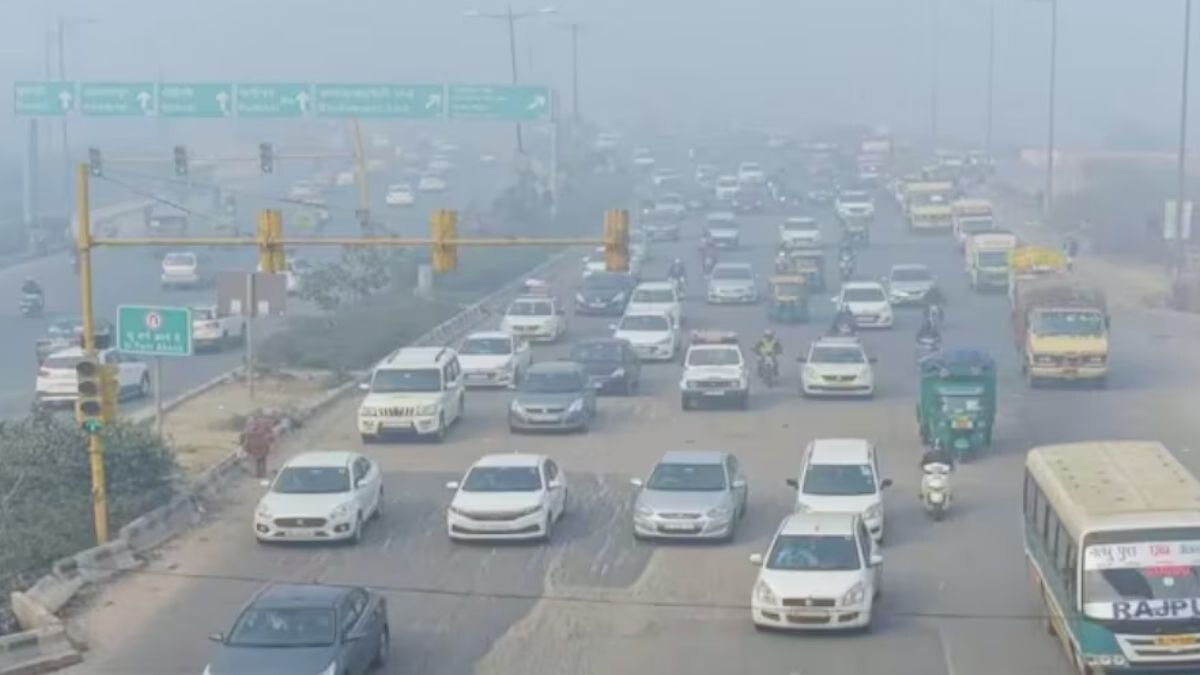
Short-term fine-particle exposure was associated with increased hospital admissions across major disease groups. The prolonged risk carries particular significance as Delhi-NCR approaches its winter pollution season.Air pollution’s health effects may extend far beyond coughing, breathlessness and asthma attacks, with even short-term exposure to fine particulate matter associated with increased hospital admissions for cancer, mental disorders and neurological diseases.A large international study published in The Lancet Planetary Health has found that the increased demand for hospital care can persist for up to three weeks after exposure.The findings are particularly relevant to India, where air pollution is a major contributor to premature deaths and chronic disease, and Delhi-NCR is heading into another winter pollution season. They also suggest that the health impact of a bad-air episode may continue even after pollution levels begin to fall.Researchers analysed 346.5 million hospitalisation records from 949 communities across Australia, Brazil, Canada, Chile, New Zealand and Taiwan between 2000 and 2019. They examined the relationship between short-term exposure to PM2.5 – fine particles small enough to penetrate deep into the lungs – and hospital admissions across major disease categories.Every 10 micrograms per cubic metre increase in PM2.5 concentration was associated with an 8% higher overall risk of hospitalisation over the following 21 days. The association was strongest on the day of exposure, although the increased risk extended beyond it. The findings challenge the tendency to view air pollution primarily as a respiratory health problem. Hospital admissions for malignant cancers were associated with a 10.8% increase, followed by mental disorders at 10% and nervous system diseases at 8.5%. The corresponding increase for respiratory diseases was 6.7%.These figures represent changes in hospitalisation risk associated with increased pollution exposure, not the proportion of people who will develop these conditions, say clinicians."What makes this study critical in the Indian context is the 21-day persistent lag effect and the heightened vulnerability observed in the 40–59 age demographic," said Dr Amit Kumar Mandal, head pulmonologist with Paras Health in Panchkula.In India, where millions of working-age adults face mandatory daily outdoor exposure, severe air pollution acts as an acute accelerant for underlying systemic inflammation, explaining why cancer patients or those with neurological frailty suffer rapid clinical deterioration after a high-pollution event, he added.BEYOND THE LUNGSThe cancer finding needs particular care in interpretation. It does not mean that breathing polluted air for a day or two causes new cancers to develop within weeks. Rather, the association concerns hospital admissions among people with existing malignant cancers, potentially reflecting worsening health or complications that require hospital care.As the study was observational, so it cannot establish that PM2.5 directly caused the additional admissions. However, the breadth of conditions associated with exposure reinforces concerns that polluted air can affect people living with several types of illness, not only those with pre-existing lung disease.Risks were observed across age groups, with the highest pooled relative risk among adults aged 40–59. Although the associations weakened during the later study period, from 2010 to 2019, the health burden remained substantial.For hospitals, the implications go beyond treating patients during a pollution spike. The findings point to the need to anticipate a prolonged demand for care after exposure, including for conditions that may not initially appear to be linked to air quality.INDIA'S POLLUTION TOLLIndia was not included in the international analysis, so its numerical estimates cannot be directly applied to Indian patients. But domestic evidence makes the findings particularly pertinent.A study published in The Lancet Planetary Health in 2021 estimated that air pollution was responsible for 1.67 million deaths in India in 2019, accounting for 17.8% of all deaths that year.The burden included both ambient pollution and household air pollution, highlighting the scale of the problem in major cities.Growing scientific evidence has established constant exposure to high AQI with cardiovascular disease, stroke, chronic obstructive pulmonary disease, lung cancer and diabetes, among other conditions. Its contribution to non-communicable diseases means that the consequences extend well beyond the immediate discomfort of breathing polluted air.Pulmonologists have repeatedly warned that people with asthma, COPD, heart disease and other chronic conditions can be particularly vulnerable when pollution levels rise. Dr Ravi Dosi, consultant in pulmonary medicine at Kokilaben Dhirubhai Ambani Hospital, Indore, said short-term exposure to fine particulate pollution was linked to increased hospital admissions across major disease groups, with effects lasting up to three weeks.Delhi-NCR’s seasonal pollution adds urgency to the issue.As winter approaches, falling temperatures, reduced wind speeds and atmospheric conditions that limit the dispersal of pollutants can combine with emissions from vehicles, industry, construction and seasonal burning to worsen air quality. Farm-fire incidents in Punjab have also begun rising during the current harvest season.As a result of which the AQI in the region, which never really remains ‘good’ or even ‘moderate', has started hitting ‘poor’ range on non-rainy days.- Ends
PM2.5 exposure may raise hospitalisation risk for three weeks
Full Article
Original Source
Read the full article at Indiatoday →KhanList aggregates and links to publicly available news content. We do not host full articles from third-party sources. Always verify important information with original sources.