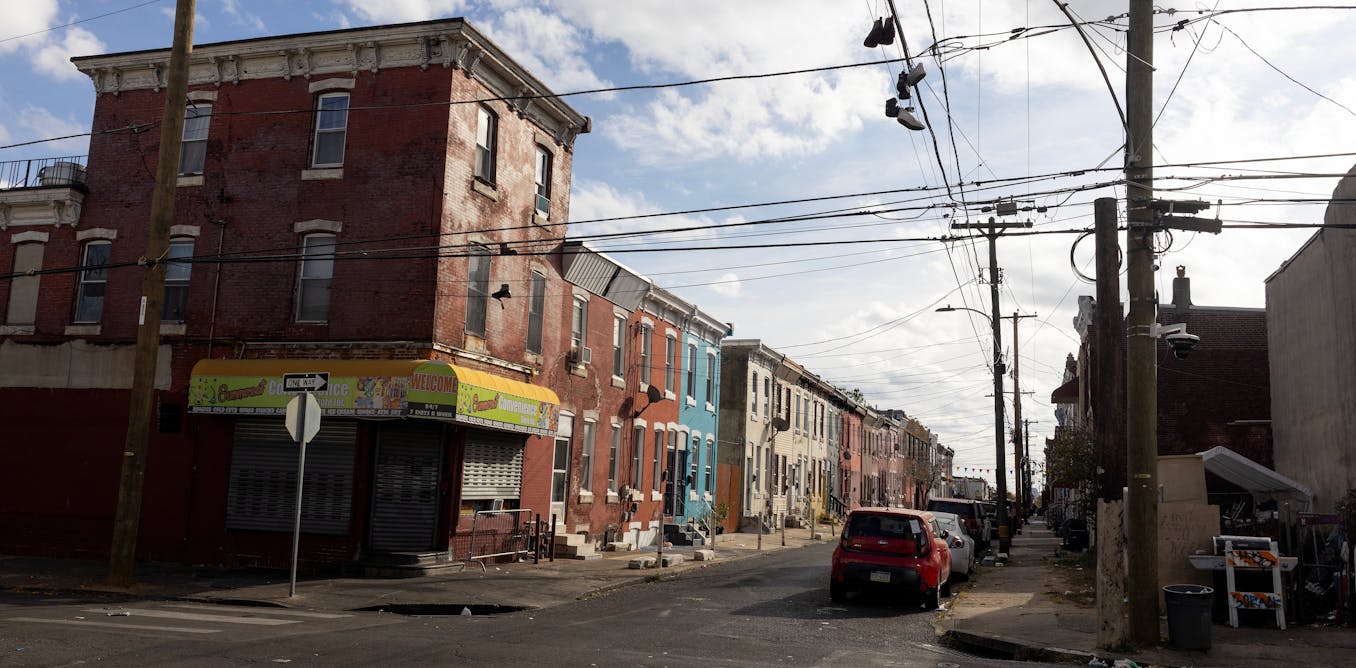
When people think about criminal justice punishment, they might picture a prison cell or a crew picking up roadside trash to fulfill community service hours. But for millions of Americans, another penalty quietly follows them for years after they have served their time: debt. Known as legal financial obligations, or criminal justice debt, these penalties encompass a range of economic sanctions. They can include court costs, fines, fees and restitution payments imposed during criminal proceedings. Legal financial obligations have become a routine feature of punishment across the United States. They are justified as a way to hold people accountable, reduce incarceration and help fund the criminal justice system itself. We are a team of researchers and criminal justice policy evaluators who want to better understand when these fines and fees are assessed and the impact they have on individuals and communities. Our analysis of more than a decade of court data from Philadelphia suggests that these financial penalties are not evenly distributed across the city. Instead, they are heavily concentrated in Black and Latino neighborhoods – places already facing the highest crime and victimization rates, significant economic hardship and the repercussions of entrenched, historical discrimination. Lasting consequences of legal debt Previous research has shown that court debt can have lasting consequences. People burdened by legal debt are more likely to experience ongoing involvement with the justice system, including probation violations and reincarceration. Financial obligations can also make it harder to find and keep employment and afford transportation, food and housing. Much of this research has focused on individual outcomes. Our study asked a different question: Where do these people live, and how are the debts distributed across the city? If legal debt is concentrated geographically, its effects may extend beyond individuals and their immediate family or support network. It can contribute to broader patterns of neighborhood-level disadvantage. Mapping debt across Philadelphia We analyzed addresses linked to nearly 200,000 felony court cases involving defendants sentenced in Philadelphia between 2010 and 2020. Pennsylvania law mandates various court costs and fees, and it permits judges to impose a range of additional economic sanctions. This means a criminal sentence generally leads to at least some legal financial obligations, though the amount and requirements can vary meaningfully. Using geographic information systems and spatial analysis techniques, our team mapped where Philadelphians who were assessed these financial penalties lived. We compared those locations with measures of income, crime and victimization. The results revealed clear geographic patterns. Neighborhoods in North Philadelphia and parts of West Philadelphia emerged as major hot spots for criminal justice debt. Kensington, Fairhill, Hunting Park and Nicetown showed particularly high concentrations. These are also neighborhoods, particularly Kensington, widely recognized for their persistent poverty and economic distress. Kensington is an area with high crime, poverty, drug activity and police presence. Spencer Platt via Getty Images A burden concentrated in disadvantaged communities Our study found that ZIP codes with the highest rates of legal financial obligations shared several key characteristics. They had lower median household incomes, higher rates of shootings and arrests, and larger proportions of Black and Latino residents compared to the city’s average. By contrast, neighborhoods with the lowest rates of legal financial obligations tended to have substantially higher incomes, lower crime rates and larger white populations. Most of these areas are in Center City. When we examined the data on an even smaller geographic scale – census block groups – the relationship became even clearer. Even when accounting for population size, those areas with the highest concentrations of legal financial obligations were also more likely to have lower incomes and higher rates of violent crime and shootings. Statistical analyses confirmed that these patterns were unlikely to be random. This map shows the rate of legal financial obligations per 100,000 residents by block group in Philadelphia. The highest concentrations are in North Philadelphia and Southwest Philadelphia. Journal of Crime and Justice, CC BY-SA More than a personal punishment A growing body of research shows that criminal justice policies often concentrate their effects in specific communities. For example, researchers have identified “million-dollar blocks,” where governments spend enormous sums incarcerating residents from a single city block. Others have shown that aggressive policing practices disproportionately affect disadvantaged neighborhoods. Our data suggests that legal financial obligations may work in much the same way. Court debt accumulates in neighborhoods that already struggle with poverty, violence and limited economic opportunities. Even in treatment-oriented diversion programs in Philadelphia, our internal data shows that average total debt can range from US$500 to $800 and increase substantially if restitution is ordered. While any single penalty may not seem like that much, their accumulation across the justice process can be substantial. As residents pay fines and fees, money is extracted from the communities that can least afford the loss. People who owe these criminal justice debts may rely on borrowing money from friends and family members. Some use their mortgages or property as collateral to pay the debt. This can put them at risk for foreclosure if payments are missed. If court debt is concentrated in disadvantaged neighborhoods, policies that focus solely on individuals’ repayment may overlook broader impacts on the community’s housing stability, transportation and health. Some advocates have proposed eliminating many fines and fees altogether, or redirecting the revenue toward communities most affected by criminal justice involvement. We believe policymakers should consider reforms, such as finely tuned ability-to-pay assessments, reduced reliance on monetary sanctions and greater transparency in how fines and fees are imposed and collected. While our study shows where legal financial obligations were imposed, it does not show how much money was assessed or how much remains unpaid. It also cannot determine whether legal financial obligations directly cause neighborhood disadvantage. It only shows that they are concentrated in places where disadvantage is already severe. Regardless, the research highlights an often overlooked dimension of criminal justice policy. Court debt – and punishment generally – is typically viewed as an individual responsibility. Yet when thousands of cases are mapped across a city, a different picture emerges: one in which economic sanctions become a neighborhood-level burden. Read more of our stories about Philadelphia and Pennsylvania, or sign up for our Philadelphia newsletter on Substack.
Philadelphia’s criminal justice fines and fees fall hardest on poorest neighborhoods
Full Article
Original Source
Read the full article at Theconversation →KhanList aggregates and links to publicly available news content. We do not host full articles from third-party sources. Always verify important information with original sources.