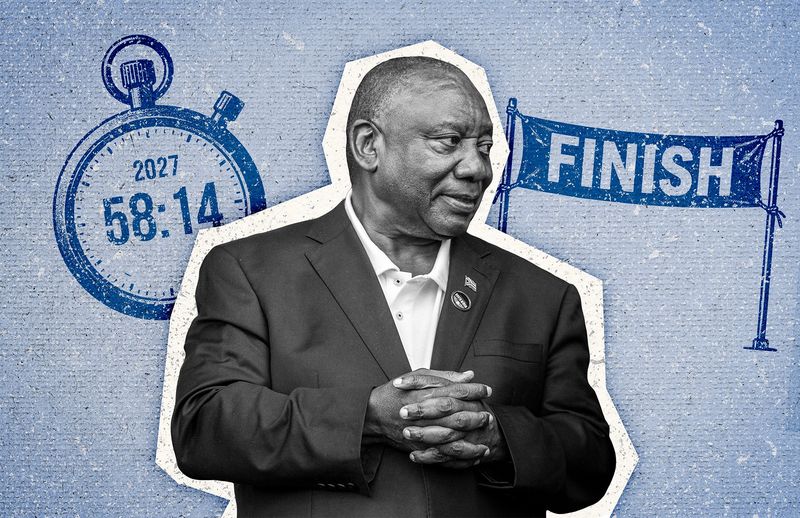
Grinding discussions in Parliament’s impeachment committee on Wednesday, 29 July, saw opposition parties criticise the ANC for delaying tactics, meaning important decisions such as appointing evidence leaders and finalising terms of reference for the impeachment proceedings against President Cyril Ramaphosa were left hanging.Next week, MPs will have another go, alongside discussing parliamentary legal advice on whether the President can be compelled to testify himself and whether adverse inference can be drawn if he chooses not to.Instead, 90 minutes were spent on arguing whether the authors of the Section 89 independent panel report that found the President had a case to answer over Phala Phala must brief MPs – despite parliamentary legal advice, and precedent – as ANC MPs argued that the Section 89 panel report was not the “gospel truth”. Yet parliamentary legal advice was clear: the panel ceased to exist once it handed over its report to the National Assembly speaker at the end of November 2022. The report was Parliament’s and the impeachment committee’s, following its referral to MPs after the May 2026 Constitutional Court judgment.That ruling effectively revived the impeachment proceedings that ANC numbers in the House voted down in December 2022. Precedent in the almost three-year-long impeachment of former Public Protector Busisiwe Mkhwebane also was clear: evidence leaders in those proceedings briefed MPs on that independent panel report; no one called for the chairperson, retired judge Bess Nkabinde, to brief MPs then.It got to the point where ANC MP Mikateko Mahlaule argued no final decision could be taken as they wanted to get their own legal advice on the parliamentary legal advice.Verbal morassUltimately, a vote trumped the ANC position, but not before ANC MP Cameron Dugmore insisted that his party was pursuing “a perfectly reasonable request” for fairness, not stalling.This episode highlights the verbal morass parliamentary proceedings can become bogged down in when cavilling and pedantry prevail. The ANC traditionally moves to protect its president. It happened with Jacob Zuma, who could count on noisy support amid regime change rhetoric, aimed at the opposition to defeat a series of no-confidence motions. This time round, the tone is less ideological, focused on verbal and legalistic hair-splitting to maintain a show of contributing to this accountability process. But ultimately, the aim is the same – to protect the President.And running down the clock is key. Ramaphosa’s review of the Section 89 independent panel report is set down for three days in early September 2026 in the Western Cape high court. The 24 July interdict is carefully worded: Parliament’s impeachment committee is stopped from holding “public impeachment hearings” until “the determination of the review application”.The relevance of the delays emerged on both sides of the interdict ruling.Judge Diane Davis, penning the main majority ruling, argued that “a delay of a few months” hardly meant serious separation of powers harm, the legal jargon to describe the potential damage that can unfold if one arm of the state interferes with the powers of another.In this case, it’s between the executive, or the President, and Parliament. In her worst-case scenario, the impeachment committee would continue with its hearing after February 2027.However, Judge Matthew Francis, who dismissed the interdict application, pointed to its potential reach as the President, in court papers, had already indicated that he “may seek a further stay pending appeals”, a process which could take years. And that is just the point. Whichever side loses will appeal, and the Phala Phala Section 89 independent panel report review case is set to end up in the Constitutional Court.Ground has been laidRamaphosa laid the ground in his court papers. The African Transformation Movement (ATM), EFF, MK party and United Africans Transformation (UAT), asking for direct Constitutional Court access to appeal against the interdict, indicates the same approach. South African politicians are litigious.The probable series of appeals to the Constitutional Court over the presidential impeachment in the Phala Phala forex theft saga could take two years, or more. Courts are under pressure, with heavy workloads contributing to delays in handing down judgments.By late 2028, Ramaphosa would be in the final months of his second, and constitutionally final, term of office, should he remain in the Union Buildings after December 2027 when his ANC elects a new president. Once Ramaphosa is out of office after the 2029 elections, impeachment proceedings are no longer applicable.The possibility of a paralysed Parliament, and its powers of oversight and accountability being encroached on in this ongoing controversy, emerged as key arguments why the impeachment committee voted on appealing against the interdict, even if the vote was hair’s-breadth thin.Regardless of whether Ramaphosa’s impeachment hearing over the Phala Phala forex theft ever unfolds, the processes – and litigation – are set to write important chapters on how presidential accountability is understood in South Africa’s constitutional democracy. DM
PHALA PHALA ANALYSIS: How Ramaphosa’s impeachment process could take two years — or more
Full Article
Original Source
Read the full article at Dailymaverick →KhanList aggregates and links to publicly available news content. We do not host full articles from third-party sources. Always verify important information with original sources.