
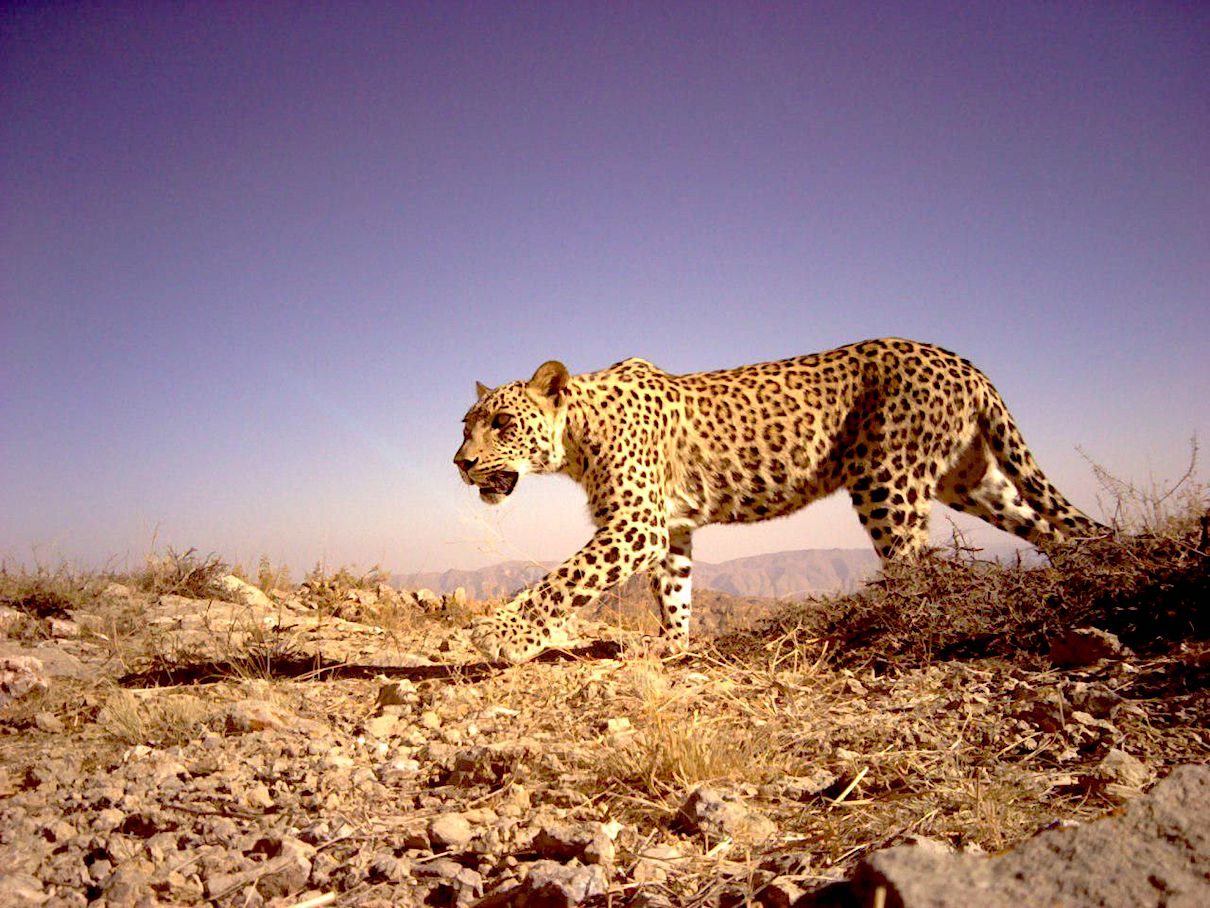
There have been few sightings of the endangered Persian leopard in the Caucasus region over the past 20 years: just three in Georgia and 10 in Armenia. But scientists and conservationists are alert to one Persian leopard in particular, whom they’ve named Aren and who is presumed to have journeyed 240 kilometers (150 miles) through cold, mountainous terrain with only three legs. This region of the world — made up of southern Russia, Georgia, Armenia, and Azerbaijan — still contains decades-old minefields from prior conflicts, and it’s believed this is how Aren was injured.Joining the Newscast this week to discuss her story for Mongabay is journalist Kayleigh Long, who explains how this leopard subspecies, Panthera pardus tulliana, persists in the region. She also describes how NGOs like NACRES, operating on extremely thin budgets, continue to monitor the big cats and provide what protection they can.“WWF is also monitoring the leopards. They put some cameras out in the same area as NACRES. So it’s really difficult,” she says. “I mean, these guys … are doing things on an absolute skeleton crew. And that’s partly because of a lack of funding more generally. There’s been a kind of tightening of purse strings around the world.”NACRES, founded in Georgia in 1991 as the Noah’s Ark Centre for the Recovery of Endangered Species and later renamed the Centre for Biodiversity Conservation & Research, has a staff of just three people, led by a zoologist named Bejan Lortkipanidze, who accompanied Long in the field.“He’s extremely dedicated,” Long says.“I said to him, ‘What would you do if you had unlimited resources?’ And he said he’d have a monitoring center set up, and he would like to prioritize … education and outreach. So going to villages and in remote areas like Tusheti region, and saying to people, ‘Here’s what you do if you see a leopard.’ And … mitigation measures for human-wildlife conflict to try and ensure that there aren’t these retaliatory or otherwise killings of leopards and other species.”Along national borders in the Caucasus, landmines pose risks to humans and wild animals alike, as do fences. Thousands of kilometers of barbed-wire from the Soviet era still stand across parts of the Caucasus, and they can trap leopards, bears, and deer.Despite the region’s challenges, the mere persistence of leopards and the dedication of NGOs operating amid increasingly difficult conditions after USAID’s shuttering offer a sense of hope, Long says.“I think the stories that I’m trying to seek out are ones that reflect the possibility of a better, a kinder, and more just world. And I think when you look at things like borders, they can reflect the very worst of our instincts, or if people are able to cooperate and recognize that we are a part of nature and that this is our environment, we all have to get along with nature and with each other,” she says.“Perhaps it’s naive of me,” she adds, “but … in times like this, I sort of think hope is a moral imperative.”Mike DiGirolamo is the host & producer for the Mongabay Newscast based in Sydney. Find him on LinkedIn and Bluesky.Listen to our conversation with Sharon Guynup & Steven Winter on impactful journalism for big cats: TranscriptNotice: Transcripts are machine and human generated and lightly edited for accuracy. They may contain errors.Kayleigh Long: I’ve done a lot of thinking about what sort of journalism I want to do and what kind of stories I want to cover and why. And I think the stories that I’m trying to seek out are ones that reflect the possibility of a, a better, a kinder, and more just world. And I think when you look at things like borders, they can reflect the very worst of our instincts, or if people are able to cooperate and recognize that we are a part of nature and that this is our environment, we all have to get along with nature and with each others. Perhaps it’s naive of me, but I think it’s, in times like this, I sort of think hope is a moral imperative. Mike DiGirolamo: Welcome to the Mongabay Newscast. I’m your host, Mike DiGirolamo. Bring you weekly conversations with experts, authors, scientists, and activists working on the front lines of conservation, shining a light on some of the most pressing issues facing our planet and holding people in power to account. This podcast is edited on Gadigal Land. Today on the newscast, we speak with journalist Kayleigh Long. She joins me to discuss Persian leopards, an endangered subspecies with fewer than one thousand one hundred individuals left, and their slim but persistent presence in the Caucasus region, the area of land between the Black and Caspian Seas, comprised of southern Russia, Georgia, Armenia, and Azerbaijan. We talk about one Persian leopard in particular, named Aren, who traveled a hundred and fifty miles from Armenia into Georgia, and it’s believed he made much of this journey with only three legs. This is remarkable in and of itself, but even more astonishing is that in the past twenty years, Georgia has had only three sightings of the Persian leopard, including Aren, and Armenia has had only ten in that same period. Aren’s condition is presumed to be due to minefields that still populate various borders and areas within the Caucasus. Long explains some of the geopolitical context of these minefields. We also discuss their impact on wildlife and other effects on local communities and what certain NGOs in the region are doing to help protect and conserve leopards, which, because of the complexity of the geopolitics and a lack of funding, is often reduced to monitoring. Still, the efforts of people like Bejan Lordkipanidze of the conservation NGO NACRES are arguably inspiring. I feel Long’s reporting offers a rare glimpse into the challenges of conservation in historical or present conflict zones and the efforts of determined NGOs that remain during these increasingly difficult conditions. And while this story may not sound hopeful on the surface, the persistence of an animal like Aren and the people monitoring him, I think, tell a very remarkable story. Kayleigh Long, welcome to the Mongabay Newscast. It’s good to have you here. Kayleigh: Thank you for having me. Mike: So we’re gonna talk today about Persian leopards, your story on Persian leopards, and one Persian leopard in particular. But before we do, I wanted to ask you about your conversation with someone by the name of Hana Raza, who’s the founder of Leopards Beyond Borders. Said to you, “Leopards do not recognize political boundaries. Their survival depends on connected habitats and the ability to move safely across landscapes.” So given this, can you contextualize for our audience the political complexity that the Caucasus poses for leopards? Kayleigh: Sure. I mean, the, the Persian leopard has an enormous range. 80% of them, give or take, are in Iran, but they’re found as far up as Dagestan in Russia, and Georgia, throughout the South Caucasus, and Azerbaijan, Armenia. They’re also found in Turkmenistan, Turkey. They’re really all over the place, and some of these are– And Hana Raza in particular, she works in Iraqi Kurdistan, so there’s– it covers a lot of ground and incredibly fractured lands and some very contentious borders, some of which have been the site of violence or continue to be heavily mined.vSo they cover a very geopolitically interesting part of the Earth. Mike: Yeah, it sounds like it’s a really complex network of borders to be crossing, especially for, creatures that don’t recognize or understand what these borders mean. So we’re gonna be talking about one leopard in particular by the name of Aren. Now, Aren traveled 150 miles, partly through Armenian territory that has decades-old landmines, and he has three legs, which experts have surmised as a result of those landmines. But can you take us back to the beginning of this story? How did this all unfold? Kayleigh: Sure. So I suppose to begin with, there’s been monitoring of leopards for over 20 years in Armenia with, by WWF. And so they provide a lot of technical monitoring and support for civil society groups and environmentalists. So when there were this, when there was this leopard spotted in the Apra Protected Area down in Vayots Dzor Province in South Central Armenia, then WWF stepped in and provided them with some cameras and expertise. So they’d had these sightings already, and the name Aren is actually, it’s from Areni Village, which is at the entrance to the park, and it’s actually a type of grape that the area is known for, the Areni wine. So actually, the leopards get given names by the various WWF offices and their staff, so they get given names that are, like, from that country. So there could be one called, like, Ahmed from Azerbaijan, that sort of thing, which I thought was a fun fact. Mike: And so when did they first find Aren, and what kind of condition was Aren in? Kayleigh: So when he was first seen, it was the rangers in the Apra Protected Landscape saw him, and he had all four limbs. He was a healthy young leopard. They assumed he’d crossed in from Azerbaijan because that protected area in Armenia borders the Nakhchivan, which is an exclave of Azerbaijani territory that borders Armenia and Iran, so it’s this island of territory that belongs to Azerbaijan. So there’s also– there are leopards in there. It’s quite a, an important conservation spot as well. But between Armenia and Azerbaijan, there, there are landmines. So the second time that he was spotted by rangers, he was missing a limb. So he was seen a few times on camera. They managed to track him for a period of a year or two, I think, and then he just disappeared, and then Pitch turned up like a year or two later in a forest way up in the northeast of Armenia. So he’d made this big journey from Azerbaijan to… As far as we know, it started in Azerbaijan and then to Armenia, and then up through Armenia to Ijevan Forest in Dilijan. I think that’s in Dilijan Province. And then obviously on– made his way onto the border with Georgia and then along the Trialeti Ridge to Algeti National Park. And I think one thing that is really I wanted to understand in traveling to do this story, ’cause I, I think it ended up being about 1,000 kilometers of the land of travel for this, was I wanted to understand what does that landscape look like? Like, what does it mean for it to walk that far, especially with three legs? And these– the landscapes are really crazy. Down in the Aparan National Park, it’s sort of quite red and desert-like, kind of Martian landscape in some ways. You’ve got these cliffs with the Bezoar goats skipping up and down these vertiginous cliffs, and then you’re going through to greener parts of Armenia through that forest and then the Caucasus ridge. This is really, really extraordinary terrain. And I just– through the middle of winter, the snow. I-it’s still more than before I did the story. Once I’d done the reporting, I– it was all the more extraordinary to me. I still can’t understand how it went that far. it’s mind-boggling. Mike: There is actually footage of Aren, performing a hunt, like actually going after prey while obviously being three-legged. What did experts tell you about how he’s able to accomplish that? Kayleigh: Yeah. So WWF had their cameras that they’d put in place and working with ARPA in, in the ARPA protected area. And because they knew that Aren was using this particular cave as a bit of a base, it was a good, a natural spot to put a camera. And as far as, , camera traps go, as I understand it, leopards are fairly predictable because they’re an apex predator. They’re pretty confident. They’re happy to walk along a ridge line. If there’s a, a road or a path that humans or cars take, they’ll take that. Like in, in Georgia, the reason that Aren was seen on the camera was because he was walking along a fence line. So in this case, they put the camera there at the mouth of this cave, and because ordinarily a leopard might give chase, but obviously he’s at, at a bit of a disadvantage now having just three legs. So he was launching himself out of the cave, and I don’t know if that was his technique all the time, but they caught it on camera. It’s really an astonishing images. And they had… It’s a shame we only got to use a few. There was some really amazing footage from inside the caves, and y- there was some the, the WWF team that showed me. They showed me where you could hear the noises that the leopard was making, and maybe, I think the, the rangers at ARPA showed me one where it seemed like he’d realized, like noticed the camera and didn’t, wasn’t too sure what to make of it, didn’t seem too happy, growling at it and that sort of thing. So yeah. Mike: And so what did experts that you spoke with tell you about RN? What were their thoughts on this journey that he took 150 miles, presumably a lot of it with only three legs? Kayleigh: Yeah. So it’s not necessarily surprising that he’d gone such a large distance. They’ve been known to cover extraordinary ground during dispersal, particularly so males that go searching for, new habitat, especially if they’re driven out by a dominant male. They can cover quite some ground. But what was really different about this was that Georgia has had so very few leopard sightings in the last 20 years. It’s just three. And with Armenia, it’s been 10, so ever since their monitoring began about 20 years ago. So they are a very, very rare species in this part of the world. Mike: But what did experts surmise from this appearance, particularly with the context of the mines being around? Kayleigh: Yeah. So it… I mean, on the one hand, the fact that a leopard is showing up in a, in a landscape can mean that it’s a healthy landscape with a decent food supply, so a sort of intact food chain for them to slot into. But in terms of landmines, these borders that are unfortunately in a lot of leopard habitat, and for other species too, that is a, a ongoing danger for leopards and other species, landmines as, and also traps and fences because leopards have been caught in border fences. There was one that was wearing a collar, like a satellite collar, and was trying to cross into Turkmenistan and became caught. So, yeah, it’s a, they cover some very tricky ground. Mike: So was this evidence that perhaps leopards are persisting in a way that might not be expected? Kayleigh: Yeah, absolutely. They had been pretty well extirpated from much of this region, in Georgia in particular, in Armenia. During the Soviet times here in Georgia, there was extreme hunting of them, and further back, of course, than not just the Soviet era, but they were ex- assumed extinct. If you go to the zoo here in Tbilisi, you look at the plaque and it says leopards are extinct. They haven’t updated that yet. Mike: So you worked with a ranger from an organization with the na- the acronym NACRES, which is short for Noah’s Ark Center for the Recovery of Endangered Species, and it’s now known as the Center for Biodiversity Conservation and Research, I believe. But you worked with a, a man by the name of, please correct me on the pronunciation of his name, I believe it’s Lortkipanidze, and you followed him into the field in Algeti National Park. What, was that like? Kayleigh: Yeah. So Bejan, Lord keep him in his way, he’s extremely dedicated. And so he took me out for a couple of days. He was going to change the camera traps and see if there was anything on the cards. So it had been an extremely heavy winter snow in, out in Algeti. So we got out there, I think he had nine cameras in place in various spots around the park, and we could only get to some because there were trees downed. And the first day that we went out, he didn’t have a chainsaw. So we had … I mean, it was really, like, rough four-wheel driving out into the forest, and then there was still snow on the hills. So he … Again, it just shows the dedication of people who work on, these issues, really slogging out in this terrain to, go and put a camera just on the off chance that they might see a leopard. And as I wrote in the story, it wasn’t like it was a place for routine camera trapping because n- no one had ever seen a leopard as far as we know in recent memory in Algeti National Park. It’s not known as a hotspot for leopards even way back. And the only reason it was seen was it was just on a standard CCTV camera because there’s a, a reintroduction scheme for this Caucasian deer. And so they had this camera for the perimeter just to make sure nobody’s getting in and messing with the deer or hunting or whatever. And the leopard just happened to be seen on that. It was a, a complete fluke. Mike: This NGO that he works for, it was really hit hard by the disintegration of USAID. How are they staying afloat with only three full-time staff? Kayleigh: Yeah, I think, I, I mean, so many organizations, whether that’s in conservation or humanitarian or whatever, there, there’ve been so many organizations affected by that big shakeup. For them, they’re operating on a skeleton staff. They have a handful of programs that they’re able to maintain. But for example, the leopard camera trapping, that’s just something they’re doing of their own volition with no support at the time. And like WWF is also monitoring the leopards. They put some cameras out in the same area as, as NACRES. So it’s really difficult. I mean, these, these guys are, are doing things on an absolute skeleton crew, and that’s partly because of a lack in funding more generally. There’s been a kind of tightening of purse strings around the world. But there’s also restrictions on what people are allowed, what organizations are allowed to receive here. Georgia’s certainly not the only country where that’s the case, but here, even if they’re given a grant, it’s possible that they won’t be permitted to receive it. It’s, … There’s a really difficult conditions for these organizations, but they are very committed and also, , you know, they work alongside the environmental authorities here in the forestry department and that sort of thing. So there’s a lot of cooperation that still goes on. Mike: Was there anything that really surprised you about this story or anything that really surprised you out in the field? Kayleigh: Yeah, I mean, I think when I started out, firstly, I didn’t know that there’d been two other leopards seen in Armenia that only had three legs. So when I… I mean, that’s 30%. That was the thing that really blew me away. And I think out in the field it was again, just understanding the nature of that terrain and how very wild it is and how a creature could make it all that way, especially through the extreme winters that we have here and that sort of thing. But I also, you know, learned a lot about, especially when I was out with Bejan, you know, we’d stop and he showed me like, “Oh, this is wolf scat, and here’s what this tells you about the health of the ecosystem,” the other animals that have been caught on the cameras recently, what that tells you about the shape that the food chain is in and that kind of stuff. It’s… Yeah. There was a, a lot to be surprised about with this. It was a real learning curve. Mike: Now I realize we haven’t covered the context of the landmines, so I think it might be important to do that. Can you tell our listeners why there is such a large amount of old landmines in this area? Kayleigh: Sure. I mean, so it depends which part of the leopard’s range you’re talking about. There’s, in Iraq, there are enormous minefields. In Iran, I, I don’t know, maybe it’s just the border with Iran. Then the Azerbaijan-Armenia, that’s a conflict that has flared up every now and then, most recently a couple of years ago. But those, these animosities stretch back decades, and so do the minefields that, that they breed. So the … Yeah, I think also in terms of geopolitics and relationships there, you have different styles of fences that have come in over the years. Like the former Soviet blocks, they would have … I forget the name, but there was a specific type of fence that was used. Mike (note): I looked into this myself, and the fencing used by the Soviet Union that Kaylee is talking about may have been called Sistema, which is a barbed wire electric signal fence. The electricity was more for monitoring purposes, sending signals to Soviet bunkers, alerting them to anyone trying to climb over it, and there was usually a harrowed dirt track on either side so that footprints would be clearly visible. Thousands of kilometers of this fencing still exists across Europe and the Caucasus. Though electricity no longer runs through them, they definitely pose a risk and can trap bears, Persian leopards, and deer, giving them strong lacerations. Kayleigh: But then as, as that was broken up, countries put in their own individual fences, which had different heights and different materials and that sort of stuff. So the … Yeah, I mean, landmines are a problem for conservation all around the world, and obviously for, humans, too. I know there’s been … Occasionally you’ll see people refer to landmines inadvertently providing refuge for wildlife because it keeps hunters out. But that’s something that Hannah Raza pushed back on when I spoke to her, because it was, you know, it stops meaningful monitoring of leopard populations, and, you know, leopards can be killed by landmines, as can their prey species. There’d been the, the rangers at ARPA, they’d seen a mutilated bear around the time that Aaron lost his leg. So it’s a, a … While it might not be seen as the biggest issue in conservation, I think it’s really emblematic of these issues that species face when they do straddle borders. Mike (note): Hello listeners and thank you for tuning in. As I always like to mention, Mongabay is a non-profit news organization. We rely on the funding from listeners like you. A few of you have become new donors to the podcast this year, and I would just like to say once again, thank you so much. We greatly appreciate it. Every dollar you donate helps us offset production costs and hosting fees. It really does make a difference. So if you’d like to join them and become a monthly sponsor, you can do so by going to patreon.com/mongabay. If you’d like to read the story mentioned in today’s podcast episode by Kayleigh Long, you can find a link in the show notes Mike: And so, do you know of any NGOs or civil society organizations that are trying to address leftover mines and to either clean up the land from the mines and to also improve conservation efforts? Kayleigh: I think it depends which border you’re talking about, but specifically, like with Nakhchivan and Armenia, I don’t know that there’s– I know that there’ve been a bit of calls from either side about, ’cause there’ve been civilians killed by landmines or injured over the years. And so there’s definitely a push from both sides to have action taken on de-mining. But whether that’s underway at, at the moment, I can’t say for sure. I’m not across that, unfortunately. But also it’s not specifically because of wildlife. Yeah, and it– I suppose the– when it comes to the threats that are faced by, leopards, it’s not the number one thing. I mean, I think there’s the terrestrial bycatch factor, where they get caught in hunters’ traps, and also just human-wildlife conflict. If you’re a farmer and your chickens keep going missing or something, it’s gonna put you on a collision path with a leopard or, or whichever species is, is taking them. So I mean, they’re, these species, there’s so many threats that they face, and landmines are just one of them. And again, the-these are places with often unresolved political, geopolitical tensions, and yeah. Mike: You did, write about the fact that there are retaliatory killings of leopards. Can you talk more about that? Kayleigh: Yeah. So it’s, I think, primarily Iran this has been an issue. But again, that’s just by virtue of the fact that it’s the stronghold for leopards, with over eighty percent of the population globally of the Persian leopard. And again, just a note on names. People might have heard of Persian leopards, Caucasian leopards, Anatolian leopards. It’s the same thing. It’s just a different name that kind of kicks in when they cross a border. So the Persian leopard, yeah, you have retaliatory killings. Poaching is sort of less of an issue than it has been historically because there are really stiff penalties in place for that. But obviously, it can still happen. And it, again, it might not get picked up on ’cause that’s a shadowy trade by its very nature. But retaliatory killings are when they might put out poison, which can be just to prevent any– it could be that they’re trying to prevent a wolf or dogs or something from taking chickens, but it could blow back on, on the leopard. So there’s, there’s also gin traps and snares. Gin traps are sort of like a sealed jaw-type thing, and then you have snares, different types of snares. But these, again, might not be intended for the leopard, and often they’re not, but they end up, end up taking them and often, all too often killing them. It doesn’t necessarily. There’s no good figures on this because, again, people aren’t necessarily going to report it. And in terms of monitoring populations, it’s been shown that when there are more rangers and kind of custodians in place who are able to provide that community-level monitoring- Then it leads to better outcomes for leopards. But in particular, like for example, Iran, I know there’s very small number of rangers that are covering an enormous, enormous amount of habitat, whether that’s for the leopards or the cheetahs. And, you know, sometimes that’s a lack of resources, sometimes it’s a lack of will. It just, it depends on the place. But yeah. Mike: Yeah, you did write that funding is a major problem for conservation efforts in countries that are experiencing war or sanctions such as Iran. What can you tell us about… it’s a complex situation obviously in the Caucasus, but can you tell us more about the conservation efforts that are persisting in the region and how they are functioning? Kayleigh: Yeah, I mean, so in the, in the Caucasus region, it’s mostly just monitoring and they’re trying to sort of take a holistic approach because it doesn’t necessarily make sense to just focus on conserving one species because the, the leopard relies on a healthy ecosystem, so it’s a part of a bigger picture effort. The, yeah, I think there’s always difficulties with coordination and, and funding. Again, people don’t necessarily have the resources to coordinate the way they might like to or carry out the programs. Like here, one of the things that Bejan, I said to him, “What would you do if you had unlimited resources?” And he said he’d have a monitoring center set up and he would like to prioritize, like, education and outreach, so going to villages and in remote areas like Tusheti region and saying to people, “Here’s what you do if you see a leopard,” and, you know, mitigation measures to human-wildlife conflict to try and ensure that there aren’t these retaliatory or otherwise killings of, leopards and other species. Mike: So I recently spoke with Sharon Guynup and Steve Winter about their book, Big Cats, and in it they described leopards as the most persecuted big cat. do you agree with that statement? Kayleigh: Well, Sharon edited this story. I think leopards face an enormous range of threats. I wouldn’t wanna put a taxonomy on which big cat is the most persecuted, certainly I think the Asiatic cheetah in Iran has a pretty good case for number one, but I’m f- I don’t know about all big cat species. I know that Sharon knows more about the species in general than I do, so I will defer to her. Mike: I think this story is particularly notable because it seems like to me to be an intersection on human wildlife coexistence in a, in a very grand scale and an animal’s ability to persist even amongst human violence. And so I feel like there’s a deeper conversation here about coexistence and also humans’ capacity to redeem or, heal the damage that has been done to the land. What do you think about that? Do you see a potential for healing to take place? What does this story tell you about humans’ capacity to coexist with wildlife? Kayleigh: Yeah, I mean, I’ve done a lot of thinking about what sort of journalism I wanna do and what kind of stories I want to cover and why. And I think the stories that I’m trying to seek out are ones that reflect the possibility of a, a better, a kinder and more just world. And I think when you look at things like borders, they can reflect the very worst of our instincts. Or if people are able to cooperate and recognize that we are a part of nature and that this is our environment, we all have to get along with nature and with each others. Perhaps it’s naive of me, but I think it’s in times like this, I sort of think hope is a moral imperative. And so that’s the sort of story I’m trying to focus on, ones that t- tell a human story as well. Mike: And so what do you think this story says about that? Kayleigh: I think it– Well, for starters, I think, I, I don’t know about readers, but for me, the image of such a incredible creature being maimed in this way is just so jarring, horrific. And I would hope that even if we’re maybe a little bit dulled to the, you hear on the news about landmines and civilians and casualties and numbers, it’s not– maybe it doesn’t hit home as much when people are desensitized, and I think, you know, nobody– I don’t think there’s really anybody out there who says, “Yes, it’s good that this has happened.” Like, it’s unequivocally a bad thing, and I hope that would give cause to reflection Mike: So I mean, I know that it can seem at times, as you’ve described, the news can seem a bit hopeless. But do you see a shred of hope in this story that might speak to humans’ ability to heal that land and repair? Kayleigh: Yeah, absolutely. I mean, we have choices, and I think that’s something that’s really key to remember. There was this story that I, I’ve covered– I’ve written about the Asiatic cheetah on and off for Mongabay and some other outlets over the years, and I… One of the cheetah conservationists had been imprisoned, and people were using this hashtag, #AnyHopeForNature, which was, you know, about them, people being part of the hope for nature. But I think it also goes the other way, that the– really, if there’s any hope for humanity, it’s in remembering that we’re part of this and working together to try and restore that balance, which we’ve so badly screwed up. Mike: Is there anything about this story that we haven’t discussed that you think is worth mentioning? Kayleigh: I have a lighter, maybe not lighter, but a, a fun fact for readers or listeners. So I’m not– maybe people won’t know. It was, I think, thirteen years ago now. There was a flood at the zoo in Tbilisi, and it was tragic. There were people who drowned, including zookeepers, many animals killed. One of the things that happened was a hippo got loose, washed down some, you know, about a kilometer from the zoo. And Bejan from the, the guy that I interviewed for the story and who took me out to the forest, he was an expert in bears, and so he was out in the forest trapping, catching bears. He’s also an expert in chemical immobilization. So someone called him and said, “Can you get back?” And he arrived ’cause they had the hippo, and so he, he got there, and they said, “Look, there’s really only enough for one shot. We’ve got this just enough to tranquilize the hippo, and you’ve got to get him behind the ear because that’s where the skin is thinnest.” So there’s like soldiers, police, people standing back from this hippo. There’s a photo of it actually of him taking his shot, and he got it, and then the guys all sort of stood behind the hippo and pushed it all the way back up to the zoo, and that hippo’s still there. I– obviously, it’s very much a tangent there and not related to leopards, but I thought that was interesting Mike: I mean, it, it’s related in a way since, you know, he’s the person who is, is working on monitoring leopards. It’s just, a- again, I think it’s astonishing how much he does by himself, let alone on a crew of three people. But yeah, it’s a fantastic story. Thank you for sharing. Sure. What are you interested in covering next, Kaley? Kayleigh: well, I’m hoping to continue writing about the Asiatic cheetah. That’s something, a story that I think I’ve been doing since 2019, and I hope to continue covering that. I have a, a ton of story ideas. I… Some that involve travel, some that don’t. But yeah, it just sort of depends if I can convince editors that they’re worth taking a shot on. I’m interested at the moment, I think, I haven’t got back… I just had an email today from Sharon because I’d proposed a story about tiger reintroductions in Kazakhstan, which I’m…is really interesting ’cause the Caspian tiger was extinct and they’re reintroducing a, a slightly different subspecies. But that, that seems like a cool one. Yeah, there’s lots of stories, and the only limitation really is time and resources, so I’m, enthusiastic. Mike: Yeah. I guess the last thing I would like to talk about with you is that, and this has kind of come up in my conversation with Sharon and Steve, is that big cat species are y- an umbrella species, right? And so if you protect big cats, you’re protecting the entire ecosystem, and I know you mentioned that conservationists in the Caucasus tend to take a holistic view, but it seems like there’s a lot of potential that could come from focusing in on big cat species in particular. Do you see that as something that would work in a region like the Caucasus? Kayleigh: Yeah, I mean, so for example, I think with the– again, I haven’t done the story yet, but my understanding of the Kazakhstan reintroduction, and not, not necessarily the Caucasus region, but they, by reintroducing the tigers, they’re hoping that that will keep the wolves at bay, which should bring things back into balance. That’s sort of something that’s hypothesized by the science from– scientists from WWF who are spearheading this. So that’s a bit of a wait and see. But in terms of, for example, in Georgia, there’s not necessarily any sense in trying to have a leopard-specific program other than monitoring because there have been three of them in twenty years. What they can do is focus on making sure that the conditions are in place for leopard prey species to thrive, and then if things are right in the ecosystem at large, then maybe leopards will come back, and that sort of hopefully is what Aaron’s arrival heralded. Mike: Yeah, it is. Again, I think it’s an astonishing story. And, for some reason, there is something about a three-legged leopard persisting amongst old landmines and, still making do that, that is– I don’t wanna use the word hopeful here, but there’s something, inspiring about it, I have to say, and I’m not sure what to think of that. Kayleigh: Yeah, it’s complicated as well because it could also be that it’s just desperation that’s driving them on. That’s really difficult to say. But I do think that if you have a choice about what you take away from a story like this, maybe hope’s a good thing to choose and work with. Mike: Well, Kayleigh Leong, thank you so much for speaking with me today, and I will be sure to link the story in the show notes. Kayleigh: Thanks so much for your time. Mike: As always, if you’re enjoying the Mongabay Newscast or any of our podcast content and you wanna help us out, we encourage you to spread the word about the work that we’re doing by telling a friend and leaving a review. But you can also support us by becoming a monthly sponsor by going to our Patreon page at patreon.com/mongabay. As I’ve mentioned earlier, Mongabay is a nonprofit news outlet, so even pledging a dollar per month makes a very big difference. I also encourage you to read our news and inspiration from Nature’s Frontline by going to mongabay.com, or you can follow us on social media. Find Mongabay on LinkedIn at Mongabay News and on Instagram, Threads, Blue Sky, Mastodon, and Facebook, where our handle is at Mongabay or on YouTube at Mongabay TV. Thank you, as always, for listening
Persian leopards hang on in the Caucasus despite landmines
Full Article
Original Source
Read the full article at News →KhanList aggregates and links to publicly available news content. We do not host full articles from third-party sources. Always verify important information with original sources.