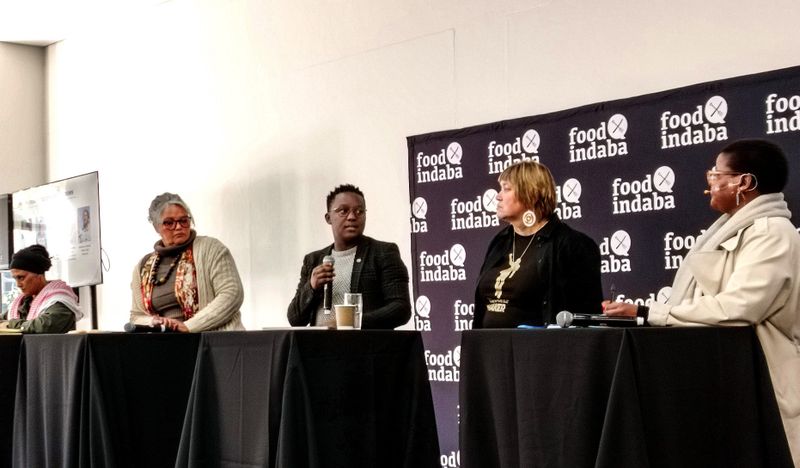
While there is an urgent need to conserve water amid the global water crisis, there are still communities in South Africa who do not have access to clean water in the first place, the audience at a recent conference about the critical relationship between water and food security heard.The conference, which took place on 24 July at the Two Oceans Aquarium Conference Centre at the V&A Waterfront, was hosted by non-profit organisation the SA Urban Food & Farming Trust as part of its annual Food Indaba.The conference was co-hosted by the DSTI-NRF Centre of Excellence in Food Security, and it was supported by the Unesco Chair in Science and Education for African Food Systems and the African German Centre for Sustainable and Resilient Food Systems and Applied Agricultural and Food Data Science, also known as Ukudla. Johannesburg residents protest against the water crisis outside Johannesburg Council Chambers on 1 November 2025. They demanded an urgent action to end what they describe as a ‘human rights and economic emergency’ caused by the worsening water crisis. (Photo: Fani Mahuntsi / Gallo Images) Researchers, policymakers, activists, innovators, community organisers and private sector members discussed historical understandings of water in Cape Town, global trends in water scarcity, the lived realities of drought restrictions, food access, community resilience and practical responses to the water crisis. Among the speakers were the nature, climate and energy portfolio manager at the United Nations Development Programme (UNDP) South Africa, Deshni Pillay, and civil society members such as Faeza Meyer from the African Water Commons Collective; community organiser and feminist activist Henriette Abrahams; Movement for Collective Action and Racial Equity coordinator Nkosikhona Swartbooi; and filmmaker Miki Redelinhuys.Pillay gave a speech describing water bankruptcy as a polycrisis, after which Meyer, Abrahams, Swartbooi and Redelinghuys discussed community mobilisation during crises with the moderator, Maverick Citizen editor Zukiswa Pikoli.The back-to-back discussions revealed the tension between the threat of water bankruptcy and water accessibility issues in South Africa.Water bankruptcy as a polycrisis in SA Pillay explained that the world has entered water bankruptcy. The United Nations University’s Global Water Bankruptcy Report describes water bankruptcy as a state of living beyond our hydrological means. It is a state where more water is being extracted than nature can replenish while degrading rivers, wetlands, aquifers and aquatic ecosystems that made water possible in the first place, she said.Pillay highlighted that water bankruptcy is not an independent crisis, but rather a “polycrisis” or multiple crises interlinking and feeding into each other. She argued that water crises always exacerbate food insecurity and used South Africa’s 2018 water crisis, Day Zero, as an example.“The water crisis was no longer only about water. It was starting to appear on dinner plates.” “For the first time, traffic in Cape Town was not the issue. Nor was it work or electricity. It was water. But something else was happening too. Every week, her grocery order increased. Vegetables became more expensive. Maize meal cost more. Oil became harder to find. The water crisis was no longer only about water. It was starting to appear on dinner plates,” Pillay said as she recounted a Cape Town nurse’s experience of Day Zero. She explained that when water declines, crop yields decline, which results in food prices rising and farm income shrinking, lost agricultural jobs, diminishing nutrition and rising poverty and inequality. The poorest households bear the brunt of a water crisis, they skip meals, stop eating nutritious food and children become undernourished when they cannot afford a healthy diet.“Every harvest begins with water. Every economy begins with water. Every community begins with water. And most importantly, every future begins with water,” she said.To mitigate the water crisis the UNDP has strengthened regional partnerships in South Africa to support climate resilience, ecosystem restoration and sustainable land management and is working with water-conserving communities to support their projects, Pillay said. Across the country, people in different spheres are taking action too. Farmers are adopting more resilient practices, such as regenerative agriculture, scientists are improving forecasting and are developing early water-crisis warning systems, municipalities are starting to explore new approaches to water scarcity, businesses are investing in innovative solutions and citizens are demanding change. But the discussion after Pillay’s speech revealed while the current water crisis has highlighted the need for better water conservation, there are those still fighting for access to water.Speaker Deshni Pillay and programme director Miles Kubheka invite questions from the audience at the Food Indaba's Water and the Food System Conference on 24 July. (Photo: Iman Allie) The fight for water Meyer told the audience that there are still vulnerable communities in South Africa who either do not have access to clean water or do not have enough to live a healthy lifestyle. “You cannot bathe with Coke. You cannot cook with beer,” Meyer said, expressing the importance of access to clean water.She expressed her frustration with the fact that households in Cape Town receive the same amount of free, basic water regardless of how many members there are and argued that the City of Cape Town should allocate water according to the number of members in a household. Meyer and Abrahams agreed that civil society is forced to take action when the state neglects its people. Abrahams recalled how during the Covid-19 lockdown, she and other members of her community in Bonteheuwel, Cape Town, distributed food parcels to the poor in their community, because they were not receiving any government assistance. Once they had learnt that distributing food parcels was unsustainable, they began growing their own food in small community gardens. This came with new challenges as the children tending the garden were required to bring two litres of water every day, but did not have access to enough water.Residents fill up water from water tankers in Dube, Soweto, on 7 January 2026, during a maintenance shutdown at a pump station. (Photo: Fani Mahuntsi / Gallo Images) Implementing the National Water Action PlanWhen asked about the state’s introduction of the National Water Action Plan in an interview after the discussion, Meyer was sceptical. She said that while the plan appeared to be beneficial, she was not positive that the government would be able to implement it practically. “It’s just a list of promises – that’s how we see it as communities. It’s just another bill, just another law […].”“It’s like a story that’s been told, but you never actually see things happening. [...] It’s just a list of promises – that’s how we see it as communities. It’s just another bill, just another law, another policy that’s out there that says something. But you don’t even know if it’s going to play out in communities,” she said. Meyer said members of the public had solutions to the water crisis, but were not being heard. She argued that the government should streamline public participation processes and allow the public to discuss solutions to the water crisis directly with them. DM
Our future depends on water: addressing South Africa's critical water bankruptcy
Full Article
Original Source
Read the full article at Dailymaverick →KhanList aggregates and links to publicly available news content. We do not host full articles from third-party sources. Always verify important information with original sources.