
8 min readHere’s what you’ll learn when you read this story:Research psychologist Robert Epstein believes that the brain may function as a transducer connected to the “Other Side,” from which we receive information that shapes our consciousness.This neural transduction theory (NTT) could explain dreams, consciousness, creativity, genius, and even humanity’s sudden cognitive leap 50,000 years ago, Epstein told other researchers at a recent conference.Researchers discussed possible tests for NTT, while skeptics questioned its lack of evidence or mathematical model.On a pleasantly warm June day in San Diego, a group of around 15 leading professors and researchers in the varied fields of neuroscience, psychology, medicine, and physics gathered behind closed doors, waiting to hear about a radical concept. Standing before the expectant, hushed crowd, senior research psychologist Robert Epstein, PhD, opened the conference with a dream.“I rarely remember my dreams, but for some reason I woke up and it stuck,” he told the gathering. He was riding in a flying car driven by his young mother, who kept dive-bombing toward different buildings on the Harvard University campus, because he had an exam and neither of them could figure out where he was supposed to go. Epstein clung to the top of the car, watching the ground rush toward him. What he felt was not terror but “this thrill, this incredible thrill, over and over again.” The dream prompted him to ask: “Where on earth did such content come from?”Epstein already had an answer, one he has championed for nearly a decade. It is summed up in three words: neural transduction theory, or NTT. This theory treats the brain less as the generator of thought than as a transducer, a biological device that converts one form of energy or information into another. The concept itself is anything but exotic. “All the sensory organs are transducers,” says Epstein, founder and director emeritus of the American Institute for Behavioral Research and Technology. Eyes turn light into neural signals, ears transduce air-pressure waves, and receptors in the nose respond to airborne chemicals. Even the skin converts pressure, temperature, and texture into neural signals. “The entire body is encased in transducers from head to toe,” he says.But there is one “small thing” Epstein wants to add.“The only thing I’m adding to this, the only small thing I’m adding to this, is that the brain itself is a transducer making a different type of connection.” Epstein doesn’t yet know exactly where or what the transducer is, but he has an idea about where the connection might lead. He calls it “OS.” The initials carry a deliberate ambiguity: the more engineering-sounding “Operating System” or the spiritual, metaphysical “Other Side.” Epstein doesn’t claim to know what the OS actually is. Possibilities include a higher dimension, a higher-frequency level of reality, or another universe.But if such a connection exists, what might actually travel through it? For Epstein, perhaps information, inspiration, genius—or even the reason the human species got “uplifted” to a higher intelligence in the first place.Here’s where Epstein invited his audience to think back in time some 50,000 years. Something strange and unprecedented happened then, he said. Anatomically modern humans had come into existence far earlier, yet for millennia they lacked the later explosion of art, language, and abstract thought, the characteristics that we associate with modern humans. Then, according to NTT, a human infant was born whose brain made not merely a transductive connection but an “optimal connection” to a higher intelligence, Epstein said—a connection that “dramatically uplifted our own intelligence.” If the trait was heritable and offered an enormous survival advantage, Epstein continued, it could have spread rapidly through the human population.That optimal connection solves what he calls Charles Darwin’s “uplift problem.” “Why have not apes acquired the intellectual powers of man?” Darwin himself asked in the sixth edition of On the Origin of Species, before conceding that the possible explanations remained conjectural.Of course Darwin wasn’t interested in transducers. “But all I need to do to get from natural selection to NTT is to make one little jump,” Epstein says. “I believe, but cannot prove, that while evolution was producing new species over a period of millions of years, it was also producing transducers that connected us somehow to other dimensions or universes.”“Perhaps we have trouble remembering dreams because we don’t generate them—because they are being streamed from the OS.”Where, precisely, this hypothetical transduction happens in the brain is another matter; Epstein doesn’t know. He has floated possibilities, though, ranging from the claustrum, a thin sheet of neurons deep in the brain, and the pineal gland, the tiny organ 17th-century philosopher René Descartes famously regarded as the principal seat of the soul, to special neural pathways. Or, it could be something more sweeping, and “the entire brain might be operating as a transductive organ,” which is the premise behind his forthcoming book, The Transductive Brain.Epstein, who was the last doctoral student of legendary Harvard behaviorist B.F. Skinner, has tried to show just how far the idea of transducers connecting us to another realm can stretch. In an embargoed preprint 2026 paper written with Liancheng Zhao, then a research intern at Epstein’s behavioral research and technology institute in California, the pair developed what they call the Epstein-Zhao diagrams: simple sketches depicting hypothetical channels between the brain and the OS. By varying a few properties—whether information travels toward or away from the brain, the “bandwidth” of the connection, its distortion, or whether the connection is broken—the diagrams propose NTT explanations for phenomena that otherwise seem to have little in common.Their list ranges from ordinary consciousness, dreams, unconsciousness, genius, schizophrenia, and intrusive thoughts—and onward into far more controversial territory, including telepathy, past-life memories, terminal lucidity, and communication with the dead. The list was approaching 90 different phenomena as of July.For normal consciousness, their sketch theorizes a two-way connection between the brain and the OS. For unconsciousness, NTT proposes that the connection is broken. Dreams reverse the picture: a strong but distorted signal travels one way, from the OS into the brain—Epstein’s proposed explanation for dreams’ bizarre content. “Perhaps we have trouble remembering dreams because we don’t generate them—because they are being streamed from the OS,” he told the room. Genius, meanwhile, is represented as a particularly strong, relatively undistorted connection.And that is precisely the point of putting such disparate phenomena on the same page. Epstein argues that NTT’s strength lies in its adherence to the principle of parsimony, or Occam’s razor: the idea that, all else being equal, the simplest explanation is preferable. In NTT’s case, that means a single mechanism could explain many apparently unrelated phenomena. “This is an extremely parsimonious theory,” he says. “I have no proof that NTT is true, just as Darwin had no proof that his theory was true. But he had parsimony on his side, and so do I.”The question, then, is whether NTT can be put to the test. After the conference, Epstein told me the talks had produced 20 possible testing methods. Unlike scientists probing inaccessible phenomena such as black holes, he says, neuroscientists have direct access to the organ where transduction might occur. “We have hundreds of labs, and we have all kinds of sophisticated scanning equipment.”Some of the scientists in the room already possessed tools that might be turned on the problem. Mayank Mehta, PhD, a UCLA professor who heads its W.M. Keck Center for Neurophysics, stood up and described a room his lab has built that was shielded from outside electromagnetic interference and sound. Researchers can introduce electromagnetic fields—even extremely faint ones—and watch what happens to dendrites and brain activity. For Mehta, however, possibilities are only a starting point: theories must become quantitative, measurable, and experimentally testable, he said.Alysson Muotri, PhD, a professor at UC San Diego, is bringing another experimental playground to the conversation: human brain organoids, three-dimensional neural tissues grown from stem cells. One possibility, he told me after the conference, would be to perform experiments with these organoids and assume that any hypothetical communication with the OS involves electromagnetic fields or quantum vibrations. He would then try to block that signal and see what happens. The problem, however, is knowing what, exactly, to block when the nature of the OS itself remains unknown. When asked whether he was thinking of starting such work soon, Muotri replied, “Yeah, yeah. It’s a priority, right?”While those two lab setups might offer an experimental opportunity in the future, others in the room were more skeptical. While Kenneth Kosik, MD, a neuroscience professor at UC Santa Barbara, called the sudden inspirations discussed at the conference “truly phenomenal,” the feeling just amounted to fascination. “I would say that’s not evidence. I would just say that’s phenomenology,” he told me after the conference.The biggest friction was with the claim that information might be coming from somewhere outside the brain. From where, exactly? “I tried to push a little bit—I never heard one idea put up by Epstein or anyone that they knew exactly what this entity was,” Kosik said. “You push them, and they say, ‘I don’t know.’”For Kosik, a theory of transduction would ultimately have to become mathematically tractable. “The place where theories gain credence is if you can develop a mathematical model,” he said. At the conference, he saw no such model: “There was no mathematical model there at all. It was just words.”Epstein acknowledges his “little jump” from natural selection to NTT. But should the theory eventually be put on firm experimental footing, he believes the stakes could be enormous.He pointed to the strange role dreams have sometimes played in scientific discovery. Nobel laureate Otto Loewi, Epstein told his audience in San Diego, got the idea for the experiment that helped establish the theory of chemical transmission between neurons from a dream he had. “He was savvy enough to jot down details from this dream in pitch darkness,” Epstein said. Come daylight, however, Loewi couldn’t decipher his notes or remember the dream. Then it returned the following night. This time, Epstein said, Loewi “got dressed and went to his lab. He won the Nobel Prize for the work he began that night.”“If NTT is true, and we can verify that in a credible way, then one of us, or perhaps a group of us, might someday be a good candidate for that prize,” was one of Epstein’s last remarks to the assembled researchers.And suppose one of these brilliant minds actually succeeds in finding out what—if anything—is on the OS. Are we sure we want to tiptoe into that realm? For Epstein, living in what he calls “pathetic ignorance” is unacceptable anyway. Besides, he believes that whatever might exist on the “Other Side” has been sending extraordinary content to at least some of us for 50,000 years. Those especially sensitive to the connection, he argues, may have received some of humanity’s greatest flashes of inspiration—the kind associated with geniuses like Einstein or Beethoven.Here’s to hoping the OS—if it exists—won’t mind us finally coming looking for it.Stav Dimitropoulos is a Gold and Community Anthem Award–winning journalist, and writes about consciousness, science, and culture for Popular Mechanics, Nature, and the BBC. Her work often explores mind-stretching angles where science meets philosophy. Her debut nonfiction book, Slow, Lazy, Gluttons (Greystone Books, 2026) asks: What if the traits society shames — laziness, darkness, nostalgia, and more — are actually survival superpowers?
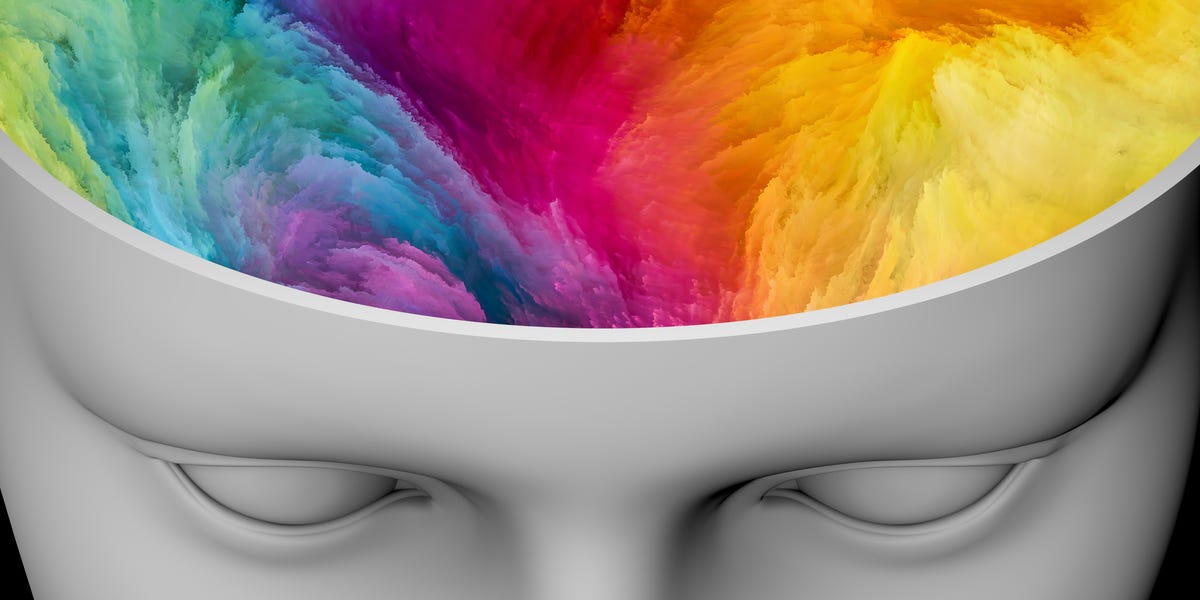
Our Brains Connected to Another Dimension 50,000 Years Ago—And Turbocharged Our Intelligence, Radical New Theory Says
Full Article
Original Source
Read the full article at Popularmechanics →KhanList aggregates and links to publicly available news content. We do not host full articles from third-party sources. Always verify important information with original sources.