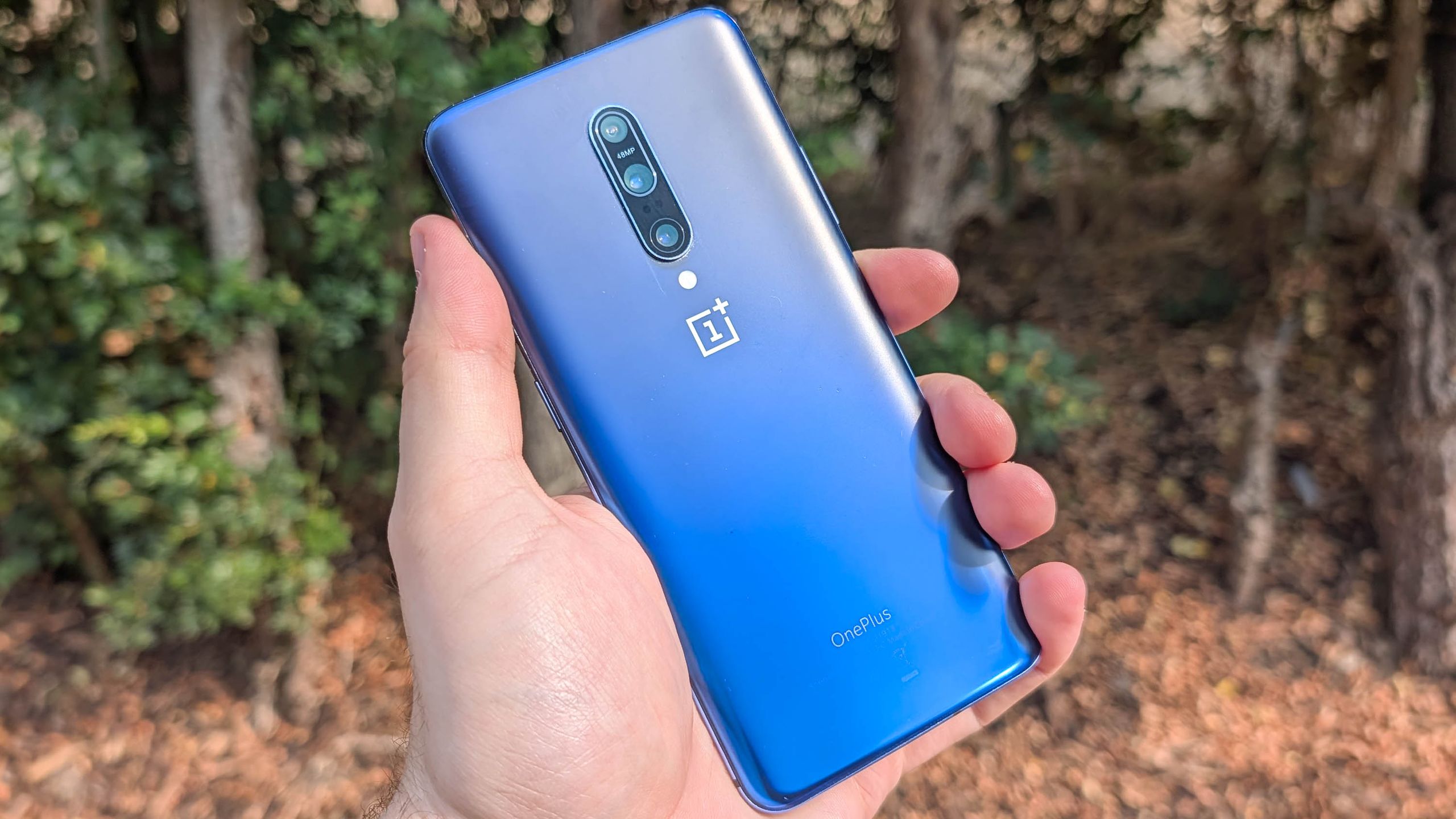
(Image credit: Tom's Guide) Earlier this week OnePlus confirmed the long-standing rumors that it was shutting down operations in multiple regions around the world — instead focusing all its efforts on the Chinese and Indian markets. In effect, contrary to the company's long-standing motto, OnePlus had decided to settle. Or, at the very least, it has in the U.S., U.K. and Europe.Naturally this news has led to lamentation from a lot of dedicated OnePlus fans online, including those people who eventually gave up on the brand for their own personal reasons. I count myself among the latter group, and still have fond memories of the first OnePlus phone I used every day: 2018's OnePlus 6. But as much as I loved the OnePlus 6, and its rear-mounted physical fingerprint scanner, that's not the phone I'm here to talk about.Instead, I'm here to remind everybody about the OnePlus 7 Pro, which is easily the peak of OnePlus' whole ethos of doing things differently.After that point, it felt like OnePlus was more interested in releasing phones that were the same as everything else on the market — and without the low price that initially made its "flagship killers" so appealing.The true full screen phone (Image credit: Tom's Guide)The advent of full screen phones was a big deal for the smartphone industry, for obvious reasons. Bigger screens without the hefty bezels that dominated the early 2010s were not only nicer to look at, they were also more practical. The problem that came with this was figuring how to account for all the front-facing hardware. Cameras, speakers, microphones and everything else that smartphone users had grown accustomed to.In those early days, it was very much a new wild west of phone design, because the industry could not agree on what to do. Many high-profile companies opted for the notch design, cutting a slice out of the display to make room for the camera. Some, like Apple, added extra hardware that users hadn't seen before — including the sensor-rich Face ID facial recognition system.While smartphones eventually settled on the hole-punch design, which was pioneered by the likes of Huawei and Samsung, this period saw a bunch of elaborate designs that attempted to maximize screen space. We're talking weird and wonderful mechanisms that either hid the front camera out of sight, or flipped the rear cameras around so they were facing your face. And yes, before you ask, such a phone did exist and it was actually surprisingly affordable.Get instant access to breaking news, the hottest reviews, great deals and helpful tips.(Image credit: Future)OnePlus's solution was to have a camera pop out of the top of the phone when called upon. That way the front camera was hidden inside the phone when not in use, allowing it to offer a true full-screen experience.That phone was the OnePlus 7 Pro, a device that was essentially an evolution of what the company's phones were offering. It took every benefit OnePlus offered on previous phones, and managed to fix some long-standing user complaints. This phone had stereo speakers, a 90Hz refresh rate, and cameras that were (by OnePlus' standards at the time) pretty good. Crucially, though, that screen was an absolute beauty.It wasn't a perfect phone, by any means. This was back in the days when OnePlus was stubbornly refusing to entertain the idea of wireless charging, and the screen itself did have two curved edges — a design choice I hated, and still hate to this day. Sadly, the OnePlus of early 2019 didn't really survive for much longer.OnePlus became just another brand (Image credit: Future)The pop-up camera didn't last long. While the OnePlus 7T Pro kept the pop-up camera, things changed when the OnePlus 8 Pro landed in early 2020. Here, OnePlus opted for a hole punch camera in the top left corner of the screen, essentially aligning OnePlus with the rest of the phone industry — which had decided hole-punches were the way to go. It wasn't a particularly big hole, but it effectively ruined the full-screen effect we got with the previous years' flagships.Logically, I get why this decision had to be made. Pop-out camera mechanisms take up space, wear out after extended long-term use, and weigh a lot more than a typical selfie camera. While it facilitated what was arguably the best phone screen I'd used at that point, the practicality of a pop-up camera just wasn't cutting compared to the alternatives.But this was still a turning point for OnePlus, where its phones started to feel a little too similar to other brands. Not to mention the fact that rising prices made OnePlus into less of a flagship killer, and more like one of the usual suspects.The change didn't happen overnight, and OnePlus still managed to help its devices stand out in other, smaller ways. We just ended up with OnePlus slowly losing the things that made it special. By the time of the OnePlus 15's release, OnePlus was no longer the rebellious underdog that was doing things its own way, it was essentially just the western arm of Oppo — a company that never really took off in the international market, as it had done in the domestic Chinese market.OnePlus still made great phones, that never changed, but it did lose that spark that made it so popular in the first place.Bottom line (Image credit: Future)Seven years after the release of the OnePlus 7 Pro, I can really appreciate what this phone was trying to do. I am the kind of person that avoids trading in older devices, instead preferring to repurpose them for something else, so my OnePlus 7 Pro is still alive and kicking. It's battered, bruised, and has a shocking amount of OLED burn in, but that pop-up camera is still functioning exactly as it originally said it would.Some of my colleagues don't agree that the OnePlus 7 Pro was the pinnacle of OnePlus as it was supposed to be. But you have to admit that it was probably the last time the company felt as though it was doing something different and unique, instead of churning out new phones with the same incremental updates — something so many other phone brands are guilty of.I haven't had a OnePlus phone for a long time because I felt like it lost what made it special. But that doesn't mean I won't miss the brand now that it's sailing off towards the horizon. It would have been nice if things had turned out differently, though, because Oppo just doesn't have the same appeal as OnePlus did. Follow Tom's Guide on Google News and add us as a preferred source to get our up-to-date news, analysis, and reviews in your feeds. More from Tom's GuideiOS 27 just upgraded a hidden iMessage feature in a bunch of incredible ways — here's how it worksI’ve been using my iPhone as a real-life Pokédex to scan every bug in my garden this summeriPhone 18 Pro Max's biggest upgrade may have just been confirmed, and it's a photography game changer Tom is the Tom's Guide's UK Phones Editor, tackling the latest smartphone news and vocally expressing his opinions about upcoming features or changes. It's long way from his days as editor of Gizmodo UK, when pretty much everything was on the table. He’s usually found trying to squeeze another giant Lego set onto the shelf, draining very large cups of coffee, or complaining about how terrible his Smart TV is.
OnePlus may be disappearing, but I still remember the company at its best — this phone was peak OnePlus
Full Article
📰 Original Source
Read full article at Tomsguide →KhanList aggregates and links to publicly available news content. We do not host full articles from third-party sources. Always verify important information with original sources.