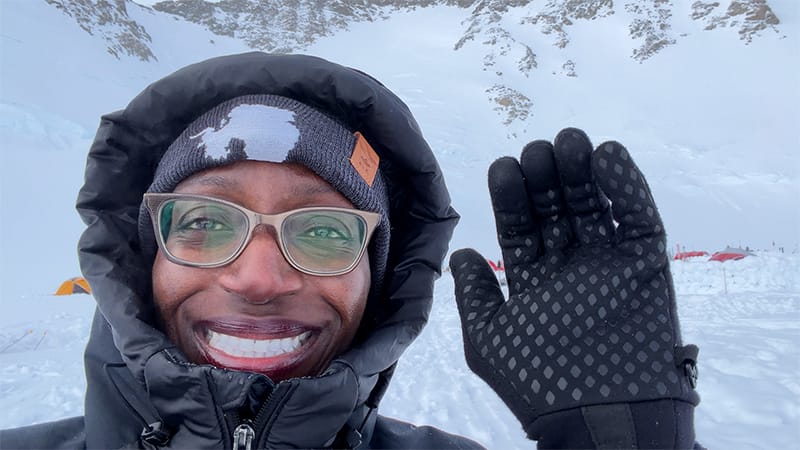
This transcript has been edited for clarity. Hello. I’m Dr Adjoa Smalls-Mantey. I'm here on Denali at 14K Camp. This is Alaska and Denali, or Mount McKinley, is the tallest peak in North America. A lot of people have experienced frostbite this year — I've experienced frostnip — and I want to share a few things about trying to prevent it.Recognize Frostbite EarlyEveryone always says frostbite is preventable. I've had frostnip before, and every time I experience cold weather, my fingers get cold more quickly. To help prevent frostbite, make sure to keep your hands warm.If you feel like your fingers are getting cold and numb, or they’re starting to look pale gray, you may be developing first-degree frostbite.Safe Rewarming MattersYou want to keep your hands frozen until you're sure you can warm them up and they won't refreeze. When it’s safe to do so, warm them in warm water, gently moving them to preserve the tissue. You don't want to rub your hands together because that will cause tissue damage from the ice crystals.Treatment and RecoveryA new medication is now available, iIoprost, an intravenous infusion. Ideally, it’s given within 24 hours, but even at 48-72 hours it may still be beneficial. If you can't receive it, one of the rangers told us 800 mg of ibuprofen may help. Ibuprofen is a prostaglandin synthetase inhibitor and prevents clotting, so you'll have more blood flow. You can also use aspirin, I suppose.You won't know for a couple of weeks or months how much tissue can be saved in your fingers. But if your fingers are blistered or you're not getting the feeling back, stop. Do all that you can to protect your fingers, toes, nose, and ears. Those are the typical appendages that get frostbite.That is it for my synopsis on frostbite here at 14K Camp. Bye.Adjoa Smalls-Mantey, MD, DPhil, is an assistant clinical professor of psychiatry at Columbia University and an adjunct assistant professor of psychiatry at NYU Grossman School of Medicine in New York City. She serves as president of the New York County Psychiatric Society and has held multiple leadership roles within the New York City district branch. Dr Smalls-Mantey has authored numerous scientific publications and contributes to ABC News as part of its medical unit. She is also an active speaker in community and media forums on mental illness, wellness, and public health.
On Denali, Frostbite Comes With Little Warning
Full Article
Original Source
Read the full article at Medscape →KhanList aggregates and links to publicly available news content. We do not host full articles from third-party sources. Always verify important information with original sources.