The Roma woman was 19 years old when she and her cousin were raped by three Serbian policemen on February 25, 1999, at the height of the Kosovo war. They had been waiting for a bus from the southern city of Prizren to their home in Decan/Decani, when a police patrol approached, asked to see their documents, and then told them had to go to the police station. “We got in the car with three police officers,” the woman told BIRN. “They didn’t take us to the police station, but to a forest, where they raped us.” “We arrived home at night. Our family understood what had happened, even though I insisted that they had only beaten us.” Today, she lives in poverty in a village near the western town of Gjakova/Djakovica, an unemployed mother of five who suffers from depression. Only recently did she apply for recognition as a survivor of wartime sexual violence, having worried for years about how to explain to her husband the 230-euromonthly payments she should receive. “He doesn’t know about it,” the woman said of the rape. “How do I tell him about the money?” Her plight will be familiar to many wartime rape survivors from Kosovo’s Roma, Ashkali and Egyptian communities. BIRN spoke to eight about the neglect and ostracism they face, and how a fear of being rejected by their family, societal stigma, and a lack of awareness about their rights have stopped many from ever seeking help. They all spoke on condition of anonymity. “Reparation, especially justice, remains largely lacking for minority women,” said Bashkim Ibishi, a Roma activist and director of a Pristina-based NGO dealing with minority issues. Excluded from public discourse Shehrije Balaj, the first woman to testify in Belgrade against Serbian fighters who raped her during the Kosovo war, but who died before her application for official recognition as a victim of wartime sexual violence was approved. Photo courtesy of Haxhi Balaj. Survivors of wartime sexual violence in Kosovo were officially recognised in 2018, much later than other categories of war victims and only after years of advocacy by women’s rights NGOs. According to the Governmental Commission tasked with verifying applications for recognition, there are more than 2,100 recognised victims of wartime sexual violence in Kosovo, of whom all but four per cent are Albanians. “The Government Commission does not request data on the ethnicity of victims during the verification process, and there is no discrimination,” Commission head Leonora Selmanaj told BIRN. Minority rights groups say the suffering of ethnic minority victims of wartime sexual violence are often overlooked in public discourse around the issue. “Roma, Ashkali and Egyptian victims of sexual violence are entirely excluded from public discourse,” said Roma activist Diana Shaka. Shehrije Balaj, a Roma woman, testified before a court in Belgrade in 2013 to the rape she suffered on May 6, 1999, at the hands of Serbian forces who went on a killing spree in four villages near Peja/Pec, western Kosovo. Balaj, who was 29 at the time, died in September 2018 before her application for recognition was approved. In 2019, BIRN reported on her story, and in 2021 she was posthumously decorated for bravery by then Kosovo President Vjosa Osmani. In her application, seen by BIRN, Balaj described being raped a second time by two Albanian men on July 29, 1999, after the war had ended. She and her family fled the next day and spent the next 13 years in Montenegro. Her son, Halaj, only found out about his mother’s ordeal when she testified before the court in Belgrade. Little support A survivor of wartime rape who recounted the violence she endured in an interview with BIRN. Photo: Serbeze Haxhiaj. A second woman interviewed by BIRN, a member of Kosovo’s Egyptian minority, was 24 years old when she was raped in an empty house in Rahovec/Orahovec by three Serbian policemen. It was June 1998, amid a growing insurgency against Serbian rule by Kosovo Albanian guerrillas. She had been with her husband when they were stopped by police; he was taken away, and she was raped. “I was covered in blood,” she said. Her husband was never found. Her father-in-law’s treatment of her and her three children worsened after he found out what had happened; she eventually took them away and sought help from an NGO. “Exclusion and shame from the community made me leave the city with my children,” the woman told BIRN. Today, she says she suffers from depression, anxiety, and a thyroid condition. The 230 euros she receives from the state as a recognised victim of wartime sexual violence does not even cover her medication. “Most survivors have not had access to employment or economic empowerment public initiatives,” said Roma human rights activist Shpresa Agushi. A third woman told BIRN about being raped in May 1999 in her home in Gjakova/Djakovica by two members of a Serbian paramilitary unit. She tried to hang herself the next day, but her mother stopped her. Two months later, after the war ended, NATO-led peacekeeping troops saved her from another attempted rape, this time by an Albanian man. For more than two decades, the woman had no access to psychological or other healthcare support. She cannot read or write and has struggled to find work. In 2020, she received recognition from the state and is now one of the few survivors from minority communities receiving psychosocial services from an NGO in her hometown. The 230-euro monthly payment she now receives does not cover her and her husband’s medical expenses. They live in a single room with their two children. Many survivors of wartime rape from minority communities had no access to psychological or other healthcare support. Photo: Serbeze Haxhiaj. Those who fled and never returned often have no means of applying for recognition as survivors of wartime sexual violence. That includes a fourth woman interviewed by BIRN, who was 29 years old when she was raped twice by uniformed men in the police headquarters in Gjakova/Djakovica in March and April 1999. A cleaner in the building, she fled when the war ended out of fear of being targeted for revenge as a former employee of the Serbian state. The woman now lives in the Montenegrin capital, Podgorica, but does not possess Kosovo documents. “Living in a refugee camp for a long time, we didn’t have food, let alone a psychologist,” she told BIRN. “Sometimes I bought sedatives when I had a few dinars.” When the war ended, ethnic minorities were targeted for revenge by Kosovo Albanian guerrillas and civilians. Speaking to BIRN, an Egyptian woman from a village near Peja/Pec recalled five armed men entering her house on July 27, 1999, one of them in a T-shirt featuring the symbol of the guerrilla Kosovo Liberation Army, KLA. Her husband was beaten and she was dragged into the woods. “One of them raped me, and my husband was unable to help.” The men later went next door, where they raped the woman’s neighbour. Three days later, the family left Kosovo. Her case was documented in a 1999 report by the Belgrade-based Humanitarian Law Centre. In the report, she says: “When they came, they asked me to find two other women and go with them. I told them I could not find any and begged them to let me go because I was a mother with small children. One of them threatened to kill my husband if I did not comply. Crying, I went there. They left me there, crying and dishonoured.” However, Kosovo’s Law on the Status and Rights of Martyrs, Invalids, Veterans, Civilian Victims, and Victims of Sexual Violence only provides for recognition of survivors of wartime sexual violence between February 1998 and June 20, 1999, i.e. roughly a week after Serbian forces pulled out of Kosovo and the war ended. The woman said she doesn’t “need” recognition. “But I am frustrated that nobody mentions us,” she said. “Egyptian Roma women have also been raped here.” Agushi, the Roma rights activist, said rape survivors from minority communities barely feature in public discourse surrounding the war and wartime sexual violence; those raped after the official cessation of hostilities are doubly discriminated against. “They are even more marginalised, and those who were victims of sexual violence after June 20, 1999, are particularly discriminated against because they are not legally recognised and remain in the shadows.” Campaign of terror No case involving wartime sexual violence against Roma, Ashkali or Egyptian women has ever reached court in Kosovo, and no investigation is currently under way. Photo: Serbeze Haxhiaj. A 2024 study of the long-term consequences of war rape in Kosovo, by Cologne-based Medica Mondiale and Medica Gjakova, found that incidents of sexual violence committed by Kosovo Albanians, while less frequent, occurred in particular after the end of hostilities and mainly targeted women from ethnic minorities. Fatmire Haliti of the Pristina-based Kosovo Rehabilitation Centre for Torture Victims, KRCT, said there is “ongoing advocacy to extend the deadline beyond June 20, 1999, as well as to remove the deadline for applications for recognition of the status of victims of sexual violence”. BIRN identified at least three Roma women who were victims of sexual violence twice, first at the hands of Serbian forces and then, after the war, Albanians. Some accounts suggest rape was used as part of a campaign of terror to force Roma families to abandon their homes. “It was a situation in which postwar Kosovo became prey to uncontrollable armed gangs that committed an increasing number of crimes,” said Jean-Christian Cady, Head of Justice at the UN Mission in Kosovo from 2000 to 2004. One, for example, was 30 years old when she was raped on July 3, 1999, weeks after the end of the war, at her in Mitrovica by two men. Her family was forced to leave their home, which was then occupied by other people. She currently lives in the northern Serbian city of Novi Sad. Another was 14 when she was raped on June 12, 1999, the day after the war officially ended. She never reported the rape, but in August 2004, a former KLA guerrilla was arrested in Montenegro and extradited to Serbia, where he was sentenced to 13 years in prison for killing two Serbs and a Roma in June 1999 after the war officially ended. Today, the woman has four children and lives in a shelter for displaced people. She suffers from diabetes and depression. After initially being denied, she was finally recognised as a victim of wartime sexual violence. “I was afraid to apply earlier because my case became public during the trial,” she said. Not a single case concerning wartime sexual violence against Roma, Ashkali or Egyptian women has ever reached court in Kosovo, nor is there any open investigation.
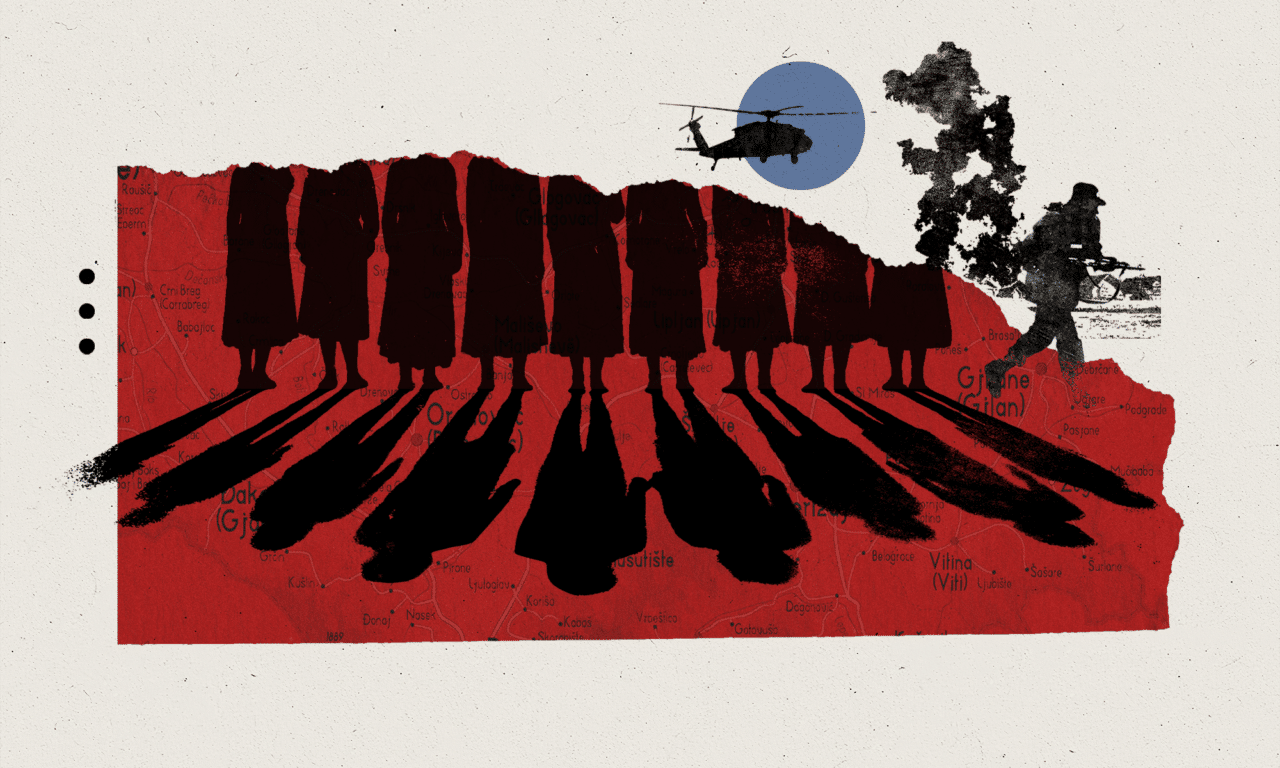
‘Nobody Mentions Us’: Silence Surrounds Wartime Rape of Kosovo’s Ethnic Minorities
Full Article
Original Source
Read the full article at Balkaninsight →KhanList aggregates and links to publicly available news content. We do not host full articles from third-party sources. Always verify important information with original sources.