
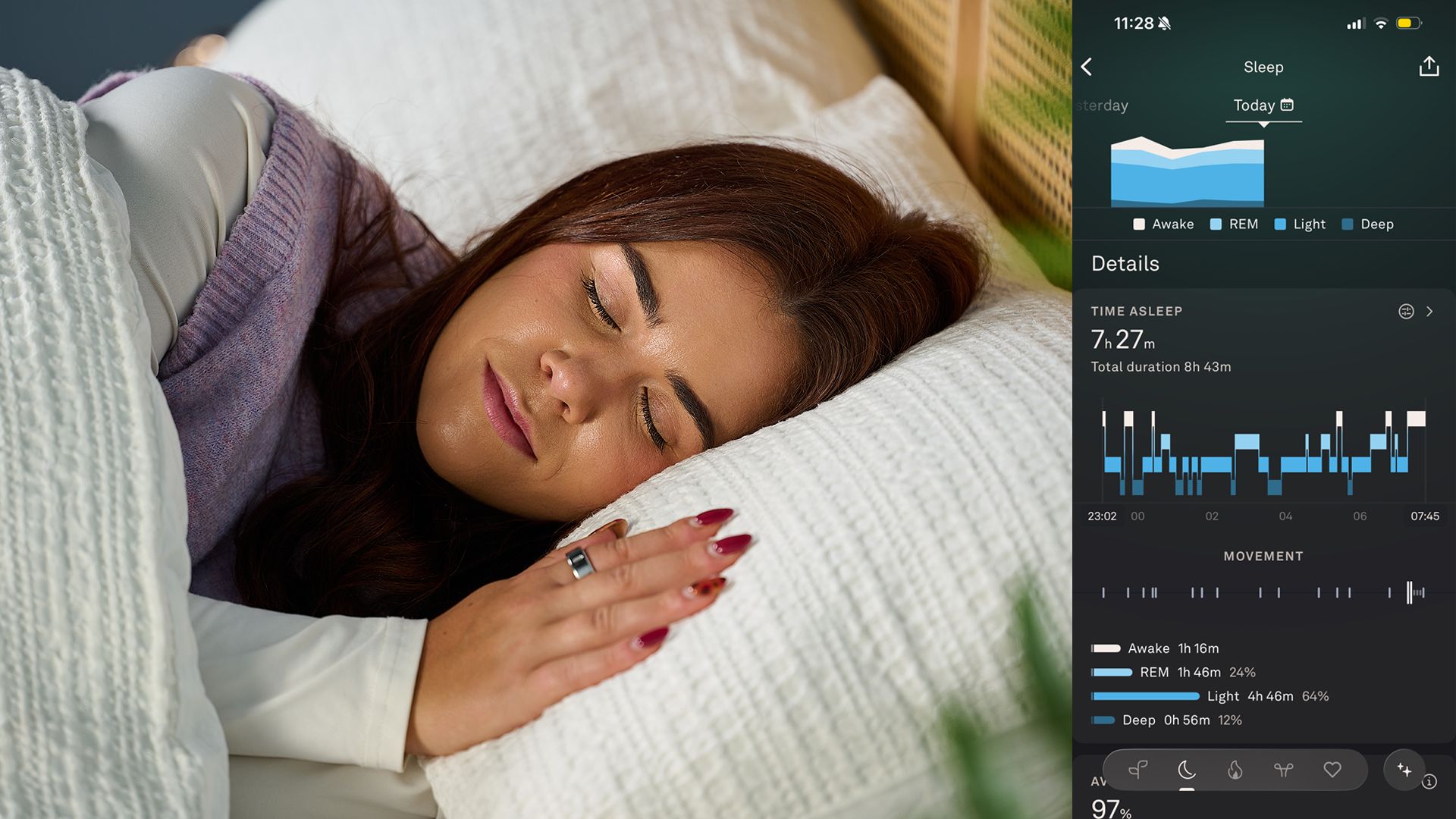
We're in a sleep crisis. We know we're tired, we know it's affecting our wellbeing, but we don't know what to do about it. Enter the sleep tracker, an at-home device that delivers better understanding of your shut-eye, without you having to lift a finger.However, a new lawsuit alleges that wearable giant Oura is preying on our sleep woes by promising accuracy it can't deliver. Like all the best sleep trackers, the Oura Ring claims to identify sleep stages and patterns, offering data down to the minute. But is it skill or guesswork?I write about sleep for a living so even as an Oura Ring wearer, I admit it's not going to give 100% accuracy. But before you toss your Oura Ring 5 into the ocean like a dramatic divorcee, the Oura Ring's "guess work" can still help you sleep — here's how.What does the Oura lawsuit allege? (Image credit: Future)Oura is facing a lawsuit alleging that the company is misleading users about the accuracy of its sleep tracking.Oura says that the Ring 5 is the "gold standard in wearable sleep tracking," and, according to the suit, has previously claimed "95% accuracy."The lawsuit alleges it's a claim that Ring can't deliver on, as "sleep happens in the brain, not on one's finger." The complaint continues to allege that Oura uses "guess work" and AI models to deliver a "coin flip’s" chance at accuracy.Further, the lawsuit states that these practices are "deceptive." And that by falsely offering consumers an accurate understanding of their sleep, Oura is preying on the ongoing sleep crisis.Get instant access to breaking news, the hottest reviews, great deals and helpful tips.Oura claims the lawsuit is "baseless" and stands behind its sleep tracking.Sleep trackers are estimates, not absolutesNo, your Oura Ring can't deliver the accuracy of polysomnography (PSG). These overnight sleep studies are the real gold standard in tracking. But that doesn't mean you should dismiss at-home sleep trackers, either."The healthiest approach is to view sleep trackers as helpful guides rather than report cards," says Dr. Shireen Emad, expert at Watches2U.The Oura Ring 5 measures sleep through a variety of variables. Your heart rate, heart rate variability, respiratory rate, body temperature and movement are all collected. This is then fed into an algorithm, trained on a large set of sleep data, which estimates your sleep stage. Oura claims that compared to PSG, this algorithm achieves 79% agreement. (Image credit: Future)But yes, that still leaves room for 21% disagreement.“Sleep trackers can be incredibly useful tools, but it’s important to remember that they provide estimates rather than perfect measurements," Dr. Emad explained to me.For that reason, if you suspect you're experiencing insomnia, long-term sleep deprivation or sleep apnea, we recommend speaking to a healthcare professional.Is 79% accurate sleep tracking any good?The Oura Ring 5 provides a generally accurate overview of your sleep. For most of us, that's good enough.Where the Oura Ring — and other wearables — struggle is typically sleep stages. (This is focal to the lawsuit.) Sleep stages describe what's happening in your body during the night. Most wearables break sleep into three areas: light (or core), REM sleep and deep sleep.But with just 79% accuracy, every second of your sleep isn't going to be divided into the right stage. (Image credit: Future)However, Dr. Emad warns getting too caught up in minute-by-minute sleep stages can leave you missing the bigger picture."When used sensibly, [sleep trackers] can improve awareness and encourage positive habits," she said. "One of the biggest mistakes people make is treating the data as an absolute judgement on how well they slept."That means you don't need to know if you spent 85 or 91 minutes in deep sleep last night. (The lawsuit notes a Nature study found Oura underestimated deep sleep by just 5.98 minutes.) Instead, focus on whether you're regularly missing your deep sleep targets... and how you feel the next day."Technology should complement how you feel, not override it,” said Dr. Emad.Why the Oura Ring 5 is still one of my top-rated sleep trackersIf you're concerned about your sleep, contact your healthcare professional to find out more about booking a sleep study. But if you just want to learn more about your snooze, here's why I'm still using my Oura Ring.1. ComfortPolysomnography delivers the most detailed insight into your sleep. But even if you can afford to do a sleep study every night, you probably won't want to.PSG requires a lot of equipment. Tubes, sensors, recordings... one recognized down fall of these tests is that many struggle to sleep with all that going on.The Oura Ring 5, on the other hand, is one of the smallest wearables on the market. I don't even notice I have it on at night.2. All-day trackingGood sleep is more than just the hours spent in bed. Your daily activities build adenosine (sleep pressure), hours awake determine your circadian rhythm (sleep-wake cycle), while stress tracking can help you understand your cortisol levels (the awake hormone).By tracking throughout the day, Oura Rings and other wearables create a wider impression of your health. All of which contributes to your sleep quality. (Image credit: Oura)3. Accurate sleep trends (largely)As Dr. Emad explained, often the best measure of your sleep isn't your daily score but your monthly trends. And one trend the Oura is excellent at tracking is when you go to bed and when you get up.Sleep time and wake time are two big indicators of sleep consistency, which builds sleep quality. (Your body clock thrives on routine.) Going to bed at the same time every night might even help you live longer.Although the Oura Ring 5 might not nail the exact moment you fell asleep, wearing it nightly helps track patterns. From that, you can build sleep habits. For example, a quick glimpse at my data shows I've started lingering in bed after waking up — which might be why I've felt lethargic in the morning.My sleep tracking favorites Follow Tom's Guide on Google News and add us as a preferred source to get our up-to-date news, analysis, and reviews in your feeds.
No, your sleep tracker isn't 100% accurate — here's why that doesn't matter
Full Article
Original Source
Read the full article at Tomsguide →KhanList aggregates and links to publicly available news content. We do not host full articles from third-party sources. Always verify important information with original sources.