
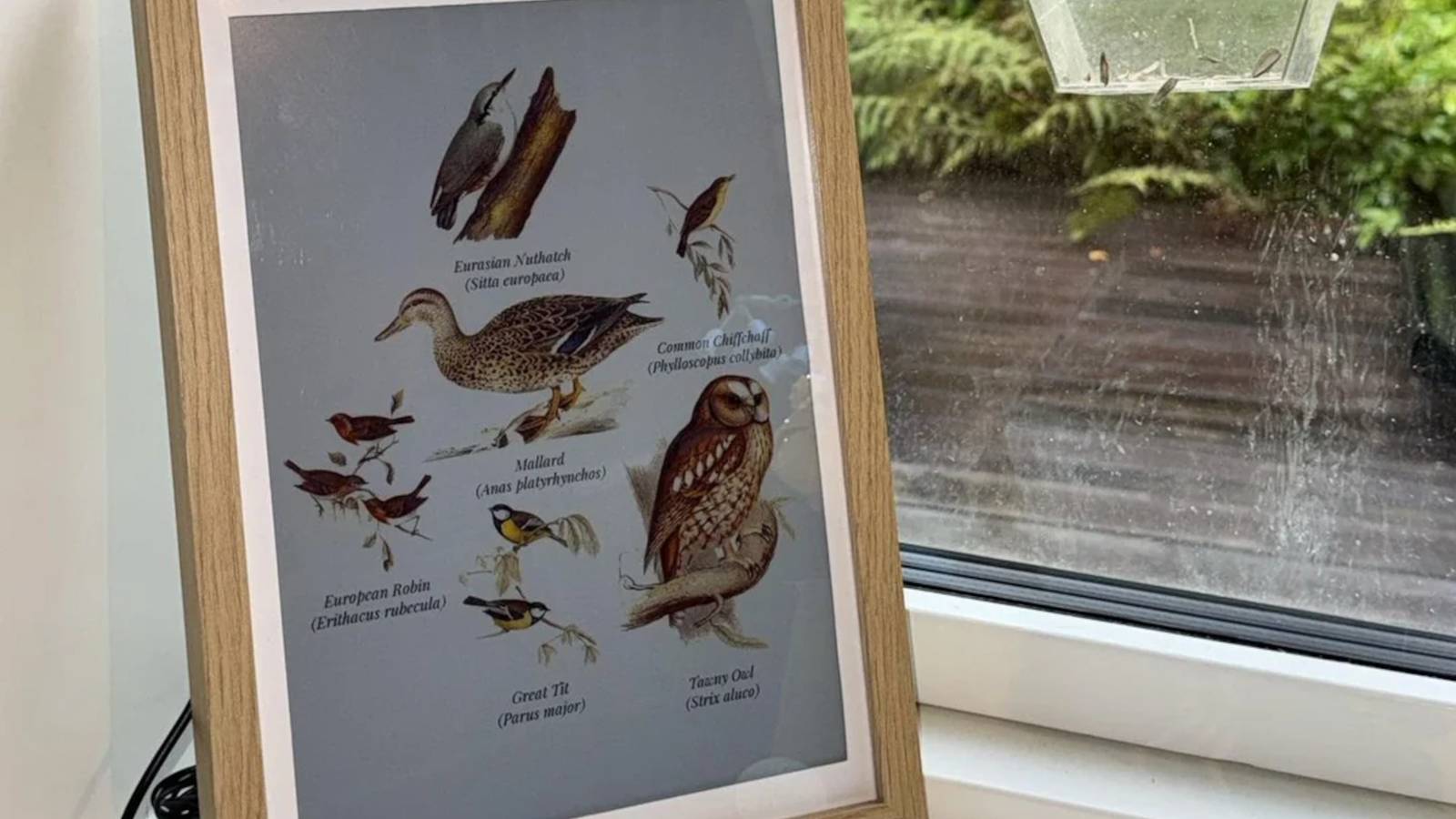
Credit: arnegiacomo Published Sep 6, 2026, 12:36 AM EDT Simon is a Computer Science BSc graduate who has been writing about technology since 2014, and using Windows machines since 3.1. After working for an indie game studio and acting as the family's go-to technician for all computer issues, he found his passion for writing and decided to use his skill set to write about all things tech. Since beginning his writing career, he has written for many different publications such as WorldStart, Listverse, and MakeTechEasier. However, after finding his home at MakeUseOf in February 2019, he would eventually move on to its sister site, XDA, to bring the latest and greatest in Windows, Linux, and DIY electronics. Sign in to your XDA account Summary This passive bird-call listener uses a Raspberry Pi 5, a USB mic, and an Inky e-ink display. Uses hand-curated 1800s natural-history cutouts for art and runs locally with BirdNET-Go. It doesn't need a lot of hardware, and a GitHub repo is available if you want to make your own. These days, it's really easy to identify bird calls; all you need is a bird identification app on your phone, and you can ID a call in a moment's notice. But what if you could have a system that passively listened for bird calls and showed you which ones it heard using beautiful art? That's the goal of this project, which uses a microphone, an e-ink display, and genuine art from the 1800s to create an immaculate set piece. This bird-recognising project is the ultimate gadget for the avid bird-watcher Or even if they're just a bird-listener This cool project was the idea and invention of arnegiacomo over on the Raspberry Pi subreddit. Usually, when we see bird identification projects like this one, the gadget uses live data from birds in the area and generates images of the birds using AI. However, this one does things a little differently: I use a USB lavalier mic with a long, thin cable, taped under the roof outside and run in through the window. Thin enough that the window still closes on it. Everything (including the detection model) runs locally on the Pi and works fully offline. What sets it apart from other similar bird projects is the art and the foundation. Every bird is a hand-curated cut-out from an 1800s natural-history scan, no AI-generated images. BirdNET-Go builds a strong foundation that this sits on top of, including location-based detections, language support, listening to multiple audio sources, IOT integrations, and much, much more. The bill of materials is pretty small: all you need is a Raspberry Pi 5, an Inky Impression 13.3" e-ink display, and a USB microphone. Right now, the project mostly features European birds, but US ones are currently in the works. If you'd like to make your own, pop over to the Fugleramme GitHub project repo for all the details. Or, if you'd prefer to see what birds are in the inventor's area right now, you can see what their own Fugleramme is showing them by visiting their dev website.
This Raspberry Pi 5 e-ink project listens to your garden and draws the birds it hears
Full Article
Original Source
Read the full article at Xda-developers →KhanList aggregates and links to publicly available news content. We do not host full articles from third-party sources. Always verify important information with original sources.