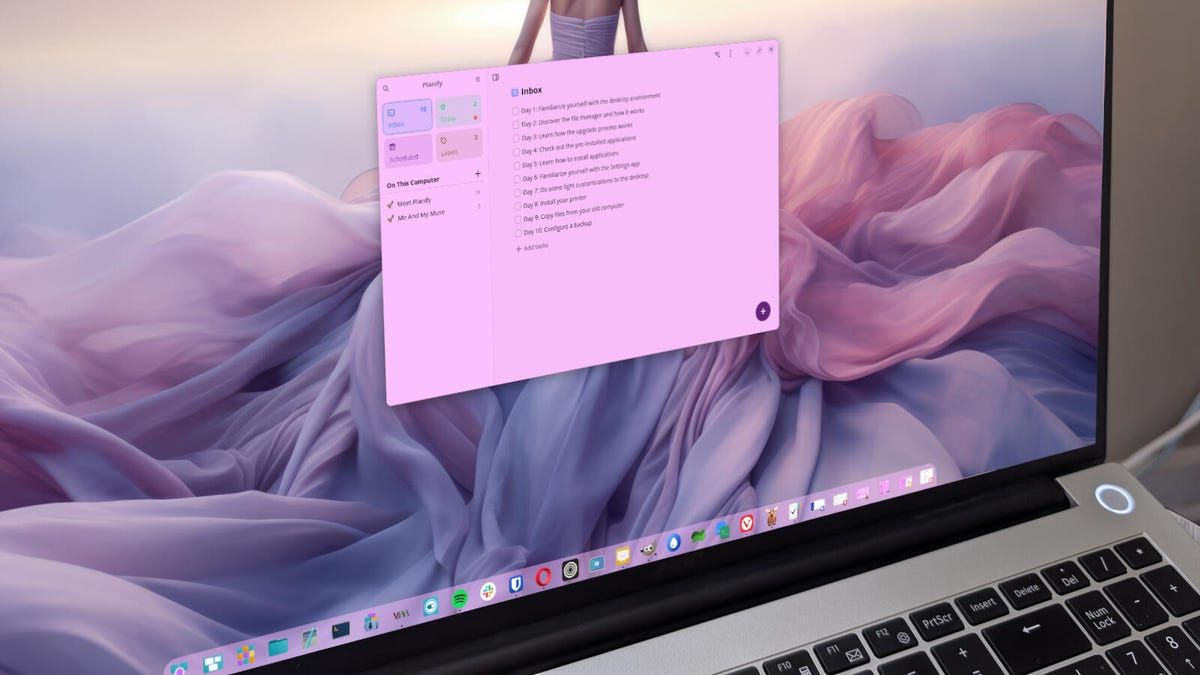
Jack Wallen/ZDNETFollow ZDNET: Add us as a preferred source on Google.ZDNET key takeawaysIf you're just starting with Linux, follow this calendar.In 10 days, you'll feel right at home.Just remember to take it slow and easy.So, you've finally decided to give Linux a try, but you're worried because you've never used anything but MacOS or Windows. What's in store for you? Can you make this work? Change is hard, and leaving an operating system that you've used for decades is certainly a big change. But if you're serious about giving Linux a try, you don't have to expect to become a pro overnight. It took me months to get to a point with Linux that I felt I truly knew what I was doing. Back then, I didn't have any help, and the OS was exponentially harder to use than it is today. But if I could go back in time, I would remind myself to take it slow and handle one task at a time. To that end, I've devised a 10-day plan that can help you ease into Linux.Also: What made me finally switch to Vivaldi as my default Linux web browserOnce you've been convinced to install a Linux distribution, here's how I would advise you to go about the first 10 days of your journey. Day 1: Familiarize yourself with the desktop environment The first thing you'll notice is that the user interface is probably different from what you're used to. You may have chosen a distribution that uses KDE Plasma, so the layout might look familiar, but even then, there will be differences. Also: 5 of my favorite Linux distros ready to use out of the box - no setup requiredThis could be the most important step you take, because if you're not familiar with the desktop, everything else will feel like a challenge. Get to know the panel and the desktop menu. Learn how to add app launchers to the panel and to the desktop (if you're so inclined). Figure out what favorites are and how to add them to the desktop menu (if your desktop environment of choice includes the feature). Don't worry about learning to customize the desktop; that will come later. Day 2: Discover the file manager and how it works The file manager is an important app that you should immediately become familiar with. After all, this is how you manage your files and keep them organized. At the same time, you'll want to get to know the different locations in your home directory. The home directory is the equivalent of C:\Users\yourusername\ on Windows and /Users/username on MacOS. Also: The 6 Linux distros I expect to rule 2026 - and whyYou can also look into the Network location in your file manager, which will list any computers it finds on your network. At this point, I wouldn't bother poking around too much in the file system. Instead, stick with your home directory. Learn how to create a new folder in the file manager, move that folder, copy that folder, etc. Keep it basic. Day 3: Learn how the upgrade process works This one is pretty important, and you'll most likely be prompted by the desktop's notification system that an upgrade is available. This might even happen soon after your first log in; if it doesn't, don't worry. If you've not been prompted for an upgrade by day three, go through the desktop menu, find the app used for upgrades, and run it today. The process should be very simple and entirely point-and-click, so there's no reason to worry that this will cause you problems. Upgrading desktop Linux is incredibly easy and reliable. Day 4: Check out the preinstalled applications Your distribution will have shipped with several preinstalled applications, and the distribution you chose will determine which apps are available on first login. You will definitely find a web browser (probably Firefox, Brave, or Chromium), which functions exactly as it did on MacOS or Windows. You might also find an email client (such as Thunderbird), an office suite (such as LibreOffice), or both out of the box. Also: I have a new favorite Linux email client in 2026 - and I've tested them allDig through the desktop menu and see what there is to see. There will be utilities (like text editors and disk managers) and possibly even some games. Day 5: Learn how to install applications If you don't find the apps you need, fret not because nearly all Linux distributions (except Arch and some Arch-based distros) have GUI app stores where you can search for the apps you need to install and use. Many Linux app stores (such as GNOME Software) offer a welcome page that categorizes the apps to make it even easier to find what you need. And then there's KDE Discover, which is equally easy to use. Using a GUI app store on Linux is the same as using the Apple App Store. Search for an app, click on the app, and then click to install the app. You will be prompted for your user password before the installation can continue, but that's it. Day 6: Familiarize yourself with the Settings app Now that you're becoming a bit more familiar with your Linux desktop, it's time to look into the Settings app. This is where you can configure settings such as desktop appearance, Bluetooth, accessibility, displays, sound, power and battery, input devices, time and language, networks and wireless, and user account. Some distributions' Settings apps offer more customization than others. For instance, KDE Plasma's Settings tool gives you quite a few more options than GNOME's. At this point, as long as your network connection is working fine, I wouldn't bother diving into that section. Keep it basic. But if your curiosity gets the best of you, feel free to poke around, but don't start randomly clicking things (especially those that you're unsure of). Day 7: Do some light customizations to the desktop Today, you can do something fun and start tweaking your desktop. Change the wallpaper and theme, tinker with transparency (if available), and adjust the window decorations. Change the size and/or position of your panel, or switch it to Dock mode (if available). Also: This is my favorite Linux distro of all time - and I've tried them allThe important thing here is to keep it light. Don't dive too deep into desktop customization, as that can wait until you're more familiar with Linux. Even so, you can still do quite a bit of safe tweaking to the look and feel. Day 8: Install your printer If you have a printer, it's time to plug it into the PC. Some distributions will probably automatically see the printer, and you'll be ready to print immediately. You'll be surprised at how well-supported printers are on Linux. Even better, unlike on Windows, many times you won't even have to install drivers for your printer to work. I have a Brother laser printer that I can just plug in when using most distributions, and it immediately works. If yours doesn't, visit the printer manufacturer's website to see whether it offers Linux drivers for your model number. If so, download them and install them. Make sure you download the file that is specific to your distribution. For example, if you're using an Ubuntu-based distribution, you'll download a DEB file. If you're using a Fedora-based distribution, you'll download an RPM file. Day 9: Copy files from your old computer Now that you're feeling more comfortable with Linux and you're probably using it more and more, you'll want to copy your files from either your MacOS or Windows computer so you can work with them on your new OS. Also: The first 8 Linux commands every new user should learnThose files will probably be in the form of documents and spreadsheets, so I would copy them into the Documents folder in your home directory. You can copy pictures into the Pictures directory, music into the Music directory, and videos into the Videos directory. Pretty simple. Day 10: Configure a backup Finally, you should definitely configure a backup so all those files you work with are backed up to an external drive. Some Linux distributions come with a preinstalled backup application. In many instances, that is Deja Dup (sometimes simply called Backup). If not, you'll find plenty of backup apps in your app store. Also: 5 tiny Linux tools I can't live or work withoutAfter you've installed the app, plug in your external drive and set up your backup. You'll most definitely want to back up your Documents directory and any other directory that holds important files or data. And there you go; you've made it through your first 10 days of using Linux. From this point on, just keep using it and enjoy the freedom, security, and reliability of the Linux OS. Open Source
New to Linux? This 10-day checklist will help you settle in nice and easy
Full Article
Original Source
Read the full article at Zdnet →KhanList aggregates and links to publicly available news content. We do not host full articles from third-party sources. Always verify important information with original sources.