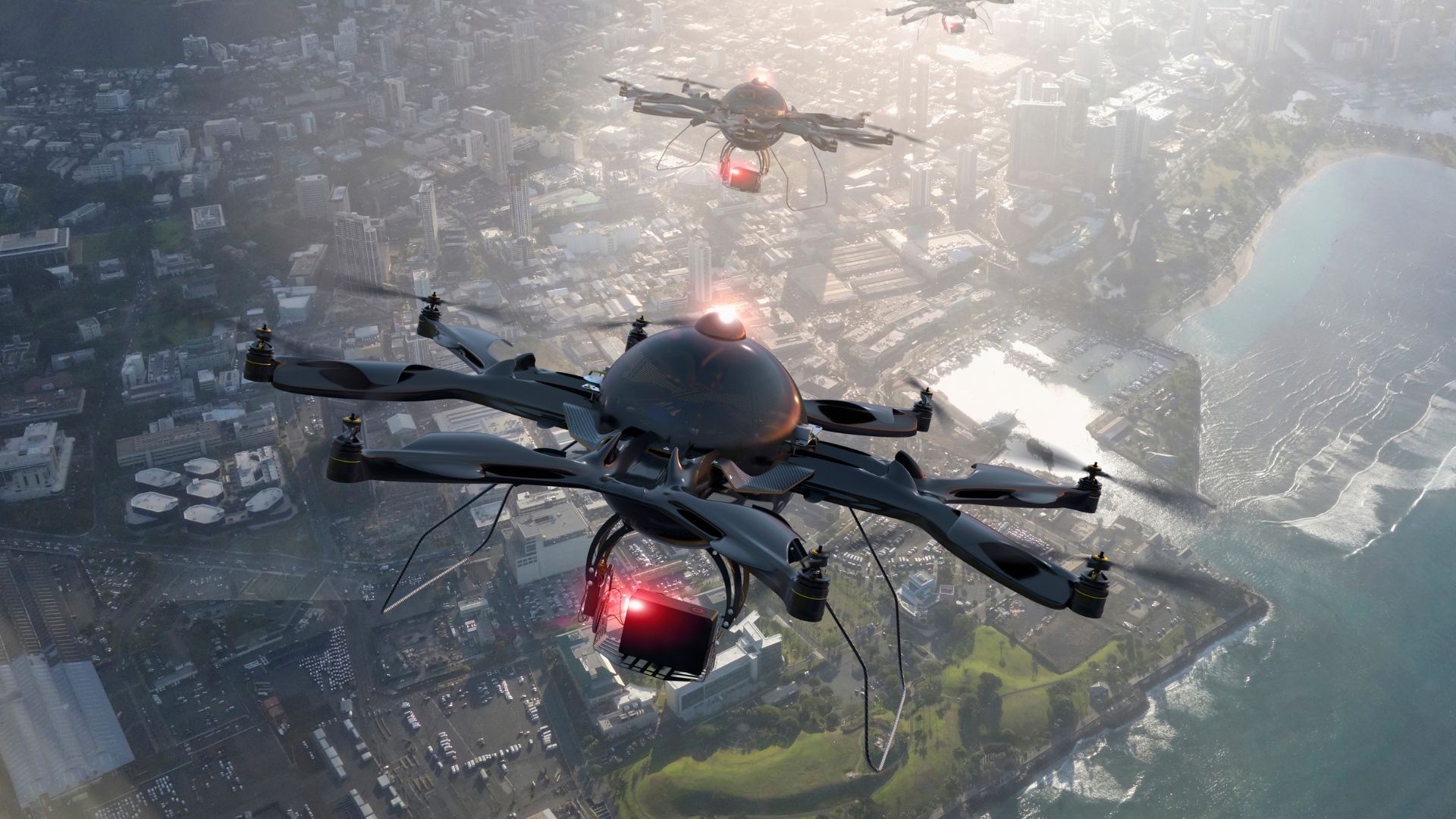
U.S. defense technology companies Lantronix and Swarmer are developing a compact computing platform designed to give small military drones four times more onboard processing power for autonomous operations. The platform will combine Lantronix’s Open-Q 6490CS System-on-Module with Swarmer’s autonomy software, creating a production-ready system for Group 1 unmanned aircraft systems. The companies say the customized platform will provide roughly four times the processing power of the current system used by Swarmer. The goal is to let small, low-cost drones handle more tasks directly onboard, including visual navigation, automated target recognition, object tracking and coordinated operations with other unmanned systems. The collaboration comes as Ukraine, the U.S. and allied militaries look to deploy large numbers of inexpensive drones that can operate despite electronic warfare, disrupted GPS signals and limited communications with remote operators. More computing at edge Lantronix said its platform is designed to run autonomy software locally, removing the need to depend on cloud-based computing in environments where connectivity may be unreliable. The additional processing capacity is expected to support more complex sensor fusion, real-time decision-making and coordinated drone behavior. “A production-ready NDAA-compliant Lantronix compute platform with Swarmer’s combat-proven software provides operators with roughly four times the processing power to optimize its visual navigation, automated target recognition, pixel lock and advanced teaming algorithms,” said Saleel Awsare, president and CEO of Lantronix. The system is being designed for Group 1 UAS, a category covering small unmanned aircraft. Its compact form factor is intended to allow the same computing platform to be deployed across different unmanned vehicles without requiring major hardware changes. Swarmer’s software is designed to let a single operator plan, monitor, and execute missions involving hundreds of autonomous platforms. The company says its software can work across fixed-wing and rotary-wing drones as well as ground and maritime vehicles. Built for contested skies Swarmer said its autonomy software has been used in more than 100,000 combat missions in Ukraine since April 2024, involving nearly 50 Ukrainian military units. The systems have operated in environments affected by electronic warfare and denied or disrupted satellite navigation. The new computing platform is intended to allow those autonomy capabilities to run directly on the unmanned systems. That could make drones less dependent on remote computing or communications links while giving them more processing capacity for increasingly complex missions. “With more than seven million drones projected to be manufactured this year alone, we believe that every one of them could potentially run our AI and collaborative autonomy software,” said Alex Fink, president and U.S. CEO of Swarmer. “Our collaboration with Lantronix will produce a compute platform that is capable of running AI models on the edge in a small form factor that is optimized for Group 1 UAS.” The companies also say the platform will be NDAA compliant, allowing it to be deployed for U.S. and allied government programs while reducing concerns over hardware supply chains. They are targeting a production commitment of more than 10 years, potentially allowing the same computing architecture to support future defense programs.
New edge-computing platform gives small military drones 4x more processing power
Full Article
Original Source
Read the full article at Interestingengineering →KhanList aggregates and links to publicly available news content. We do not host full articles from third-party sources. Always verify important information with original sources.