
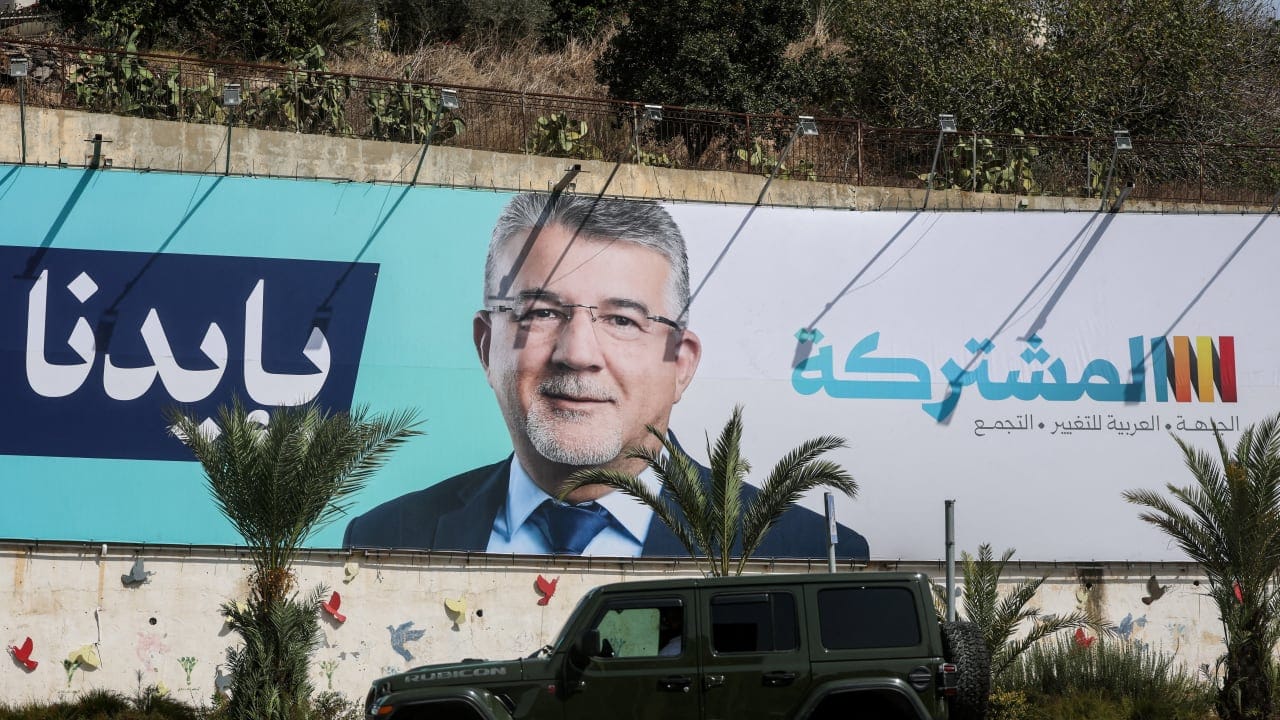
NOVEMBER 6, 2026 12:52It was the perfect image for social media. During the October 27 general election in Israel, Arab voters in the Negev were filmed racing to polling stations on camelback, waving green Islamist flags. Even mainstream international media were captivated by the vision. It doesn’t fit with the “Israel is an apartheid state” story, but who could resist this colorful picture?Every election has its surprise. In Israel last week, it was the high turnout of Arab voters. While voter turnout was high nationally, it was the Arab turnout that stood out, at almost 80% compared to some 53% in the 2022 election.Allegations of voter fraud, funded perhaps by Qatar and other foreign sources, were immediately floated. David Zini, the head of the Shin Bet (Israel Security Agency), ordered an investigation. Documented reports of envelopes stuffed with money or gas coupons being distributed to voters added to the suspicions that the turnout was less a surprise than pre-planned.On Sunday night, the head of the Central Elections Committee, Justice Noam Sohlberg, seated next to Zini and Attorney-General Gali Baharav-Miara, issued a video statement in which he said: “The majority of the reports about the Shin Bet’s investigations are incorrect. Our position is that even if the allegations are confirmed, they will not detract from the election process and its results. There is nothing to make us question the vote by Arab society.”That only raised a question of electoral oversight. We need to see the bigger picture. Certain polling stations in Arab communities had – in violation of the law – apparently established gender-separated hours to enable women in a highly traditional society to vote without waiting in line with male voters. Imagine the uproar had polling stations in Jewish ultra-Orthodox (haredi) communities arranged for women-only voting hours.United Arab List (Ra’am) party chairman Mansour Abbas stands alongside fellow party members on stage following the release of exit poll results in the northern Israeli city of Sakhnin, on Israel’s general election night, October 27, 2026. (credit: MICHAL GILADI/FLASH90)Incidentally, unlike the Arab sector as a whole, the Negev Bedouin community suffers from high levels of female illiteracy. How does an illiterate person choose a ballot slip among the 36 possibilities in the polling booth? Someone had either prepared them or given them the relevant slip.As the elections for the Palestinian legislature and presidency were postponed (yet again) in September – over 21 years after Mahmoud Abbas was elected to a four-year term – some people quipped that the Palestinian Authority doesn’t need elections as it can come to power via the Israeli ones. It’s not funny.Amit Segal commented on X/Twitter: “This week, 19 Arab lawmakers were elected to Israel’s parliament. They are paid by the state and openly accuse it of war crimes. Under the Palestinian Authority, Jews are barred from residing, killers of Jews receive state payments, and selling land to Jews can carry the death penalty. Guess which one is the only one labelled an apartheid state.”Arab citizens make up about 20% of the country’s 10 million population. The vast majority are Sunni Muslim but Arab Christians and Druze (who serve in the IDF) are usually included under the same label.Who represents Arab Israelis?The term “Arab party” itself is a misnomer as they have Jewish members and voters. The Joint List, which won 11 seats, comprises secular nationalist parties Balad and Ta’al, along with Hadash, which evolved from the Communist party.Its 2026 platform includes clauses like: “The Joint List strives to change the existing political, social and economic reality... and to act to halt all Israeli wars – chief among them the war of annihilation against the Palestinian people.”Ra’am (United Arab List), led by Mansour Abbas, won eight seats. It is an offshoot of the Muslim Brotherhood, although this year the No. 2 spot is held by Jewish former police commander Yoav Segalovitz, representing the desire to tackle rocketing crime rates and homicides within the Arab sector.Ra’am was part of the coalition in the short-lived 2021 government of Naftali Bennett and Yair Lapid. It nearly brought the government down when it threatened to withhold its support if Keren Kayemeth LeIsrael-Jewish National Fund tree-planting in the Negev weren’t halted ahead of Tu Bishvat, the Jewish new year for trees.The current coalition and opposition (with the exception of Yair Golan’s The Democrats) vowed not to rely on the Arab parties to reach the necessary 61 seats in the 120-member Knesset to create a government with a majority. But that was before the results were known.Like the Joint List MKs, Abbas has come under fire for refusing to call Hamas a terrorist organization. It’s hard to see either party supporting military operations against Iran or terrorist organizations in Gaza or Judea and Samaria or elsewhere as part of the defense policy following the multifront war that broke out after the invasion and mega-atrocity of October 7, 2023.They would definitely not support mass conscription or civil national service, a key element in the “change bloc” parties’ platforms. It is not even clear whether they would support the defense budget when it comes to the vote.When Israel signed the Abraham Accords with the United Arab Emirates and Bahrain in 2020, the Arab parties voted against the peace agreement because it ignored the Palestinian issue. It is acts like these that harm Jewish-Arab relations and trust.MK Ahmad Tibi, No. 2 on the Joint List after Yousef Jabareen, was the close adviser of Palestinian leader Yasser Arafat before beginning his Israeli political career. When I was a parliamentary reporter, I remember him quipping that his position as an MK gave him access to the proposed Oslo process maps before Arafat had seen them.The Knesset career of Balad MK Azmi Bishara, a former philosophy lecturer, was abruptly cut short in 2007 when he fled the country rather than face the investigation into the charges he had supplied Hezbollah with intelligence during the Second Lebanon War. He now lives in Qatar and, with a touch of special chutzpah, has been busy commentating on the Israeli elections for Arab media.PART OF THE Arab parties’ success can be attributed to the three eclectic lists running together on the Joint List, instead of being split into two parties like the previous election. It was a smart move. Israeli wannabe MKs could learn from this and stop wasting votes on smaller parties that don’t cross the threshold.The Eretz Nehederet satire show post-election broadcast included a skit in which the character of public diplomacy activist Yoseph Haddad, who ran with Ofer Winter’s party, complained: “I’m currently the only Arab in the country who didn’t get into the Knesset.”Joking aside, perhaps the solution in the future lies with encouraging people like Haddad, who said he had turned down a spot on the Likud list, to run with the larger parties. Democracy would be strengthened by the participation of a broader public on the larger lists, instead of smaller parties – of any political and religious persuasion – wielding disproportionate power as “kingmakers” creating and maintaining a ruling coalition.There is clearly a growing public in the Arab sector that wants to be involved in Israeli political life. And there are enough issues that affect us all – from the security threats posed by Iran and its proxies (whose missiles don’t differentiate between Jewish and non-Jewish citizens and communities), to education, taxation, road safety, workplace conditions and safety, the environment, and healthcare.Women’s rights, healthcare, and education should be high on the agenda of anyone who really cares about the welfare of women and children in a community where laws against polygamy are flouted. (There was even an Arab MK with two wives.)Commensurate with their population, Arab Israelis make up some 20% of the country’s healthcare personnel. An Arab Israeli health minister in a future government should not be ruled out.Previous Arab Muslim ministers are Raleb Majadele (Labor), who served as minister without portfolio and later as science, culture, and sport minister between 2007 and 2009, and Esawi Frej (Meretz), who served as regional cooperation minister under Bennett and Lapid.Israelis – all Israelis – deserve representatives who support the continued existence and prosperity of the state whose citizens pay their lawmaker salaries and perks.Follow us on Google
My Word: Arab voting and the bigger picture - opinion
Full Article
Original Source
Read the full article at Jpost →KhanList aggregates and links to publicly available news content. We do not host full articles from third-party sources. Always verify important information with original sources.