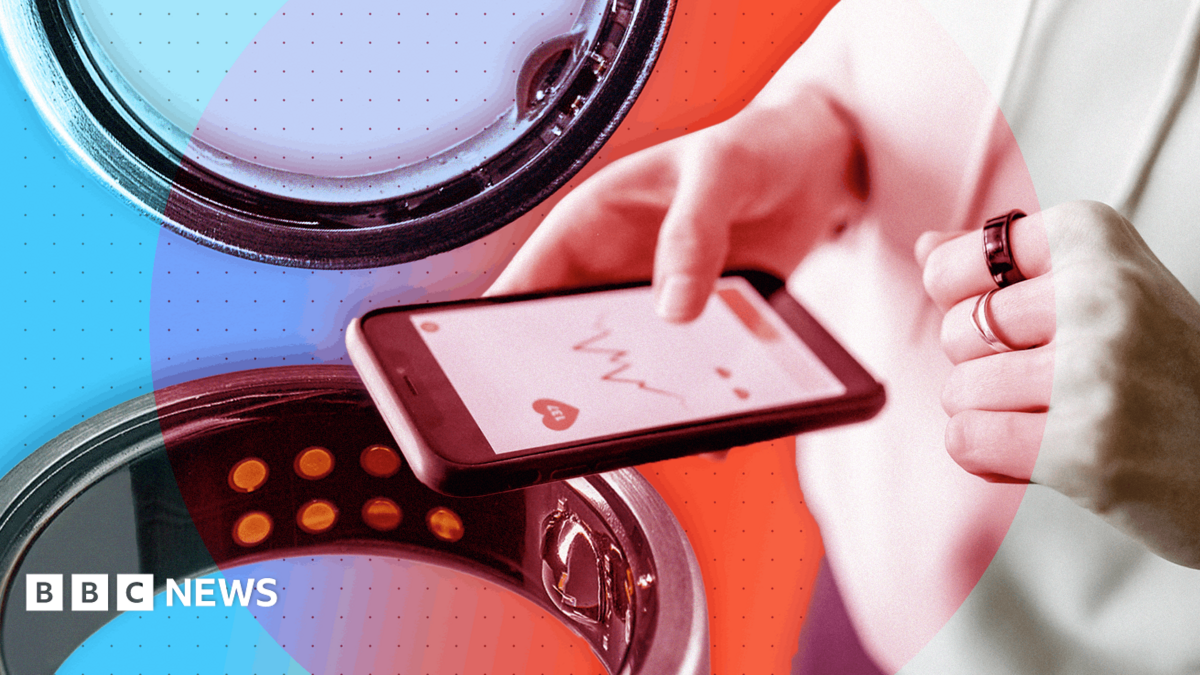
Sofia, 32, had been one of them. She lost two pregnancies, both of which she spotted in the data from her Oura ring, before becoming pregnant a third time with her now five-month-old baby son.The first time she became pregnant early last year, she kept checking her app every morning."When I would wake up to see the [temperature] line progressing, and then I saw in the app one morning that my temperature had dropped - and that's how I knew, something's weird," she said."When I did have the miscarriage, I kind of was already mentally prepared because of the data I saw."The same thing happened again three months later, and Sofia and her husband decided to take a break from trying to conceive - but it was during this break that she got a notification of "minor signs of strain" from her ring, and noticed her temperature was elevated again. She took a test, and it was positive.Though this pregnancy was healthy, Sofia felt anxious throughout those early weeks and found herself repeatedly checking her data."I was like, 'Oh my God, is this going to happen again?', and I remember I would wake up at four or five in the morning and just check my app to see if my temperature had dipped," she said."I was so conscious of that piece of data to the point where, when I reached seven or eight weeks [pregnant], I had to take my ring off and didn't wear it for all of the first trimester."Dr Stuart Lavery, consultant of reproductive medicine at University College Hospital in London, said: "People are understandably using this technology to try to get a greater understanding, and to try and pick up things as early as possible because it has such a profound impact on your life if you're planning a pregnancy."However, "we might be running before we can walk," he cautioned."We probably need a lot more data on the reliability, we need a lot more research… otherwise what happens is your levels of anxiety will just skyrocket," he said."I have no doubt that more people will be using technology, an app-based approach or a wearable-based approach, to try and pick up these things. But I think it should come with quite a big health warning about how much we can rely on them for accuracy."When asked about the anxiety women reported feeling early in their pregnancy as a result of checking their ring data, Dr Chris Curry, Oura's clinical director of women's health, told BBC News: "With or without biometric tracking, pregnancy can be an uncertain time where many women, particularly those pregnant for the first time, are in the dark about the range of what's normal."She added that if women feel overwhelmed, the company "encourages members to take a break from the app experience, whilst Oura Ring continues to collect data and gather insights", adding: "The ring is a support tool, not a replacement for your care team."Ravika sadly did miscarry. She's hoping to start trying to conceive again soon - and when she does, her experience has made her rethink wearing her tracker again."I didn't really see myself as being an anxious person, but… I think going forward if it came to a point where I had an inkling that I was pregnant and my stats were low, as soon as that positive pregnancy test was there, I do think it would be the best thing for me to take the ring off."
My fitness tracker knew I was pregnant before I did
Full Article
Original Source
Read the full article at Bbc →KhanList aggregates and links to publicly available news content. We do not host full articles from third-party sources. Always verify important information with original sources.