
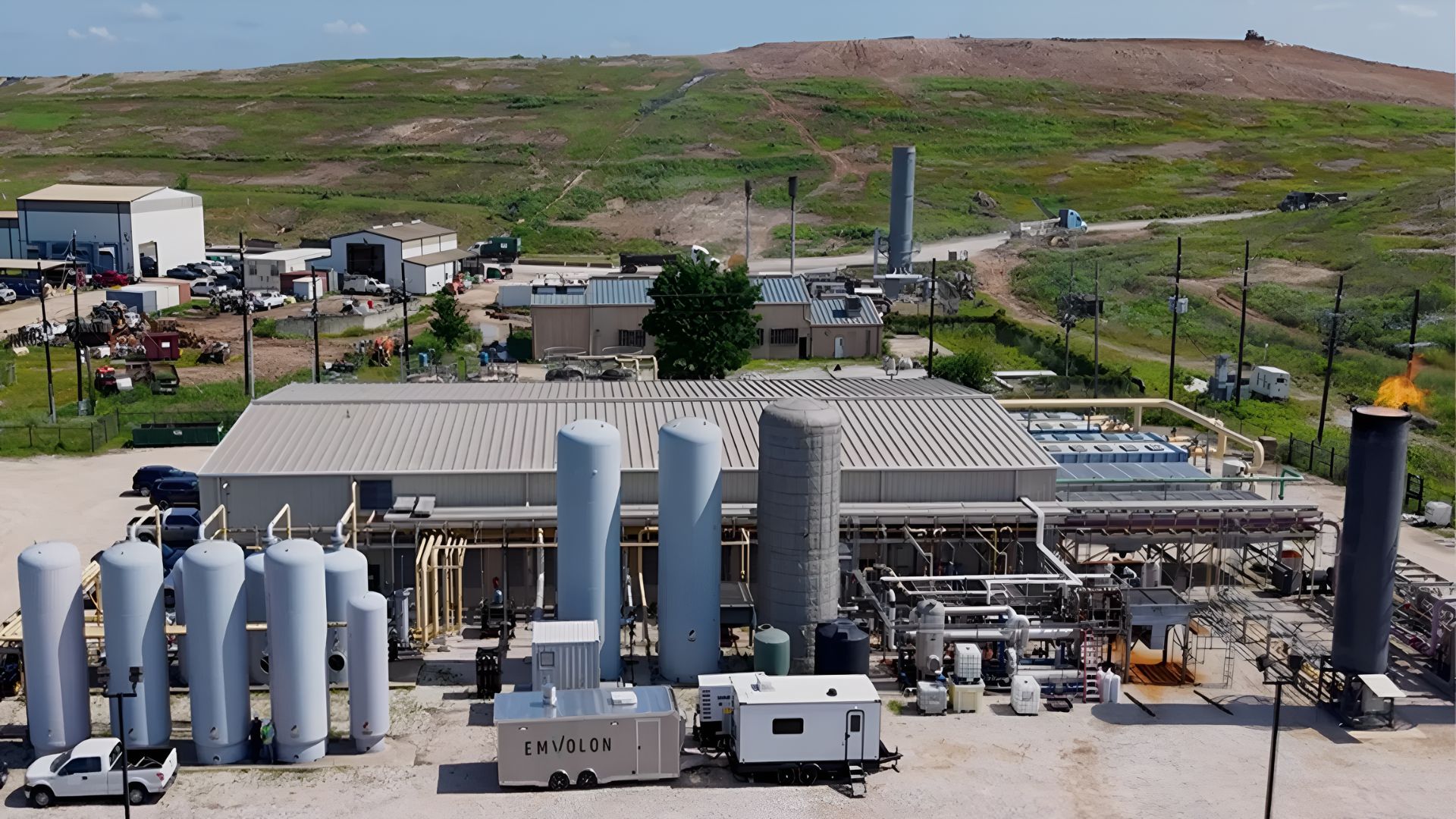
Emvolon, an MIT spinout developing technology to turn methane-rich waste gas into liquid fuels, has signed two commercial agreements with commodities trader Freepoint Commodities to scale production, targeting up to 300,000 metric tons annually as projects are deployed globally. Under a seven-year commodity purchase agreement, Freepoint will become the primary buyer of biomethanol and other liquid fuels produced at Emvolon’s projects. The fuel will enter Freepoint’s existing physical distribution network, giving Emvolon an established route to market as production expands. The second agreement gives Freepoint rights to co-invest in Emvolon’s project portfolio through equity and debt. The arrangement is designed to provide capital alongside technology deployment, particularly for projects using waste gas from landfills, dairy farms and industrial sites. Emvolon, founded in 2021, is developing systems that convert methane-rich waste gases into fuels and chemicals at the location where the waste is generated. Waste gas becomes fuel The company’s approach uses modular micro-reactors built around mass-produced automotive engines. These systems are designed to convert waste gas directly into liquid fuels without relying on new pipeline or grid infrastructure. That could allow fuel production at sites where methane would otherwise be flared, released or left unused. Emvolon says its model can be applied to different feedstocks and locations, reducing the need for bespoke engineering for each project. “Energy security and supply chain resilience and sustainability dictate that we produce essential liquid fuels locally using domestic waste resources that are currently flared or lost,” said Emmanuel Kasseris, Ph.D., Co-Founder and CEO of Emvolon. “This dual commercial and capital agreement with Freepoint systematically solves the core bottleneck in decentralized fuel manufacturing by securing our buyer and anchoring our project financing platform. We are building our first commercial system now and will put that foundation to work across North America and key international growth regions.” The companies see methanol as a significant market for the technology. Methanol is used in shipping, heavy transport and chemical production, while newer pathways are also being developed to use methanol in sustainable aviation fuel production. Emvolon says low-carbon biomethanol that meets RED-II requirements can command a premium of more than $1,000 per metric ton. Its strategy is to produce the commodity close to waste sources, potentially cutting infrastructure requirements and transportation needs. Capital backs modular rollout Freepoint’s investment rights could also help Emvolon move individual projects from technology deployment toward long-term financing. Rather than simply licensing its technology, Emvolon plans to package feedstock access, fuel production, financing and product sales into a single project model. The company has already demonstrated part of this approach through a joint venture with Montauk Renewables, which provides access to waste-gas resources. “Freepoint is focused on building resilient commodity supply chains and identifying proprietary technologies capable of scaling rapidly to meet physical supply deficits,” said Mark Lay, Managing Director at Freepoint. “Emvolon’s modular deployment model offers a practical solution to localized fuel production. Our dual commercial and capital commitment reflects our commitment to renewable chemicals and fuels.”The model is intended to support projects across landfill, agricultural and industrial waste streams in North America and other regions. If deployment scales as planned, the 300,000-metric-ton annual target would give the partnership a sizeable position in the emerging market for waste-derived fuels.Get the latest in engineering, tech, space & science - delivered daily to your inbox.With over a decade-long career in journalism, Neetika Walter has worked with The Economic Times, ANI, and Hindustan Times, covering politics, business, technology, and the clean energy sector. Passionate about contemporary culture, books, poetry, and storytelling, she brings depth and insight to her writing. When she isn’t chasing stories, she’s likely lost in a book or enjoying the company of her dogs.
Modular micro-reactors set to turn waste methane into 300,000 tons of fuel annually
Full Article
Original Source
Read the full article at Interestingengineering →KhanList aggregates and links to publicly available news content. We do not host full articles from third-party sources. Always verify important information with original sources.